The New International Encyclopædia/Dicotyledons
DI’COTYLEDONS (Neo-Lat., from Gk. δι-, di-, double + κοτυληδών, kotyledon, cup-shaped, hollow, from κοτύλη, kotylē, cavity). The larger and more important of the two groups of flowering plants, angiosperms (q.v.). Its members represent the culmination of the plant kingdom, and are the most conspicuous and the most modern of plants. More than 80.000 species have been described, and the actual number is probably over 100,000. The chief characters which distinguish them from monocotyledons, the other group of angiosperms, are an embryo with lateral cotyledons (usually two); the vascular bundles of the stem forming a hollow cylinder, which means an annual increase in the diameter of woody stems; an open system of venation, which means that the veinlets end freely in the tissues of the leaf or in the margins, often resulting in various forms of toothing, lobing, and branching; and flowers whose tendency is to display their parts in fives or fours or their multiples.
Two great groups of dicotyledons are recognized—the Archichlamydeæ and the Smypetalæ. In the former there is either no perianth (calyx and corolla), or its parts are separate (polypetalous); in the latter the corolla is sympetalous (petals coalesced). Formerly the Archichlamydeæ were divided into two groups—the Apetalæ, in which there are no petals, and the Polypetalæ, in which petals are present; but this division has been found to be too artificial to stand, as several natural families have both apetalous and polypetalous members.
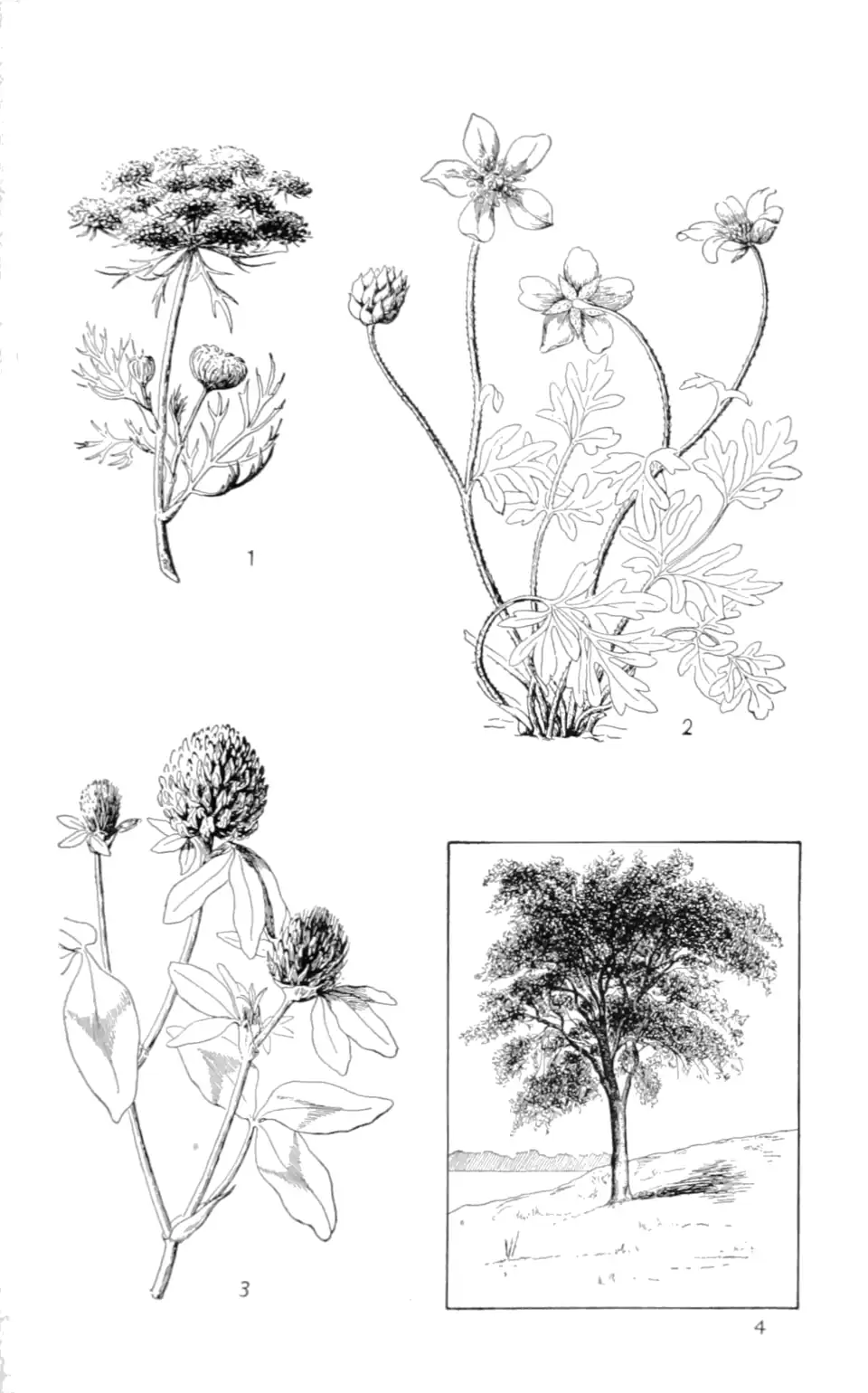
Archichlamydeæ. These are the simpler and more primitive dicotyledons, and contain about 40,000, or one-half of the known species of dicotyledons, distributed among about 160 families. The prominent alliances may be given as follows: (1) A great tree assemblage, prominent in which are the oak, hickory, walnut, chestnut, beech, poplar, elm, willow, etc. These plants are probably the most primitive of the dicotyledons, a fact indicated by the simplicity of their floral structures and by their anemophilous (wind-pollinating) habit. (See Pollination.) Prominent in the group also is the characteristic inflorescence known as the ament (q.v.) or catkin; and it is among its members alone that chalazogamy (q.v.) has been discovered. (2) The buttercups and their allies, a great assemblage of terrestrial herbs, including waterlilies, buttercups, poppies, and mustards; certain notable tree forms, as the magnolias, custard-apples, sassafras, etc.; and also the strange group of ‘carnivorous plants’ (Sarracenia, Drosera, Dionæa, etc.). (3) The rose family (Rosaceæ), which is one of the best-known and most useful groups of the temperate regions, including such forms as the strawberry, raspberry, blackberry, rose, hawthorn, apple, pear, quince, plum, cherry, peach, etc. (4) The legume family (Leguminosa), which is far the greatest family of the Archichlamydeæ, which contains about 10,000 species, and with flowers elaborately constructed for insect pollination. Here belong the lupine, clover, locust, pea, bean, vetch, redbud, senna, honey-locust, indigo, sensitive plants, etc. (5) The umbellifer family (Umbelliferæ), which is the most highly organized of the Archichlamydeæ, and contains such well-known forms as the carrot, parsnip, hemlock, pepper-and-salt, caraway, fennel, coriander, celery, parsley, etc.
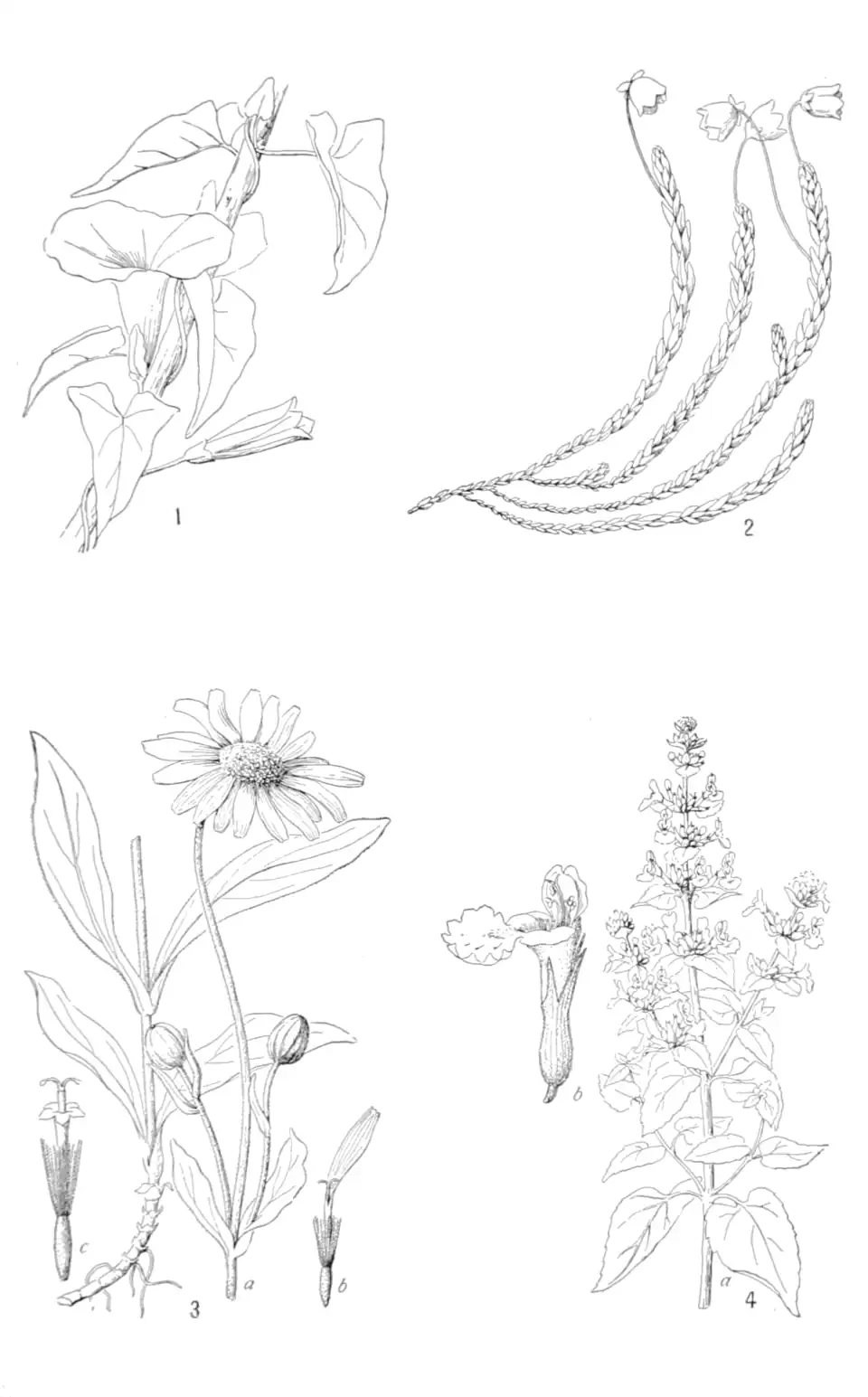
Sympetalæ. This group is evidently derived from the Archichlamydeæ, and contains the most highly organized of plants. Older names of the group are ‘Monopetalæ’ and ‘Gamopetalæ’. The group contains about 40.000 species, distributed among 50 families. Among the prominent alliances are the following: (1) The heath family (Ericaceæ), which consists mostly of shrubby plants, and which contains such forms as huckleberry, blueberry, cranberry, bearberry, trailing arbutus, wintergreen, heather, azalea, rhododendron, Indian pipe, etc. (2) The Convolvulus forms and their allies, in which the flowers are prominently tubular, including the morning-glory, polemonium, phlox, gentian, dog-bane, etc. (3) The mint family (Labiatæ) and its allies, containing about 10,000 species, and characterized by the irregular two-lipped flowers. Here belong the mint, dittany, hyssop, marjoram, thyme, balm, sage, catnip, horehound, lavender, rosemary, etc. In allied families are the nightshade, potato, tomato, tobacco, mullein, snapdragon, toadflax, painted-cup, verbena, plantain, etc. (4) The Compositæ, the greatest and ranking family of the angiosperms, is estimated to contain at least 12,000 species. The name of the family suggests the most conspicuous features—namely, the organization of the numerous small flowers into a compact head, which resembles a single flower, formerly called a ‘compound flower.’ Among the very numerous forms are arnica, thistle, dandelion, tickseed, beggar-ticks, Spanish needles, ironweed, aster, daisy, goldenrod, rosinweed, sunflower, chrysanthemum, ragweed, cocklebur, ox-eye daisy, tansy, sagebrush, lettuce, etc.
| DICOTYLEDONS | |
| |
| 1. CARROT (Daucus Carota). | 3. RED CLOVER (Trifollum pratense). |
| 2. BUTTERCUP (Ranunculus sp.). | 4. ELM TREE (Ufmus sp.). |
| DICOTYLEDONS | |
| |
| 1. MORNING-GLORY (Ipomœa sp.). | 3. ARNICA (Arnica sp.) a general habit; b, ray-flower; c, disk-flower. |
| 2. A HEATHER (Cassiope sp.). | 4. CATNIP (Nepeta Cataria); a, general habit; b, single flower. |