Portal:Featured texts
 sister projects: Wikipedia article, Commons gallery, textbook
A featured text is one which is recognized as among the most complete and highest quality works on Wikisource. These are prominently displayed on the main page, inviting users to read at their leisure.
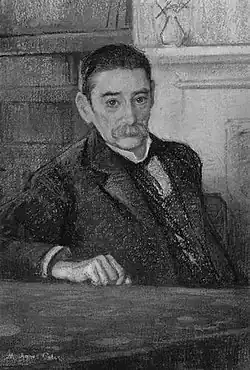
The Japanese have a voluminous literature, extending over twelve centuries, which to this day has been very imperfectly explored by European students. Forty years ago no Englishman had read a page of a Japanese book, and although some Continental scholars had a useful acquaintance with the language, their contributions to our knowledge are unimportant. Much has been done in the interval, by writers of grammars and dictionaries, to facilitate the acquirement of this most difficult language, and translations by Sir E. Satow, Messrs. Mitford, Chamberlain, Dickins, and others, have given us interesting glimpses of certain phases of the literature. But the wider field has hitherto remained untouched. Beyond a few brief detached notices, there is no body of critical opinion on Japanese books in any European language, and although the Japanese themselves have done more in this direction, . . .
or see all featured texts.
Flatland, a Romance of Many Dimensions is an 1884 satirical novella by the English schoolmaster Edwin Abbott Abbott.
Abbot intended his work as a critique on Victorian social hierarchy. Since its publication, however, it has been noted as an early piece of science fiction and, among mathematicians and physicists, for its examination of the concept of dimensions.
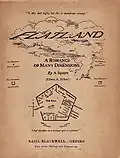
I call our world Flatland, not because we call it so, but to make its nature clearer to you, my happy readers, who are privileged to live in Space.
Imagine a vast sheet of paper on which straight Lines, Triangles, Squares, Pentagons, Hexagons, and other figures, instead of remaining fixed in their places, move freely about, on or in the surface, but without the power of rising above or sinking below it, very much like shadows—only hard and with luminous edges—and you will then have a pretty correct notion of my country and countrymen. Alas, a few years ago, I should have said "my universe": but now my mind has been opened to higher views of things.
In such a country, you will perceive at once that it is impossible that there should be anything of what you call a "solid" kind; but I dare say you will suppose that we could at least distinguish by sight the Triangles Squares and other figures moving about as I have described them. On the contrary, we could see nothing of the kind, not at least so as to distinguish one figure from another. Nothing was visible, nor could be visible, to us, except straight Lines; and the necessity of this I will speedily demonstrate.
For the guidelines regarding featured texts on Wikisource, please see Wikisource:Featured texts.
To nominate new featured texts, vote on current nominations or view the nominations of past texts, both successful and unsuccessful, please see Wikisource:Featured text candidates.