WOE to thee, Œnone! stricken blind And poisoned by a darkness and a pain, O, woe to thee, none! who couldst find No love when love lay dying, doubly slain Slain thus by thee, Œnone! Slain thus by thee, Œnone!O, what stain, Of red like this on hands of love was seen Ever before or since, since love has been! O, woe to thee, Œone! Hadst thou said, "Sweet love, lost love, I know now why I live And could not die, the days I wished me dead; O love, all strength of life and joy I give Thee back! Ah me, that I have dared to strive With fates that bore me to this one sure bliss, Thou couldst not rob me, O lost love, of this?"—
Hadst thou said this, Œnone, though he went Bounding with life, thy life, and left thee there Dying and glad, such sudden pain had rent His heart, that even beating in the fair White arms of Helen, hid in her sweet hair, It had made always moan, in strange unrest, "Œnone's love was greater love, was best."
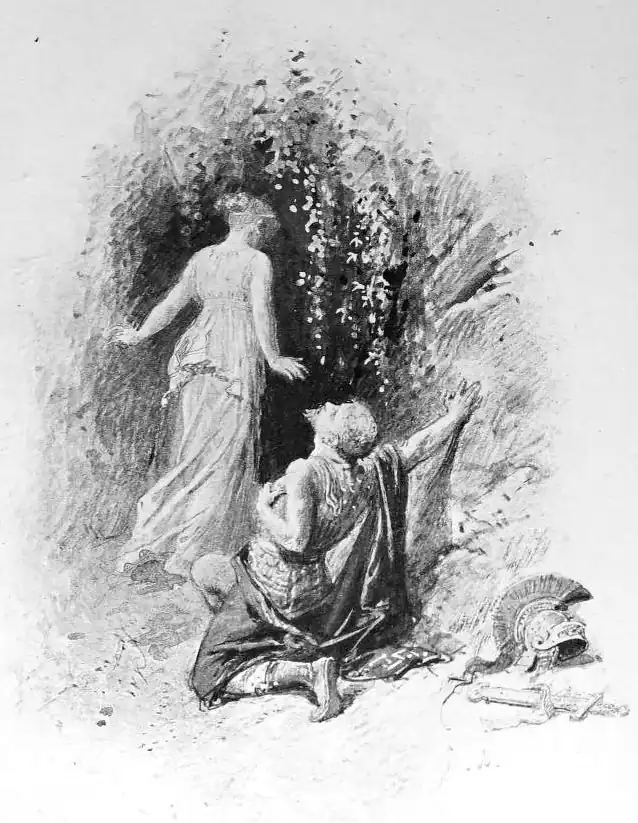
["Paris, the son of Priam, was wounded by one of the poisoned arrows of Hercules that Philoctetes bore to the siege of Troy, whereupon he had himself borne up into Ida, that he might see the nymph Œnone, whom he once had loved, because she who knew many secret things alone could heal him; but when he had seen her and spoken with her, she would deal with the matter in no wise, whereupon Pans died of that hurt."]
ŒNONE.
"O, what stain, Of red like this on hands of love was seen Ever before or since, since love has been!"
 WOE to thee, Œnone! stricken blind