Pet Birds of Bengal/Common Ruby-throat
THE COMMON RUBY-THROAT
(CALLIOPE CAMTSCHATKENSIS)
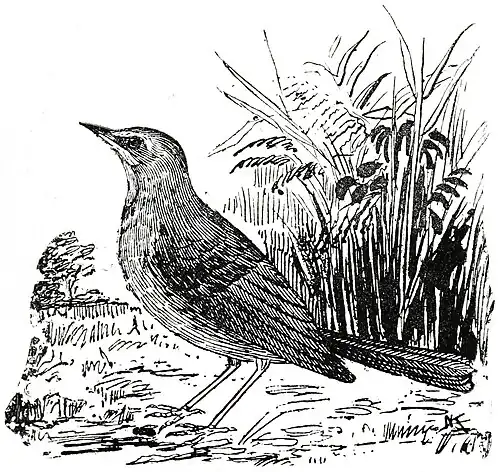
The Indian Blue-throat reminds us of another bird—the Common Ruby-throat—which closely agrees with the former in habits. It is also a winter visitor to the eastern portions of India, being very common in Bengal during the cold weather. Oates says that its range extends only as far south as the latitude of Raipur in the Central Provinces.
It is shy and silent, but not devoid of pugnacity. Thickets and underwoods are its favourite resorts. In the Deltaic portion of Bengal, rankField Notes grass-jungles, sugar-canes or reeds are selected by it as its hunting ground. It passes most of its time on the ground where it hunts up insects by running after them with remarkable adroitness. Extreme cautiousness, however, sends it into cover at the least sound and so it seldom "meets the eye". Its notes have been characterised by Mr. P. W. Munn as "a plaintive whistling noise". I would not call it a "noise"—it is far superior to that.
It is a very pretty bird. In the male the upper-plumage is olive-brown. A white line from the base of the upper bill passes over the eye, and another white streak, broader than the last, is below the eye. TheColoration intermediate space is black. Throat and fore-neck are ruby-red with silvery edges to the feathers. The
 lower body is dull whitish. The female is to be recognised by the absence of the ruby patch on the throat which is dull white. The white streaks on the face are buffy white above, and olive-brown below. The young are mottled and assume full adult plumage in the very first winter after their birth. A full-grown bird is seldom larger than six inches.
The Ruby-throat is not generally caged in this country, but, in my opinion, it deserves attention. If we cultivate its acquaintance, we will not be disappointed inasmuch as it is a handsome bird possessing a charming note. I had a pair of these birds in my aviary. In company with the Chats, they lived happily enough, warbling merrily their pleasant little tune, requiring little special attention except during the moulting season.