Page:The Strand Magazine (Volume 6).djvu/291
eve the beetle boometh." But the only beetle one remembers as effecting much in the way of a boom is the Colorado Beetle. The beetle, as a general thing, is not given to publicity of any sort, preferring a retired and quiet life. He never interferes in public affairs—having too many legs to look after. The Bombardier Beetle, however, can boom. Touch him, and you will hear.

The Insecteer.
Quantrill, here, is very kind to the Tarantula Spiders, often giving them a steam bath to assist them in getting rid of their old suits of clothes. Quantrill keeps in order the moths, butterflies, caterpillars, and spiders in the Insect House. He is a man who has arrived at a state of being when nothing feels crawly—not even a centipede. To be on terms of daily intimacy with lions, tigers, elephants, and pelicans is a great thing, but I feel a more peculiar awe for a man who is the confidential friend of several scorpions, and who keeps two spider-ogres on show in glass cases; consequently, I am always respectful to Quantrill, and inspect his person carefully for stray scorpions before coming very near.

"What a lovely sealskin! But there's moth in it."
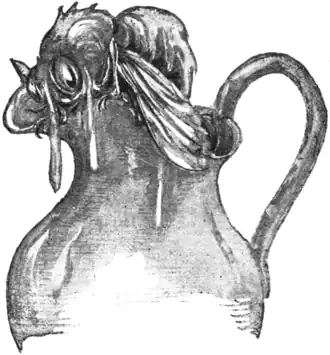
Intemperance even in milk.
A certain amount of entomology is forced on everybody, whether of a scientific turn or not. There are very many seaside lodging-houses where the whole of the inmates, without distinction of scientific tastes, sleeplessly adopt the study from their first night of residence. The sea air invariably stimulates interest in natural history. Nobody, therefore, however humble, need despair of acquiring entomological knowledge from want of material. The earnest need do no more than buy an expensive sealskin cloak to gather together an instructive swarm of moths, sufficient to engage his attention for a long time. The Japanese, by-the-bye, have a pretty story to account for the rushing of moths at a flame. The moths, they say, in love with the night-flies, were bidden to fetch fire for their adornment. The moths, being naturally fools from the circumstance of being in love, rushed at the first flame available, and were damaged. This is a very pretty excuse for the moth, and perhaps more flattering than the belief prevalent in this country, which is that the moth is fool enough to burn himself without being in love. Because a moth never learns wisdom. Once having got away with the loss of half a wing, he might reasonably be expected, in future, on observing the light that caused the damage, to remark, knowingly, "Oh, that's an old flame of