Page:The Czechoslovak Review, vol4, 1920.pdf/78
The Czech Heart saved the lives of thousands of little ones; it was still the only nation-wide charity, when Austria collapsed and the Czechoslovaks became masters of their destiny. A ministry of social welfare was established, as well as the food ministry, and between them they tackled the big problem of getting enough to eat for the masses of the people. That they have accomplished much is evident the minute one compares Czechoslovakia with its neighbors; the government saved the nation as a whole from famine, from sheer starvation. This was made possible with the help of America. The United States government lent the new republic the necessary funds, and Hoover rushed the food into the country in early spring in time to prevent a disaster.
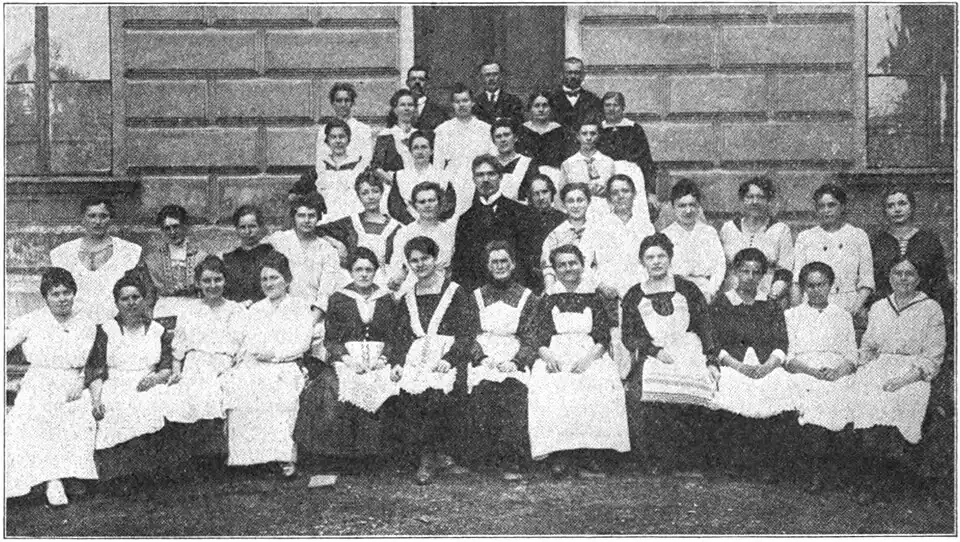
Local Committee of Czechoslovak Child Relief in Hradec Králové.
Hoover’s assistants were not satisfied with merely delivering the food supplies to governmental authorities; they took in hand the terrible problem of relief for the masses of the poor to whom the artifically reduced price of flour was beyond reach. Above all they tackled the problem of city children who were dying or growing into stunted forms because of lack of milk and nourishing food suitable for their years and physical condition. Being practical Americans they did not undertake to run the charities of a strange republic; they furnished the impulse and they furnished a good deal of the money needed to give the relief activities a good start; and they pledged further help. But the big problem they put up directly to the Czechoslovaks.
Thus arose the two great Czechoslovak relief organizations—Czechoslovak Red Cross and the Czechoslovak Child Relief (Péče o dítě). Dr. Alice Masaryk, daughter of the president, became the moving spirit of both bodies. If the nation as a whole has cause to bless its president, the poor and the children have abundant reason to pray for his daughter. It is too early to put a value on the work accomplished by Alice Masaryk during the past year. She has given all her time to it, even gave up her seat in the National Assembly so as to have more time for her wards. She conquered the prejudice against the name of Red Cross which came down from the Austrian days; it is now a proper, almost fashionable thing, in Czechoslovakia as in America to make collections on every possible occasion for the Red Cross. The National Assembly approved a loan of twenty million crowns for the benefit of the Red Cross. There are local chapters in most of the cities of the Republic, and with the aid of experienced American organizers