Page:The Czechoslovak Review, vol4, 1920.pdf/377
within the power of the American exporters to so employ their capital as to assure a maximum return and lasting business. By this is meant the application of generous terms to sales made or proposed to Czechoslovakia. These in brief, are a ninety day acceptance against a delivery of finished goods or the arrival of documents in Prague, possibly to be guaranteed not only by the purchaser but also by one of the principal banks of Prague. The banks are sound, able to meet their obligations and certainly they would not be so foolhardy as to guarantee payments of their customers’ liabilities unless they were convinced of their financial stability and their ability to meet obligations. Therefore the American business houses doing a foreign trade in order to successfully do business in Czechoslovakia should heed the requirements of that trade which will enable them to do a fair business.
In selling raw materials a different situation is presented. Credit of sufficient duration to permit transportation, conversion and marketing must be extended.
England, France and even Germany have accepted the edicts of business as dictated by present day necessities. There is no advantage in buying American wares for cash against documents in New York when similar products are sold on credit by European countries. Through obstinacy or non-realization American merchants are allowing a golden opportunity to slip through their fingers. If American financial methods do not answer the progressive requirements of foreign business they must be made to conform otherwise America must withdraw from lucrative fields.
Anthology of Modern Slavonic Literature
Translated by P. Selver. E. P. Dutton & Company, New York.
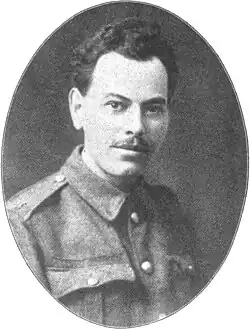
P. Selver.
The name of Paul Selver is well known to all readers of “The Czechoslovak Review”. He is a poet, a satirist, and a translator of Slav literature. His “Anthology of Modern Slavonic Literature” was published in England last year, but appeared on the American book market only recently.
The first impression one gets in looking it over is, that Mr. Selver expended a tremendous amount of energy in merely surveying the vast field of eight national literatures. He knows all the Slav languages thoroughly and he knows also what was written in each that deserves to become known to the English speaking people—the largest reading public in the world. And the next impression is that the translator has a great literary gift. Not merely in prose translation, but in poems as well, one cannot find a trace of awkwardness or anything indicating that the writer had before him foreign phrases, expressions that in the original sounded odd to English ears; in short that the translation is a translation and not an original English poem or story. And in spite of this high literary quality of the English version, the translator manages to stick remarkably close to his Slav writers, as one can prove by checking up the Czech authors concerned.
To a Czech reader, the interest of the book lies mainly in excerpts from modern Czech literature. From the prose writers Selver quotes J. S. Machar, whose “Jail” is now being published in “The Czechoslovak Review” from a version made by Mr. Selver; there is Jan Neruda, now dead for a number of years, but still beloved by the great mass of the Czech nation; there is Arne Novák, literary historian and critic; and a less known writer, Fráňa Šrámek. From the poets Selver selects a number of powerful rhapsodies of Peter Bezruč, the bard