Page:The Czechoslovak Review, vol4, 1920.pdf/252
developed by the socialists in Slovakia. The party in power, national farmers, barely kept up with their chief adversaries, the people’s party, each polling about a quarter million votes; while the socialists got in round numbers half a million votes among the Slovaks. The country people, as most of the Slovaks are, went to the mass on Sunday morning, and listened with unaffected piety to the priest who in most cases was the local leader of the people’s party, and after church went to the polls and voted the social democratic ticket.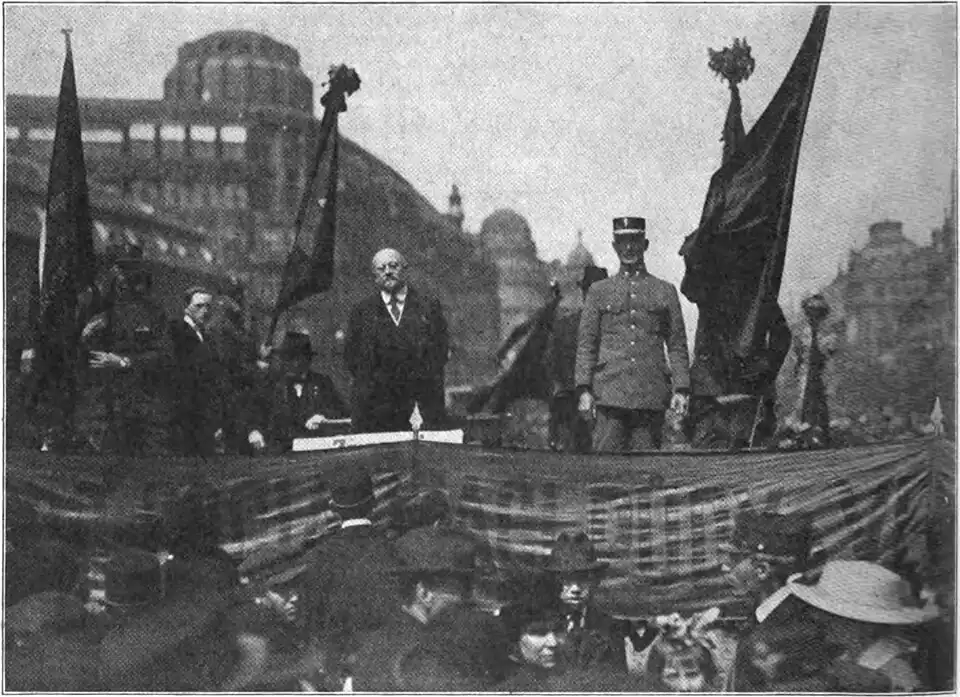
Antonín Němec, socialist leader, speaks at celebration on May 1. There are many theories to account for this election surprise of Slovakia: slow progress of partition of large landed estates, government requisitions of cattle and grain at maximum (or rather minimum) prices, excellent organization and campaign work of socialist workers, the vote of Rusins in eastern Slovakia, the merciless campaign which the two chief parties—national and Catholic—carried against each other, forgetting to attack the socialists, etc.
As a result of the elections the old Slovak Club disappeared and the Slovak deputies joined various Czech parliamentary organizations which best suited them. Social democrats of course belong to the social democratic club, the Catholic deputies from Slovakia united with Czech Catholic deputies in the people’s organization, and the national farmers decided to enter the Czech republican club. Whatever other results the elections may have, good or bad, they have laid at rest the problem of Slovak separatism artificially kept alive by Magyar propaganda. Even if one charged all the Catholic vote to the side of separatists which would hardly be fair to many excellent men in the party, there was a three quarter vote of the people in favor of parties which want a close union of the two branches of the Czechoslovak nation. The Magyars who have been clamoring for a plebiscite in Slovakia have now their answer.