Page:The Czechoslovak Review, vol3, 1919.djvu/236
Courtesy of “The Americas.”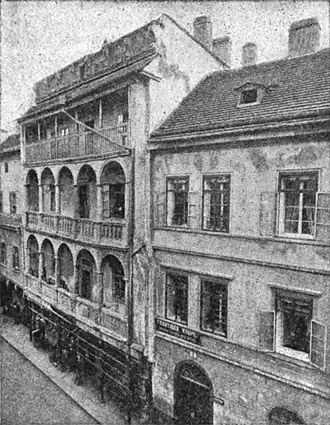
Typical Old Dwelling, Built in 1573. Courtesy of “The Americas.”
The Famous Astronomical Clock on the Prague Town Hall.was rightly felt that there lay the greatest danger; if the people get to be too hungry, they will rise and slaughter the imperial family. Attempts were made to increase the food ration, but the demands of Germany and the incapacity of the bureaucratic system prevented any real betterment. Later on an atmosphere of hopelessness enveloped the court, a sort of fatalism that only Zitta’s energy disturbed. Charles found consolation in drunkenness and gallantry, but at home he used to cry. He was so helpless, hopeless and desperate that he sought relief in confiding with his servants; he told them about his worries, his children, about Valerie and Frederick, and listened to their family affairs, their stories of the front, their judgment of the popular sentiment, etc.
Very peculiar was the relation of Vienna to Berlin. Charles ascended the throne as William’s vassal; William gave orders not only to the sultan, to Ferdinand of Bulgaria and to the bolsheviks, but above all to Charles who ruled over fifty million people, mostly Slavs. Now Charles incited by Zitta disliked intensely his position, but he could not help himself; in the end whatever the German general staff determined had to be done. Charles used to say of William that his schemes were fantastic, that his head was always full of plans that were never carried out. He mistrusted William’s military projects, but was not strong enough to make his opposition good. The German clique in Vienna was very powerful; many high officials were in German services, particularly Czernin. Zitta was hostile to Czernin who maintained himself in office only through the influence of Berlin. Berchtold who was the favorite at court could not be appointed to office by reason of German opposition. The Magyars almost up to the end played into the hands of the Prussians whom they admired immensely; but they switched around suddenly, when they saw that Germany was licked. Berlin usually simply dictated how many men Austria would have to furnish for any campaign, and even interfered in internal affairs of the dual monarchy. Zitta’s plans for peace at any price were over and over again crossed by Berlin; when Zitta persisted, Berlin at least enforced delay. All that created a peculiar, musty atmosphere