Page:The Czechoslovak Review, vol3, 1919.djvu/234
Courtesy of “The Americas.”
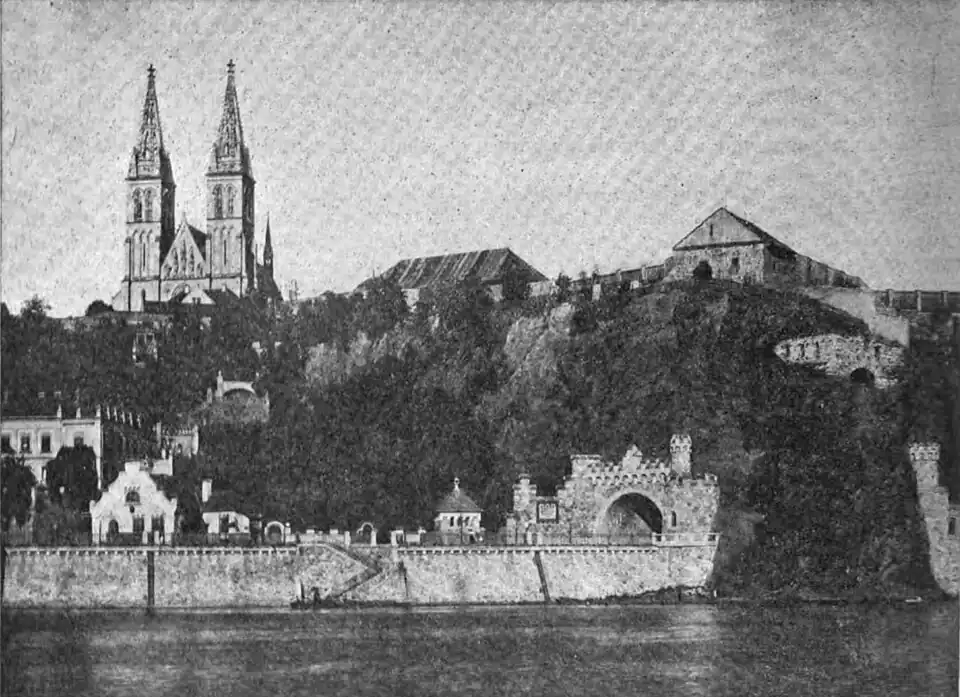
Old and new Bohemia: Vyšehrad Church Above, Railway Tunnel Below.
mated mated the bolsheviks, claimed that they did not represent the Russian people and that sooner or later the Russians would get rid of them; no use spending money on them. Why does not the Kaiser make a deal with England instead of with the Bolsheviks; that would mean something. William tried to dismiss her arguments with a joke, but she gave him a sharp answer and stormed out of the meeting with the parting shot that no good could come out of such conferences. Zitta blamed William for dragging her husband into the great headquarters, where he was made drunk; when she started on this subject, she wound up by weeping and pitying herself. Always she tried to prevent Charles from leaving for the front, and there were many violent scenes between them.
The influence of Zitta was so all-pervading that had not the empire gone too far along the road of dissolution, she might have kept it together. She and her friends worked with much energy, but it was too late. The mood at court changed continually according to events; one day desperate weeping, next day rejoicing and new efforts for peace that never seemed to get anywhere. Toward the end poor Zitta foresaw the coming catastrophe and fought to save her man, giving up all hope of the empire.
She was a woman with incipient consumption, poor health, worn out by her babies and her incessant worries. We Czechs had to fight her, because she wanted to re-establish medieval principles. We contributed most to the defeat of her plans, but we give her credit for being a decent woman.
The big favorites at the Court of Vienna were of course members of the nobility; it was really lucky that an ordinary mortal was not deemed worthy or qualified to advise monarchs who ruled by divine grace. Our reports mentioned as persons who were most consulted Prince Pokovic, Count Sylva-Taroucca, Count Zichy, Prince Hohenlohe, later Count Karolyi; the only commoners occasionally honored by invitation to court were professors Redlich and Lam-