Page:The Czechoslovak Review, vol3, 1919.djvu/232
Courtesy of “The Americas.”
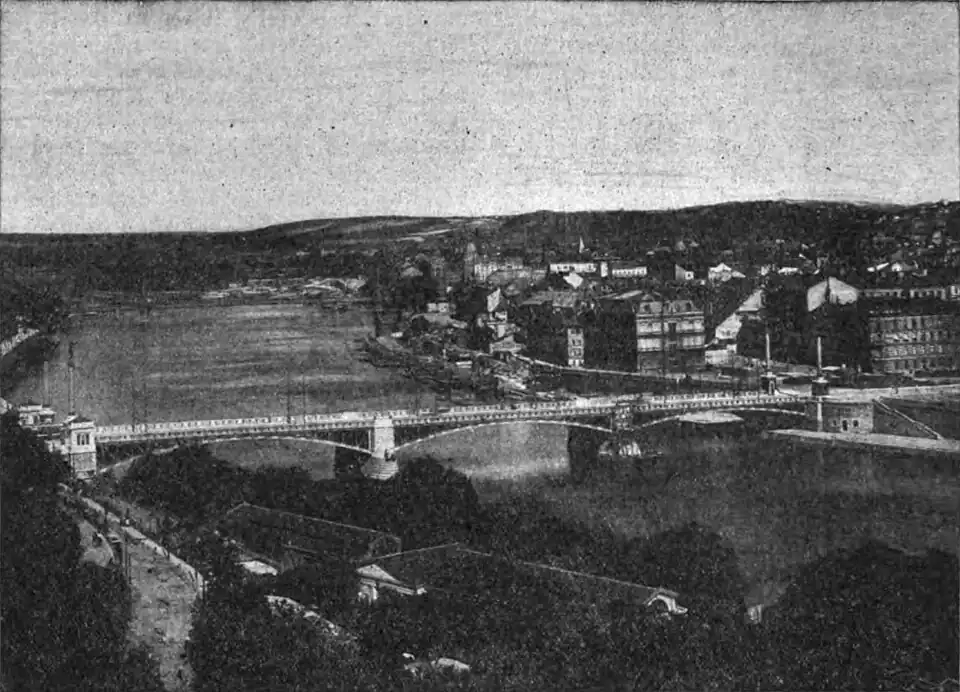
One of Prague Many Beautiful Bridges.
them. He was angry, because his empire was so much in Jewish hands, but his own actions contributed toward it.
When giving audiences, Karl was shaking like a man mentally affected and appeared always greatly excited. Only when there were women present at the audience, he made a better appearance. He liked to give the impression of cordidality by slapping everyone on the shoulder and asking them silly questions. Of course the faithful subjects treasured every word addressed to them as a great distinction.
Like all the Hapsburgs he was proud of his military career and made his first-born son a colonel. A joke based on this ridiculous appointment was very popular in Prague for a time, running something like this: “Did you hear the latest scandal about the Court?” “Why, what is it this time?” “Karel Novák (the nickname given to the emperor by his Czech subjects) came home from the front and found a colonel in his wife’s bed.” “Is that possible! And who is the man?” “The little heir to the throne.”
The empress Zitta, venerated by old women of both sexes, while she was on the throne, had far more energy, perseverance and strength than her all-highest husband. Most of her subjects knew only that she had a baby nearly every year, but the rest of her character was a secret. The motherly instinct was the leading motive with her. She realized that the war endangered her own future and the future of her children, and so from the very beginning she sought consistently a way out. Not that she cared about the loss of human lives, but she feared that the war might turn out badly for her and hers. She surrounded herself and her husband with advisers who carried out her general policies. She wanted peace and she sought it from the pope, from her brothers, from reactionary cliques all the world over. She did succeed in creating a friendly feeling for the Hapsburgs in influential Allied circles. Often her schemes miscarried, and Zitta despaired and wept, especially when Kaiser Wilhelm snatched her husband from her and carried him to the German headquarters, or when the tendency to fight it out to the end gained the upper hand. Charles, who was much weaker, gave way to her generally, but he could