Page:Rolland - Beethoven, tr. Hull, 1927.pdf/146
misery and wretchedness caused by war than with the single hero of that period who reaped both glory and dishonour at one blow. The oboe subject in the Trio portion is only one of many wonderful passages in this piece. The speaking bass melodies, the majestic second subject on the strings almost bursting with eloquence, and the wonderful coda, not broken-hearted but buoyed up by the rhythm of things viewed broadly. Any attempt to connect the Scherzo and Finale with Napoleon must fail ludicrously. The Scherzo is simply one of Beethoven's finest productions in one of his bubbling, vivacious mood. The three horns have a subject which appears to be a genuine hunting call.
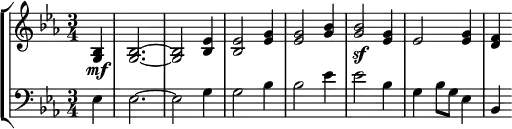
It is a seven-bar phrase, the echoes to which are enchantingly coloured. The common chordal formation of the duple time interjection near the end suggests something more massive, and the little coda figure, E flat, E natural, F, comes from the opening theme of the Symphony. The Finale is an amazing set of variations, the bass of the eight-bar theme being displayed and varied many times before the melody itself enters at the eightieth bar; and even then we continually hark back to the