Page:Punch Vol 148.djvu/185
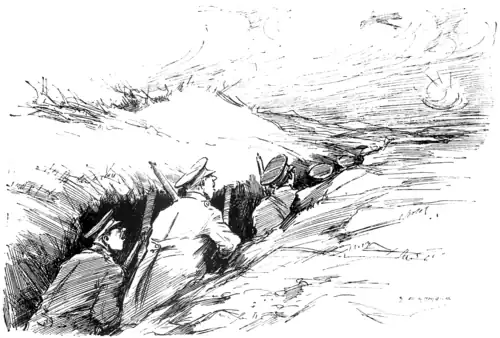
Tommy (late gamekeeper). "Mark over!"
OUR BOOKING-OFFICE.
(By Mr. Punch's Staff of Learned Clerks.)
Miss Viola Meynell brings to her analysis of character an astonishingly acute observation and insight, an intimate sympathy, a quiet, leavening, sometimes faintly malicious, humour; and to her synthesis a conscientious and dexterous artistry in selection and arrangement which gives a vividly objective reality to her creations. So that you may put down her Columbine (Secker) with something like the guilty fooling of an eavesdropper. Love in its effect upon three girls is her main theme, and it is difficult to overpraise her skill and restraint in the handling of it. Lily Peak, the actress, beautiful, passionless, incompetent, with her irrelevant banality and her second-hand philosophy of living, is a veritable tour de force of characterisation which cleverly avoids the easy pit of caricature. And between this pretty nonentity and Jennifer, the competent, the loyal and the deep, with her occasional flashes of beauty and her innocent provocativeness, Dixon Parrish, one of those self-analytic, essentially cool-blooded modern young men, wavers to the tragic hurt of all the three. Alison, his sister, full of moodiness and passionate preoccupations, moves unquiet on the well-planned background which holds that genially absurd pseudo-intellectual, her father; the kindly negative Mrs. Parrish; Gilbert, Alison's lover (the least satisfactory of the portraits); the pleasantly pretentious Madame Barrett of the elocution classes; and "that Mrs. Smith," who is only (but adroitly) shown through Lily's artless chatter. Miss Meynell chooses to write chiefly of little moments in little lives. But she has adequate reserves of power for bigger work, as passages of warm colour placed with a fine judgment on her low-toned canvas abundantly prove, and meanwhile she has shown herself mistress of a method singularly skilful and restrained. She does not describe or explain or soliloquise. All her points are made through the speech, the actions or the expressed thought of her characters—the manifestly excellent way which so few have the wit or the courage to follow.
Mr. Leo Brandish, so Miss Peggy Webling assures me, intends to write the professional biography of their mutual hero, that notable actor and admirable gentleman, Edgar Chirrup (Methuen). In the meantime she has told us all about the man himself, at least as far as the last page that he has turned, the one where the dogs and the rocking-horse are included in the family portrait, with his children and the wife whom you and I, and everyone else for that matter, realised was the one for him long before he did. Some of the other pages in his life were less satisfactory, more particularly those on which Fate had inscribed, not in the most convincing fashion (but perhaps the authoress jogged Fate's elbow), the history of his sudden unworthy infatuation. If I could not forget or ever quite understand this episode, neither could "Chirps" himself in the years that followed, when the lovableness and loyalty that had already won my affections were pleading for his release, with the ladies (Fate and Miss Webling, I mean) collaborating over his destiny. It would indeed be pitiful if any but the happiest of endings had been in store for the hero and his Ruth, for sweeter and simpler folk have seldom been persuaded by any writer to smile a genial public into arm-chair content. And the secret of their charm, would