Page:Polynesian Mythology by George Grey (polynesianmythol00greyuoft).djvu/362
here, it is the division of the half-note interval with which we have to do;
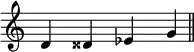
the discussion as to the variety or difference introduced by Olympus—(as to whether he made use of this design or not)—is not of any importance to our subject, our object being merely to show that the smaller interval, called a quarter tone, has its representative in modern times.
Suffice it to say, that many Chinese airs, of which I have two, show the diesic modulation and the saltus combined; but the majority of the New Zealand airs which I have heard are softer and more "ligate," and have a great predominance of the diesic element.
It may not be amiss to define in what sense we wish "diesis" to be understood, for sometimes, by modern writers especially, it is used for the simple minor half-tone of in contradistinction to the major of . In Dr. Smith's Harmonics it is the limma of equal temperament. Sometimes the moderns use the term for the double sharp. It was Rameau's diese major; Henfling's Harmonia; Boyce's quarter-note; the Earl of Stamford's tierce wolf; observed in the tuning of an organ. Dr. Maxwell makes the maj. diesis, and the min. But the sense in which I shall use it is that of the ancient quarter-tone, being an approach to the quarter of a tone major, or rather the division of the limma into two unequal parts; this is called the Aristoxenian diesis quadrantalis; which is re-


