Page:Midland naturalist (IA midlandnaturalis01lond).pdf/196
| William I. | William II. (?) | |
| (Hawkins 242.) | (Hawkins 244.) | (Hawkins 245, 246.) |
| Worcester. | ||
| BALDRIC ON PIHR | BALDRIC ON PIHR | |
| ESTMÆR ON PIHR | ESTMÆR ON PIH | |
| ESTMÆR ON PIHR | ||
| GODPINE ON PIHR | ||
| SEPINE ON PHRI[1] | ||
Speculation as to the cause of the deposit in the place where it was found would be futile. There is no doubt it was a local hoard from the number of coins of the Tamworth mintage, and a few notes on the Tamworth Mint will properly conclude this article.
The revered historian of Tamworth, Charles Ferrers Palmer, says that the name as a place of mintage first appears upon a penny of Edward the Martyr, (975,) as TANWO. A coin of Canute the Great is mentioned by Pitt in his History of Staffordshire, having on the reverse EDRIC ON TAM; i.e., "Edric, Moneyer in Tamworth."
The next reign of which coins of Tamworth are extant is that of Edward the Confessor, in which the name appears as TONWVRTH and TONWYRTH. The only specimen of the Confessor's coinage issued from Tamworth with which Palmer was acquainted, is a silver penny, bearing on the obverse the inscription EDWARD REX, and on the reverse, BRVNING ON TAM.
I am indebted to Mr. J. Thompson for the use of the block of this coin, which was cut for Palmer's History of Tamworth.
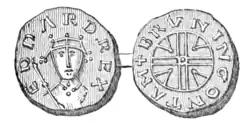
Fig. 7.—Silver Penny of Edward the Confessor.
Ruding mentions some coins of Harold bearing the contraction TAN, which he conjectured to be either Tamworth, or Taunton in Somersetshire.
After the Conquest, says Palmer, the Royal Mint of Tamworth was in activity until the time of Henry I, in whose reign it was discontinued, (Ruding), Through Mr. Thompson's kindness I am also enabled to give a representation of another Tamworth coin of William the Conqueror (or William Rufus?), which differs from those in our recent find.
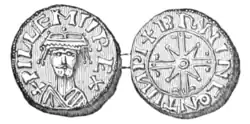
Fig. 8.—Silver Penny of William I. (or II. ?).
- ↑ In each case the Saxon character, the Wen is used for W, and in this article the Roman P, which it resembles, is substituted.