Page:Material Culture of the Iglulik Eskimos.djvu/100
set in motion, steered by a person on either side; a rolled line of walrus hide, held under the runners, serves as a brake. When driving light, the sledge is steered by the driver who rests on his left knee well forward; he then steers the sledge with his right foot round ice hummocks, stones, etc.
How much a dog team can pull and how quickly, depends upon many circumstances. Parry[1] says that ten dogs one day in June pulled a sledge with 1200 pounds a distance of 40 miles, but this is
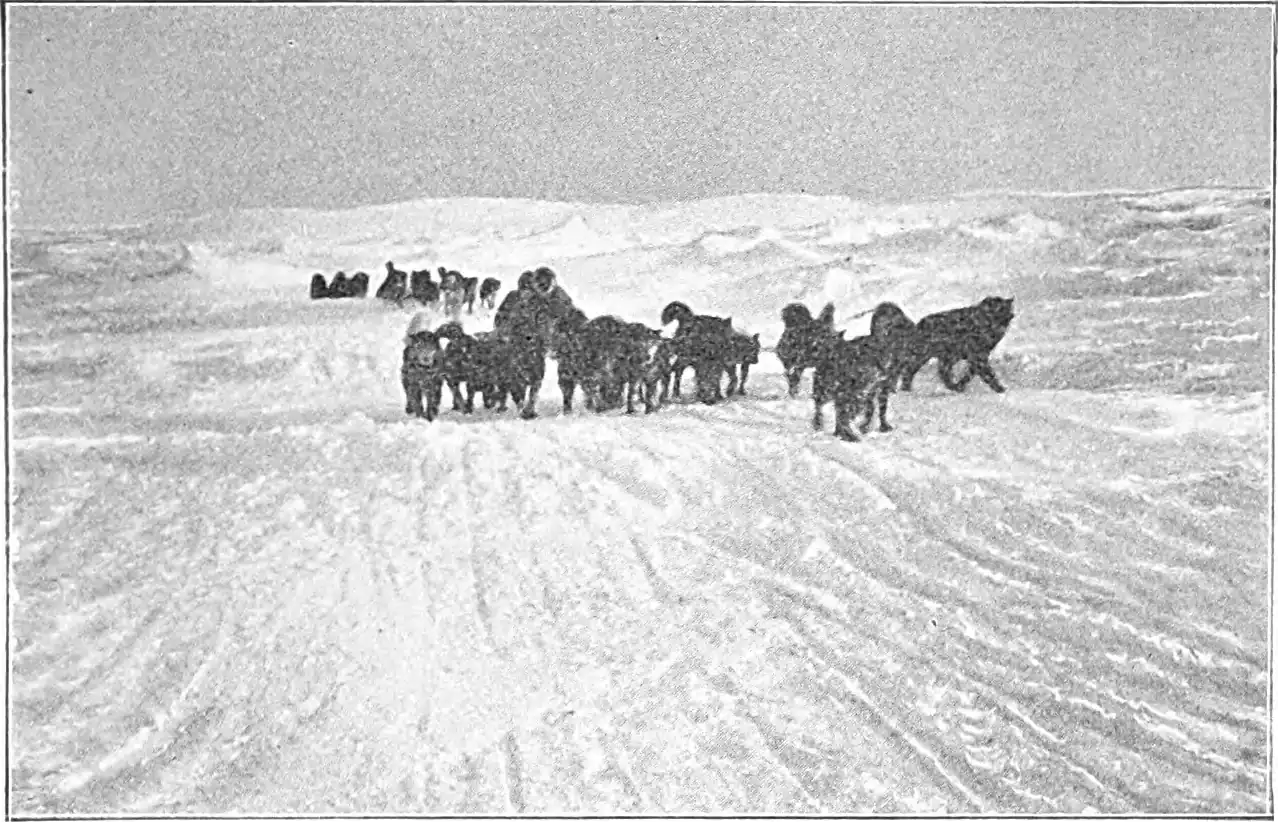 Fig. 40.Two big dog teams. Danish Island.
by no means the norm. Most of the Iglulik Eskimos' sledge journeys proceed at no greater pace than that a man on foot can easily keep up; in fact it is more often the case that the driver has to walk alongside the sledge, and, what is more, the wife frequently has to walk ahead. An average speed of three to four kilometres is fairly general on winter journeys, and this corresponds to a day's journey of 25 to 30 kilometres. In spring, when there is not much snow on the ice, when the days are longer and it is not necessary to build snow houses at night, day's journeys of 40 to 50 kilometres are common. When we moved across the middle of Southampton Island in November 1922 with a load of about 600 kg, drawn by ten hungry dogs, the average speed was barely over 2½ to 3 kilometres, even when everybody walked, and we rarely advanced more than 20 kilometres a day. I have seen a sledge team of 18 powerful dogs, pulling a big Iglulik sledge with two families who were going to
Fig. 40.Two big dog teams. Danish Island.
by no means the norm. Most of the Iglulik Eskimos' sledge journeys proceed at no greater pace than that a man on foot can easily keep up; in fact it is more often the case that the driver has to walk alongside the sledge, and, what is more, the wife frequently has to walk ahead. An average speed of three to four kilometres is fairly general on winter journeys, and this corresponds to a day's journey of 25 to 30 kilometres. In spring, when there is not much snow on the ice, when the days are longer and it is not necessary to build snow houses at night, day's journeys of 40 to 50 kilometres are common. When we moved across the middle of Southampton Island in November 1922 with a load of about 600 kg, drawn by ten hungry dogs, the average speed was barely over 2½ to 3 kilometres, even when everybody walked, and we rarely advanced more than 20 kilometres a day. I have seen a sledge team of 18 powerful dogs, pulling a big Iglulik sledge with two families who were going to
- ↑ 1824 p. 437.