Page:Czecho-Slovak Student Life, Volume 18.djvu/509

PROMINENT AMERICANS OF CZECH AND SLOVAK ANCESTRY.
In this issue: Dr. F. G. Novy, Rev. Cosmas Vesely, O. S. B., and Hon. G. A. Hricko.
DR. F. G. NOVY, SCIENTIST AND DIRECTOR OF HYGIENIC LABORATORY, UNIVERSITY OF MICHIGAN.
Dr. Frederick George Novy, Professor of Bacteriology and Director of the Hygienic Laboratory in the University of Michigan, was one of the U. S. Commissioners who investigated the epidemic of bubonic plague, the terrible Black Death”, in California in 1901. His services to mankind, in the field of science, have been neither inconsiderable nor unrecognized, and as one of the foremost of American bacteriologists, he has been recognized by the editors of the Encyclopedia Americana and honored by the French government with the Cross of Chevalier de Legion d’honneur. The scientific world places him among the foremost contemporary scientists.
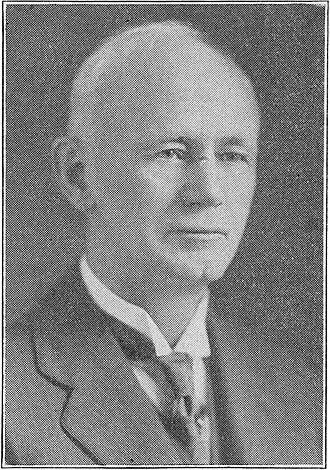
DR. FREDERICK GEORGE NOVY.
Dr. Frederick G. Novy was born in Chicago on December 9, 1864. His parents Joseph and Frances Janota Novy came from the small town of Čista, between Rakovnik and Pilsen, and settled in Chicago in 1862. After the usual grammar school training he entered the High School, for at that time there was only one in Chicago. It was, however, overcrowded and a new West Division High School was soon erected and from this he graduated in 1882. Early in his High School course he became interested in the natural and physical sciences and when it became necessary to decide upon a career he selected chemistry. This meant going to college, a rather serious question at that time. For financial reasons a position was sought and obtained on the evening staff of the Chicago Public Library and this extra load was carried during the last two years in the High School. In the fall of 1862 he entered the University of Michigan and graduated there, in 1886, as Bachelor of Science in Chemistry. There he also received the degree of Master of Science in 1887; that of Doctor of Science in 1890, and Doctor of Medicine in 1891. The honorary degree of Doctor of Laws was conferred upon him by the University of Cincinnati in 1920.
Early in his career he realized the need of additional training and to obtain this he went in 1888 to Berlin where he worked in bacteriology in the laboratory of Koch; in 1894 he studied in Hlava’s Pathological Institute in Prague; and in 1897 he carried on further work in the Pasteur Institute in Paris.
Upon graduating from the University, in 1886, he was appointed Assistant in organic chemistry; in 1887 he was made Instructor in Hygiene and Physiological Chemistry; in 1891 he