Page:Czecho-Slovak Student Life, Volume 18.djvu/303
had closed down for lack of orders. Being thrown out of work, Mr. Cervenka managed to secure a position as an appraiser and salesman with a Bohemian firm that opened up a store and sold used furniture, bought from closed hotels and rooming houses, at very low prices.
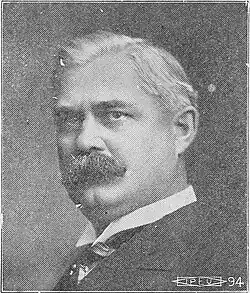
A short time after he was asked by the reorganizing cabinet makers to act as their representative, in which capacity he was instrumental in perfecting an agreement between the workmen and the factory owners. In the year 1899, when the new agreement including a higher wage scale was arranged and ratified, he resigned his position of business manager and entered the restaurant business which he conducted successfully for a number of years at the intersection of Blue Island Avenue and 19th Street in Chicago.
Again in 1903, his constructive ability was required in organizing his fellow merchants into a cooperative company to build and operate a plant of their own, with the result that the Pilsen Brewing Company organized that year, opened its modern brewery and put the product on the market in 1904, and as a cooperative concern continued growing and prospering until the prohibition law stopped all activity.
Adjoining the brewery, a large park with a pavilion has for years been the scene of Czech and Slovak representative functions and the center of their national and patriotic activities in Chicago.
J. A. Cervenka received his political start in the section of Chicago now known as the 26th Ward where his friends urged him to become a candidate for Alderman in 1901. He was opposed by a corrupt machine, and though defeated, showed so much strength that in 1910, when the Democratic party was selecting candidates for county offices, his name was placed on the ticket for Clerk of Probate Court of Cook County. He justified the expectations of his sponsors by defeating the outgoing incumbent, who was asking for re-election, by more than thirty thousand votes and became the first Democrat elected to office in a period of twenty years. His record during the four year term was such that at the following election held in 1914 he was re-elected. His second term expired in 1918.