Page:Czecho-Slovak Student Life, Volume 18.djvu/232
Prominent Americans of Czech and Slovak Ancestry
In this issue: Dr. Bohumil Shimek, Msgr. J. B. Dudek, Dr. C. G. Tomecko.
“As a scientist Prof. Shimek has occupied a prominent place for many years. His love of the out-of-doors lead him early into close contact with the more obvious phenomena of nature,—plants, animals, and the earth itself with its rocks, rivers, and variety of soil. Quite naturally as a young man he followed these lines of interest into the formal fields of botany, zoology and geology. The fact that he has attained distinction in all three of these branches has given him a peculiar advantage in the interpretation of each and has earned for him the recognition as one of the outstanding naturalists in America, wrote Dr. Rob. B. Wylie, head of the botanical department at the State University of Iowa, to the editor of the Student Life Monthly.
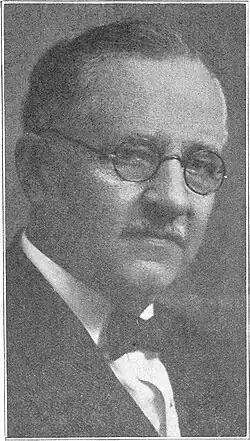
One need but attend any scientific gathering in America to realize what esteem and respect Prof. Shimek holds among contemporary scientists.
We learn that Prof. Shimek’s childhood and early youth were spent under hard circumstances, for his mother’s early death and father’s financial losses and helpless condition as an invalid broke up the home and left the remnant of the family forsaken.
Even before this, the early experiences of the family here in Iowa were those of the pioneers of limited means. The father had been a revolutionist, a—“Forty-eighter”—in his own country of Bohemia, then a part of the Austrian empire, and he came to this country financially destitute. He was unable to give material assistance to the son, but developed in him an intense love of the institutions of our country and the liberty which they insured and typified.
The father, a florist in his own country and always a lover of plants, also planted in him the seeds of that love of the outdoor world which has so largely shaped his own course in life.
After the completion of the work in the public schools of Iowa City, a course in civil engi-