Page:Czecho-Slovak Student Life, Volume 18.djvu/218
In the Heart of Europe.
For the “S. L.” by Dr. Růža Lukavská-Stuerm.
 T IS chiefly because of a harmonious union between beauty of nature and cultural charm, as two main elements of the character of the country, that Czechoslovakia holds the hearts of tourists. In addition to such an attractiveness, it enjoys a convenient location in the very heart of Europe, its capital being reached in less than twenty four hours by train from Paris, in eight hours from Berlin, in six from Vienna and twelve from Rome. Among the countries of Europe it is fifteenth in size, tenth in population; or in other words, it is as large as Holland, Belgium, Denmark and Switzerland put together and has nearly as many inhabitants as Austria and Hungary combined, the area being fifty-five thousand square miles and the population exceeding 14,000,000.
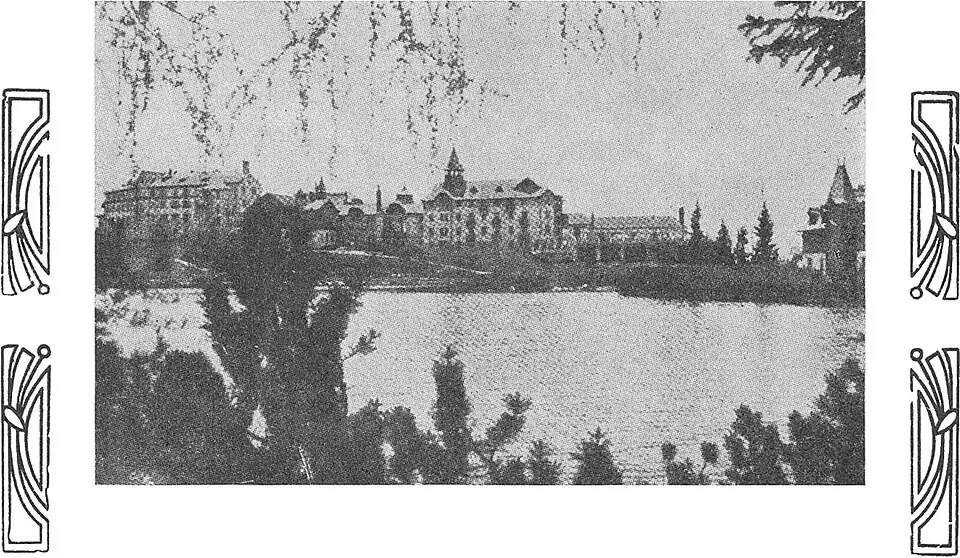
ŠTRBSKÉ PLESO
The most beautiful spot and most convenient starting place for tourists in the High Tatras, 4000 feet above sea-level. Touring and winter sports. Railway station: Štrba on the Prague-Kosice-Bucharest line.
Both agriculture and industry have reached a high level in the Czechoslovak Republic. In general it may be said that the western half of the country, or Bohemia, Moravia and Silesia, is predominantly industrial, while the eastern half, or Slovakia and Rusinia, is agricultural. The capital of Czechoslovakia is the beautiful Prague, often called the “Golden City”, or “Rome of the North”. Its characteristic panorama is that of Hradcany Hill with the Royal Castle and Cathedral of St. Vitus above the magic Vltava, whose cadence harmonizes so well with the soft and yet marvelous environment. The famous Gothic Charles Bridge from the fourteenth century, with treasures of the twelfth, and baroque statues added much later, forms a de-