Old Westland/Chapter 7
Chapter VII
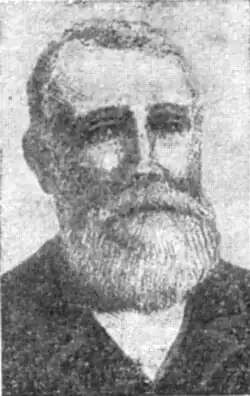
James Mackay
James Mackay, it will be remembered, had embarked at the Buller, on the cutter Supply for Nelson, and on his arrival there, he was ordered to proceed to Auckland, for the purpose of interviewing Governor Gore Browne with regard to the purchase of the West Coast from the natives. After receiving Mackay’s report, the Governor instructed him to offer the Maoris a sum not exceeding £400, and to do his utmost to close the deal.
So once more in February, 1860, the explorer set out for Westland, with the four hundred sovereigns in his swag. This time he was accompanied by Alexander Mackay, Frank Flowers, and three Maoris from the Massacre Bay District. They travelled to the Roto-iti Plains with the intention of finding a practicable roadline via the Upper Buller and Maruia to the Grey at the point where Mackay’s exploration had terminated the previous year. Sir Julius von Haast, who had been engaged soon after his arrival in New Zealand to report on the geology of the south-western part of the Province of Nelson, accompanied the explorers during a portion of their expedition. He remained in the vicinity of the Tiraumea, awaiting a fresh supply of provisions, whilst the explorers were engaged in cutting a track for his guidance up the Maruia Valley, through the bush and on to the grass plains. At this time the party were almost destitute of provisions, and the supplies of birds and fern root were very scanty—so scanty, indeed, that it was considered wise for Alexander Mackay and Frank Flowers to return to Nelson, leaving James Mackay and the natives to carry on alone.
They made little headway, however, owing to the lack of food and to the fact that the Maoris became disheartened and refused to proceed further. They said, “We are in an unknown country, which is inhabited by wild men and great lizards, which will presently appear . . . . we will return to Nelson, or lie down and quietly die in the camp” . . . . they were indeed starving and exhausted. Mackay’s determination, however, 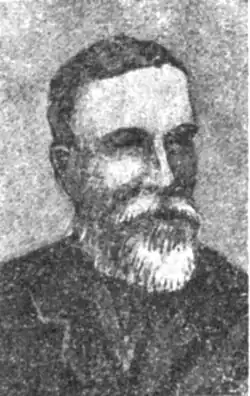
S. M. Mackley
prevailed and somehow or other he kept them going—though at this time his own right knee was so badly swollen, having been poisoned by spear grass, that he had to cut and gash it with a razor and so reduce the swelling that he might proceed,
A little later, when the situation was desperate, Mackay sighted a distant hill which he had ascended when in the upper Grey district, and was therefore able to define his position and assure the natives that they would reach the Mawhera Pa in two days’ time. This assumption was correct, and so ended a terrible journey which lasted no less than seven weeks. In this connection be it noted the Nelson Provincial Government voted Mackay a bonus of £150 for “defining the track from the Roto-iti Plains, via Maruia, to the mouth of the Grey River.”
On his arrival at the Mawhera Pa on March 2nd, 1860, Mackay found S. M. Mackley, a Nelson settler, and seven Massacre Bay natives there. They had travelled down the coast from Collingwood, Mackley’s mission being the location of an area suitable for farming purposes. Fortunately, in his youth, he had studied for the medical profession, and, having a few simple remedies with him, he treated Mackay’s knee with such good effect that that indomitable man was ready for the road again in a few days. Food at this particular time was very scarce, the natives having but little to spare and the white men none at all.
When, however, the immediate future looked dark indeed, the schooner Gipsy, which had been chartered to carry supplies to the Grey, hove into sight, and later entered the river (March 5th, 1860), all was well. Nineteen days after Mackay’s arrival at the pa, Von Haast and his party also reached that haven of refuge, in a starving condition, and that night for the first time in the history of Old Westland a party of white men—Mackay, Mackley, Von Haast and James Burnett—foregathered and ate to repletion of good life-giving food, so different from the fern root and occasional eel that the explorers had been forced for some time to subsist upon.
Mackay at once opened negotiations with Tarapuhi as chief of the coastal natives, with the result that it was agreed to convene a meeting of all the tribes to take place at the Poherua Lagoon, near Okarito, which was situated some one hundred and forty miles south of the Mawhera Pa. Accordingly, Mackay, Mackley and James Burnett set out on their tramp to the place appointed, and with them went Tainui and the whole of the local tribe—men, women and children. They travelled down the coast by easy stages, picking up the natives resident at the Taramakau, Arahura and Hokitika Pas en route. Mackay, known to the Maoris as “Karamea,” travelled in flax sandals, having worn his boots off his feet. He, like Thomas Brunner, had overcome the difficulty of “walking barefoot.”
On their arrival at the pa the usual feast of welcome was tendered to the visitors. This lasted several days, after which the real business of the meeting was commenced. Mackay addressed the gathering at length, conveying to those present the Governor’s greetings and good wishes, and finally offering three hundred golden sovereigns (the canny Scotsman) for their lands, subject to certain reserves being set aside. This offer was accepted, and James Mackay and Mackley, accompanied by some of the leading chiefs, at once set out for Bruce Bay, another forty miles south, where they met some Maori women who had not previously seen a white man. These ladies took a great fancy to Mackay’s English-made clothes, and suggested that he leave them behind him. A quick getaway on his part ended a very embarrassing situation. The necessary reserves having been defined to the satisfaction of the Maoris, they returned to Mawhera, which was duly accomplished without further incident. On arrival at the pa there was more feasting prior to the signing of the deed of sale. When this was concluded the fourteen Maori chiefs present affixed their signatures by making a cross, Messrs. Mackley, Burnett and seven Maoris from Collingwood acting as witnesses and James Mackay signing on behalf of Queen Victoria. These legal formalities having been completed, the three hundred sovereigns were paid over and the business concluded.
The following is a copy of the original document which is of great historical importance:
This Deed, written on this 21st day of May, in the year of our Lord, 1860, is a full and final sale conveyance and surrender by us the Chiefs and people of the Tribe Ngaitahu, whose names are hereunto subscribed: And witnesseth that on behalf of ourselves, our relatives and descendants we have, by signing this Deed under the shining sun of this day, parted with and for ever transferred unto Victoria Queen of England, Her Heirs, the Kings and Queens that may succeed Her and their Assigns for ever in consideration of the sum of three hundred pounds (£300) to us paid by James Mackay, junr., on behalf of the Queen Victoria (and we hereby acknowledge the receipt of the said moneys) all that piece of our land situate in the Provinces of Nelson, Canterbury and Otago, and named Poutini, Arahaura, the boundaries whereof are set forth at the foot of this Deed and a plan of which Land is annexed thereto, with its trees, minerals, waters, rivers, lakes, streams and interests whatsoever thereon. To hold to Queen Victoria Her Heirs and Assigns as a lasting possession absolutely for ever and ever. And in testimony of our consent to all the conditions of this Deed we have hereunto subscribed our names and marks. And in testimony of the consent of the Queen of England on her part to all the conditions of this Deed the name of James Mackay, junr., Commissioner, is hereunto subscribed.
These are the boundaries of the land commencing at the seaside at Piopiotai (Milford Haven), thence proceeding inland to the snowy mountains of Taumora, thence to the mountains, Tioripatea, Haorange (Mount Cook), Terao-o-Tama, thence to the saddle of the source of the river Teremakau,[1] thence to Mount Wakarewa, thence following the range of mountains to the lake Roterua, thence to the source of the rivers Karamea and Wakapoai, thence by a straight line drawn in a southerly direction. The sea coast is the boundary of Piopiotai (Milford Haven) where the boundaries meet. There are certain lands within this block reserved for sale; these are described in schedule A and B attached to this Deed.
(Signed) James Mackay,
Assistant Native Secretary.
Then follow these signatures, the Maori names in each case being signed with a mark, thus X Kinihi, Kerei, Kaurri Mokohuruhuru, Pako, Wiremu Parata, Pauha-te-Rangi, Taraphi-te-Kaukihi, Mere-te-Aowangi, Werita Tainui, Hakiaha, Taona, Purua, Makarini Tohi, Arapata Horau, Rewai Kaihi. Witnesses to the payment and signatures, James Mackay, Junior, Assistant Native Secretary, acting for Land Purchase Commissioner; Samuel M. Mackley, Settler, Nelson; James Burnett, Surveyor, Nelson; Tamati Pirimona, Collingwood; Hori-te-Kirama, Collingwood. Received this 21st day of May, in the year of our Lord one thousand eight hundred and sixty, the sum of £300 sterling, being the £300 consideration money expressed in the above written Deed to be paid by James Mackay, Junior, on behalf of Her Majesty the Queen, to us.
Witnesses, James Mackay, Junior, Assistant Native Secretary for Land Purchase Commissioner, Samuel M. Mackley, Settler, Nelson; James Burnett, Surveyor, Nelson; Tamati Poumona, Native Chief, Collingwood; Hori-te-Kirama, Native Chief, Parapara, Collingwood; Tarapuhi, Werita Tainui, Hokiaha Toana, Makarini Tohi, Arapata Horau, Kiwai, Kaihi, Kinihi-te-kau, Kerei, Kawiri Mokohuruhuru, Pauha-te-Rangi.
After completing the sale, Mackay, Mackley and the seven Maoris from Collingwood set out for Nelson by way of the coastal route, and in attempting to cross the Grey River, which was in heavy flood, the explorers’ canoe capsized. Mackay at this time had the deed of purchase, the field books of the reserve surveys, and the remaining hundred sovereigns in a leather dispatch box in his swag, which was very heavy. He with great difficulty retained his hold of it until he reached the overturned canoe which later was washed ashore just south of where the town of Cobden now stands. He afterwards received a “please explain” from a Government armchair official who complained of the “slovenly and dirty appearance of the deed and papers attached thereto,” and suggested that “he should be more careful in the future.”
When Messrs. Mackay and Mackley reached the Buller, they found a party of twenty Europeans who had arrived in a vessel from Lyttelton in search of gold, the report that the precious metal had there been found by John Rochfort having got abroad. These early gold seekers were dissatisfied with their prospects, and wished to return to civilization, little dreaming at that period of the vast quantity of gold which was afterwards to be found at the Buller and on the West Coast generally. Mackay, seeing the plight these miners were in, offered to pilot them to Nelson, and took them overland from the mouth of the Heaphy, crossing the saddle between that river and the Aorere, and so to their destination.
Mackay’s last exploring expedition to the Coast was in 1862 in company with Messrs. John and Arthur Knyvett, when they blazed a saddle line from the Upper Aorere, Collingwood, to the mouth of the Heaphy River. On this occasion Mackay left his companions at the River Karamea and travelled on foot, from there to Westport in one day.
James Mackay paid some visits to Westport at a later date as Magistrate and Warden, but finally left the West Coast in July, 1863, on the outbreak of war in the Waikato. His services there were principally confined to persuading rebels to surrender and taking possession of their arms and ammunition. In May, 1864, he was appointed Civil Commissioner for the Hauraki District, where he remained until 1867, when after protracted negotiations with the natives he opened the Thames goldfields to the general public. In 1880 he returned to Westland where he held the office of Resident Magistrate and Warden at Greymouth until 1881.
Samuel Meggitt Mackley, shortly after reaching Nelson, returned again to the West Coast and settled at Waipuna, Grey Valley. G. W. H. Lee, who had made the alpine crossing under the guidance of the Chief Tainui, also took up land in the same locality, both holdings being stocked with sheep in 1863. Messrs. Mackley and Lee thus became the pioneer agriculturists of the West Coast, and Mrs. Mackley the first white woman resident.
Did Mackay know of the fabulous richness of Old Westland’s gold deposits prior to its purchase from the natives?
This question was ever a bone of contention with old time diggers, who displayed an intense and lasting interest in the subject, and the writer, when a youth, can well remember hearing many discussions pertaining thereto. At this time the author’s father, who was an early surveyor employed by the Canterbury Provincial Government (his name being perpetuated in the Lord Range, South Westland, and Lord Street, Greymouth), was practising his profession privately, and had a party of men who had all been through the hectic days of the various rushes. They were of all stations in life, and had a wonderful knowledge of the golden days of the mid-sixties, which they described at great length during bad weather and in the long evenings round the camp fire. There it was ever the author’s delight to sojourn, and thrill when listening to their tales of “Dick” Seddon, “Big” Revell, Reuben Waite, “Honest John” Hudson, the elusive Albert Hunt, stormy petrel of the diggings, Gentleman George, Ah Sue, the wily Chinese, and many other characters who played prominent parts in Old Westland’s Golden Drama. Yet after all these stories had been told, the conversation would always swing back to “Jimmie” Mackay, and the famous sale.
Of course this took place about five years before the arrival of this party of men, and Mackay had left the district. Still, the natives who had sold were still there and their version was eagerly sought.
It was generally considered impossible for Mackay not to have known of the gold. The Oakes brothers and Messrs. Harper and Locke had reported it to the Canterbury Provincial Government three years before the sale, the Nelson Examiner had actually published the fact that the Maori brothers Tarapuhi and Tainui had found it “in abundance” in 1858, and most important of all, Mackay’s friend, John Rochfort, had reported its discovery at the Old Diggings a year later. Again, Mackay was a Goldfields’ Warden, and as such was known to have a good knowledge of the metal royal. Further, Von Haast and his assistant, James Burnett, were on the spot, and surely, if only for curiosity, must have panned a dish or two of wash and by so doing proved that gold was existent everywhere. This being so, it was held that “Mackay did not play the game with the natives,” going as far as to give £100 less than he was authorised to, even though he had the money with him.
On the other hand it was contended the explorer had no knowledge of the gold. Brunner had reported that Westland “was worthless,” and Mackay had accepted this statement. Apart from this it was pointed out that Governor Gore Browne had laid it down that reserves amounting to ten thousand acres were to be set aside, holding that the territory (comprising seven and a half million acres) was of no use to the few natives who then occupied it, and that it would be better to make good reserves which would, by the profitable occupation of the remainder of the land by Europeans, be of more ultimate value than the whole waste untenanted district then was. It was also considered that if the natives had been paid a large sum in cash they would soon have been penniless. No, it was better to set aside adequate reserves and so conserve the Maori interest, and time has proved this to be correct, for when the rentals were finally fixed it was found that the natives were to receive £5,300 annually, and as eighty years will have elapsed from the date of the sale until Centenary Year, 1940, the sum of £424,000 will have been paid, and will continue to be paid through the years to be, for though Maoris may come and Maoris may go, the rent goes on for ever.
It is of interest to state that the greatest portion of this huge amount has been paid by the business community of Greymouth, and noteworthy too, that this rapidly extending town is now, for the most part, being built on land outside the Native Reserve, the Maori rents being considered excessive.
- ↑ Teremakau as spelt in the deed.