Old Westland/Chapter 18
Chapter XVIII
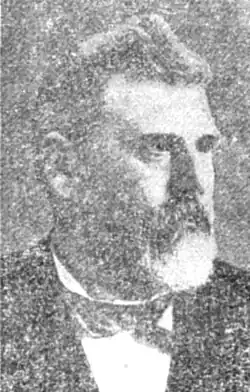
Richard John Seddon
Richard John Seddon, another member of the Council, became world famous, and the story of his connection with Old Westland has been contributed by Mr. D. J. Evans, Hokitika, a life-long friend of the Seddon family, and son of Mr. James Evans, a pioneer, and leader of the Welsh community on the West Coast goldfields; whose name, in recognition of his many valuable exploring expeditions, is perpetuated in Mount Evans (8,613 ft.), the Evans Range, and the Evans Glacier. Of New Zealand’s greatest statesman, who represented Westland for over a quarter of a century, Mr. Evans writes as follows:
“The name of Seddon is written indelibly in the history of Westland, as it is in the annals of New Zealand, and the records of the Empire. Truly an outstanding leader, and one who had the power to sway a people and to bend them to his progressive ideas. From a tireless advocate of ideals and aspirations to one with the power to implement his thoughts and remedies for the ills of the masses, he passed into the highest sphere of his unique record—a humanist. It was on a plea and platform of humanitarian proposals that he passed into Parliament once again in his final appeal to the people, sweeping the polls and holding an impregnable political position, unequalled in the country’s records. It was on that pinnacle of his fame and power, that his life-work ended, and a great worker in the cause of humanity and his race, closed a memorable career, so often still recalled and reflected on for its breadth of vision and soundness of purpose for the common good.
“His birthplace was Eccleston, Lancashire, in June of 1845. He ventured across the seas to the Victorian gold rush, and ultimately found employment in the railway workshops in suburban Melbourne. But only for a brief sojourn, when news of the West Coast goldfield discovery lured him by direct steamer to Hokitika. Then began a most interesting career, as slowly Mr. Seddon began to make his way in the public life of the community. He arrived in 1866, and it is worthy of record that among his earliest friends were John R. Hudson and Walter Ramsay, two of the first arrivals at Hokitika. The diggings called, and Mr. Seddon followed the early days of the Stafford and Waimea fields. It was near the latter (now called Goldsborough) that he set up a storekeeping business at the Big Dam. It was the centre of a minor rush, and flourished for a few years, but has now vanished—for only the memory of the locality remains. Three years after the first arrival of Mr. Seddon, he returned to Melbourne, and brought back the lady of his choice, to whom he had been engaged. Mrs. Seddon came with her husband in 1869, and played a notable part in the life of the statesman to be. The young couple became established at Big Dam, where a country business was conducted. Life on the goldfields in those days called for resource in the individual—more so for the man in business, who with a nomadic population had to watch carefully the movements of customers who ran accounts. Mr. Seddon was able to play his part, and had many a battle with doubtful debtors, but in only one case was he worsted in actual contest. In later years when visiting England as Premier of New Zealand, one of the reception party at the railway station was his vanquisher in open combat, yet hearty was the reunion between the two former contestants. On another occasion, Mr. Seddon had to rescue from the dam a miner returning to his camp loaded with his week’s supplies, who missed his step, and with his burden was in danger of drowning. But instead of thanks abuse was uttered when the swagsman found his stores all pulp. The difficulties of transport in those days to the back country were many, corduroyed tracks alone serving. Where horses could not go, men shouldered the burden, and Mr. Seddon is credited with many a heavy load up the hill to ease the weight on the trusty horse. Such was the atmosphere, at least in part, of those early goldfields days in which Mr. and Mrs. Seddon played a very full part, as pioneers of a new land, where the fortunes of their family were laid.
“Tt was not very long before Mr. Seddon took an interest in local public affairs. Miners invariably took a keen interest in the course of events, and the needs of the new country as the localities were settled, became of paramount importance. More so, because at that stage the district was under far-off Canterbury, where the authorities regarded the West rather as a liability, and at one stage wished to withdraw from it. So there was work to do to organise the district, and in his immediate locality Mr. Seddon became prominent. He was first elected to the Arahura Road Board, which embraced the new goldfield, and was an active member, becoming Chairman. Then in 1874 he was one of the fifteen members elected to the Westland Provincial Council, his colleague for Arahura district being Michael Houlahan, while A. R. Guinness, afterwards Speaker of the House of Representatives, was one of the members for Paroa. Later, when the Kumara gold rush occurred in 1876, Mr. Seddon and family moved to the new centre which offered wider opportunities, and in the same year, when the Provincial Council was abolished, Mr. Seddon was elected a member of the now-existing Westland County Council with which he was associated till 1891, when he resigned on becoming Minister of Public Works in the Ballance Government. In 1878 he was elected Mayor of Kumara, and went into Parliament the following year. Mr. Seddon was a member of several local bodies, embracing school committees, the Westland Education Board, and others. His intimate connection with local affairs was severed in 1891 when he removed to Wellington to fill the larger sphere awaiting him in the public life of the nation. Premier Ballance passed away in 1893, and on the 1st May of that year, Mr. Seddon entered into the office of Premier, which he held until his death in June, 1906.
“His political career was an intensely busy one. Mr. Seddon devoted his full time and all his talents to the duties ahead of him. His colleagues were no less remarkable in their application to responsibilities, and New Zealand saw a rapid change over from the Conservative policy to the Liberal policy. The latter was marked by much reform in social life and industrial activities. The land administration was liberalised generously, and many changes enacted, including the initiation of a labour policy with the principle of arbitration established. His imperial policy was indicated by his response to the Empire position when the South African war ensued, and in other ways he showed the greatest affection to the Homeland with which he sought to create the strongest ties. His national work—in fact Empire service, too—is recorded in the public acts and history of the colony, as New Zealand was in his time, and need not be dilated on here, suffice to say that his passing drew forth a remarkable tribute from the people who revered his life-work and ultimate sacrifice (for he died at the early age of 61) as one of the greatest service to those who enjoyed the fruits of his good work, and which was the foundation for further enlargement as time went on.
“The West Coast remains indebted to him for his vigorous service on local bodies for a period of years, during which he was most active in striving for the opening up of the country. As a Member of Parliament, and ultimately Minister and Premier, he did a great deal. He strove hard for the railway connection between Greymouth and Hokitika, which was delayed by the Conservative party. Another stroke of policy was the seizure of the Midland railway in 1895, resulting in the outlet to Canterbury being assured, and later, in 1905, deciding on the Otira Tunnel work. Further, he commenced the railway to Ross, intending it to pass on into South Westland, and commenced the opening of a vehicle road south; the first major bridge, over the Waitaha River, he was able to open on his last visit to Westland. But already he had arranged for the bridging of the Wataroa River, feeling sure the bridging of the Big Wanganui River intervening could not then be delayed. And so an arterial highway was assured for the southern district.
“In other respects, he promoted prospecting subsidies to assist in opening new fields; he fought for the reduction of the miner’s right fee, and the abolition of the gold duty. He had a ready sympathy always for the back-block miner or settler, and where he could, gave all assistance possible. As a pioneer he knew the value of opening up the country and affording facilities for its resources to be used to the best advantage, and his work in that respect must have been of the highest value. He foresaw the plight of the aged miner left in the evening of his days to the care of charity, and to create a defence against want in old age, and some measure of comfort for declining days, the pension was his special duty and care in acquiring for those who became eligible. Many of his old West Coast comrades of the early times, some of whom had drifted to other parts of New Zealand in search of a living, had occasion to keep in grateful memory that one great act of forethought for those who had not prospered in their active lifetime.
“In his busy years of later life, Mr. Seddon continued to represent Westland, where reposed the fullest confidence in the Member. Year by year along with Mrs. Seddon he made an annual visit to the electorate, and that was always a time for a round of visits to all and sundry. In particular old friends in the days of early struggles were not overlooked, and calls were made at many a wayside home for a grasp of the hand, a chat over a cup of tea, and an interchange of reminiscences of other days. Mrs. Seddon was a welcome visitor to every household, and was often approached by women with suggestions for the common good. In that way the telephone first went to Okarito, to give the southern women folk direct contact in emergency with a doctor. The wives of two settlers living some five miles apart by road, in a sparsely populated district, were granted a short-cut track reducing the distance to half, so that they might more readily help each other in emergency. These are instances of the ever-ready willingness to help the settlers of the out of way places with conditions to improve their lot, and assist to aid the progress of the back country.
“Mr. Seddon played a very full part in his sojourn in New Zealand. First as pioneer miner and storekeeper, he passed on to local advocate and public man. Always a ready speaker, he began many a new movement, winning support where often strong opposition had first to be overcome. He was a painstaking worker, yet considerate for those about him. A fast friend and a loyal supporter where need demanded. The maintenance of the prestige of the country and its advancement were ever in his mind. A rare command of men where action was needed, and in emergency a quick thinker and prompt in action. Indeed, a man of many parts, whose qualities endeared him to all. Loyal himself, he received loyalty from his followers in return, and so held his place in undisturbed challenge to the close of a brilliant, busy career, which has left its mark on the country’s methods of progress. Westland, in the first place, was fortunate in attracting Mr. Seddon to its territory, where so much experience and training fitted him for the higher destiny he was to fulfil. For that reason, and the memory of his great personality, the name of Seddon will stand high always in the minds of Westlanders.”
Reverting again to the opening of the year 1866, Old Westland with “King” Sale at the helm continued at an ever-increasing rate, to draw thousands of men to her now widely known goldfields, and most of these new arrivals at once proceeded to Lake Brunner, to where, as has been noted, a rush had set in towards the end of December, 1865. On their arrival there the field was pronounced a “duffer,” and there was a violent demonstration against Albert Hunt, who had led the rush but had mysteriously disappeared as soon as his alleged claim was reached. This so infuriated the diggers that they wrecked a storekeeper’s premises and divided his goods among themselves, holding that he was in league with Hunt and had promoted the rush for the purpose of selling his goods at exorbitant prices.
Having thus wreaked their vengeance on this unfortunate man they made preparations to return to the Grey, but this they found impossible for, owing to continuous rain, the creeks and rivers became flooded and the lake rose to an unheard of height. They were forced to climb trees and there remain without food until rescued by men in boats, who earned as much as £100 per day in so doing. Two hundred men who were marooned in a flax swamp without food and shelter were even in a worse plight and when at length rescued were in a starving state. Floods were general throughout Westland at this particular time, due to the late melting of the snow on the ranges, and much damage was done at Hokitika. Many drownings were also reported and every day diggers lost their lives in attempting to cross the snow-fed mountain torrents.
At this time the beaches just north of Greymouth were being worked to great advantage; in shallow ground slightly above high water mark as high as 30 ounces to the paddock were obtained, while at Darkie’s Terrace (Seven Mile), two hundred feet above sea level, extra-ordinarily rich wash was located which went from 12 to 20 ounces to the load. Further north Barrytown “broke out” and soon carried a large population; this field, too, proved remarkably rich, and so it went on until the whole of the beaches from West Wanganui in the north to Martin’s Bay in the south were yielding their golden harvests.
The discovery of the metal royal north of the Grey River which, as has been mentioned, is the southern boundary of the Province of Nelson, caused many complications, and one in particular which the diggers greatly resented. This being that a miner’s right issued by the Canterbury Provincial Council was of no use in the Province of Nelson, and vice versa; this meant that miners crossing the Grey had to take out a second one to hold the ground they intended to work and this they strenuously objected to.
While fortunes were being made (and spent) in the Grey district, the southern fields were more than holding their own. Okarito was still booming and the Bruce continued to bring large parcels to Hokitika, over 5,000 ounces in one trip. Here diggers had discarded cradles and were sluicing. The Kanieri field also continued to yield sensationally, while Ross, the Waimea, Stafford, Goldsborough, and the Greenstone all contributed gold in undiminished quantities. As a matter of fact, almost everywhere the finding of the precious metal was reported, and daily new rushes set in.
At this juncture, Albert Hunt, who had so mysteriously disappeared after the Lake Brunner fiasco, again came into the picture. He applied for a prospector’s claim on the Ohinemaka River, Bruce Bay, some nine miles inland. He stated he had discovered a very rich terrace there, where the wash was only from four to eight feet below the surface. On his application being granted by Warden Price at Okarito (from where, during the preceding twelve weeks, 30,000 ounces had been exported), his every movement was watched and when he set out for his newly-granted claim he was followed by hundreds of diggers all anxious to be in early on the new field. In a short time Okarito was almost deserted and soon from four to five thousand men were on what we now know as Hunt’s Beach. Here Warden Keogh set up his Court and a police camp was established, stores and hotels also being opened. Claims were pegged out along the beach, covering an area of over ten miles, and then, as at Lake Brunner, neither Hunt nor his claim could be found. He had made his getaway by sea, aided and abetted by a notoriety known as Black Sam, the owner of a cutter whose home port was Riverton. Meanwhile, men who had left good claims to hasten to Hunt’s El Dorado found on their return that these had been occupied by others, and it is certain that Hunt, could he have been found, would never have led another rush. This, and as well for him, was his last appearance on the West Coast.
By this time Westland was becoming very much more settled, and more modern methods of mining were being adopted. Many extensive water races were in the course of construction, some of them being two or three miles in length. Kanieri led the way in these reforms, for there, as previously stated, many experienced miners were located, who worked their claims to the utmost advantage. Larnach, commenting on this, states: “There were five fire engines at work on Commissioner’s Flat; and water was brought on to the terraces behind the township from a distance of nine miles.” In the Grey district, too, works of a permanent character were going on, and many of the so-called “worked out” claims were reopened, giving good results.
Then came Moonlight Creek, famous for its nuggets, the largest of which weighed 79 ounces, another being 78 ounces. Then two more were found, 47 and 44 ounces respectively, the latter being about the size and shape of a man’s hand and very dark in colour. Shortly after this a rush set in to the Little Grey; this was brought about by statements anent this field which had appeared in the Grey River Argus and soon a considerable number of men were on the ground. At first very poor returns were obtained, and an indignation meeting was held by the diggers, who passed a resolution that the editor of the Argus should pay £100 to the Greymouth Hospital “as a public restitution for the misleading statements published in his paper.” After events, however, justified the editor, for soon 1,000 men were doing well on the field so hastily pronounced a “duffer.” Here nuggets were again in evidence, one parcel of over 300 ounces, bought by the Bank of New South Wales, being composed of nothing else. It was considered that this was the finest sample of gold yet won in Westland.
To the residents of Old Westland, who by this time numbered 25,000, the news of the murder of George Dobson by the infamous Burgess-Levy-Kelly-Sullivan gang of bushrangers, came as a great shock. This unfortunate road engineer, who was a brother of Sir Arthur Dudley Dobson and employed by the Canterbury Provincial Council, was killed on the south bank of the Grey River, near the coal-mining centre which today bears his name, when on a tour of inspection. A concrete monument erected by the Provincial Council marks the spot where this inoffensive Government servant met his untimely end.
This tragedy occurred on May 28th (1866); and about the middle of June four men who had been gold mining on the Wakamarina diggings were also murdered when proceeding to Nelson. Shortly after this the gang in question were arrested on suspicion, and they had not been long in gaol before Sullivan turned Queen’s evidence, and made a statement that they had killed the four miners mentioned, a man named Battle, and George Dobson. From Sullivan’s confession it is certain they mistook Dobson for a gold buyer named Fox. Sullivan was reprieved and later shipped out of the country by the police. Burgess, Levy and Kelly were hanged.
George Dobson was buried in the Karoro cemetery, Greymouth, by Bishop Harper (Christchurch), who even at this early date was conducting a series of services among the diggers, with headquarters at Hokitika. He rests beside Whitcombe, Townsend and Mitchelmore, men of his day and time, who, as has been shown, also passed on when on duty in Westland. It is of interest to state that Fox was drowned in the New River in 1875, and that he, too, rests in the Karoro cemetery, not far from George Dobson, the man who was killed in his stead.
The winter of 1866 was as good as that of the previous year was bad, and vessels were able to work the ports of Hokitika and Greymouth continuously, with the result that food supplies were plentiful and not nearly as dear. It was now generally considered that the goldfields would last for a number of years, and many diggers were being joined by their wives and families. With the advent of spring road construction commenced in earnest, and a tramway was opened to Kanieri. Then came telegraphic communication with Christchurch, and Westland was no longer completely isolated.
In October one of the greatest known rushes set in to the Buller district, where excellent ground had been discovered at the Inangahua, Charleston and Fox’s River. The township of Westport, which had been neglected, became a busy shipping centre, 12,000 men arriving there from Okarito, Hokitika and Greymouth in one month. And so this, the West Coast’s record year, closed with gold being won almost everywhere in prodigious quantities, the grand total for the twelve months being no less than 560,220 ounces, valued at £2,170,589.