Old Westland/Chapter 16
Chapter XVI
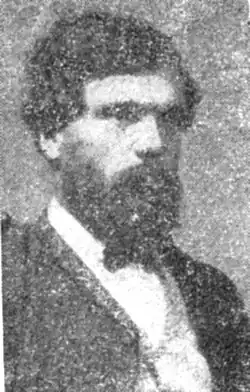
George Samuel Sale
“The year 1865 opened with bright prospects for the West Coast,” states W. J. M. Larnach, C.M.G., Minister for Mines in the Stout Government, who compiled a very comprehensive series of articles pertaining to the mineral resources of the Dominion which appeared in the Handbook of New Zealand Mines, 1887. “The population was increasing rapidly,” he continues, “and men belonging to various nationalities were arriving daily. Others came over from Canterbury, some of whom had taken only seven days to walk from Lyttelton. Two women were reported to have walked the whole distance, and a man with a wooden leg had also braved the dangers of the road.
“Michael Cassius,” he goes on to say, “was appointed Postmaster at Hokitika (January 15th); this was another proof of its growing importance, while the Police shifted their camp, originally at Greymouth, but which had been transferred to the Taramakau, to Hokitika, then fast becoming the business centre of the goldfields.”
Interrupting Larnach’s narrative momentarily it is necessary to record that on January 28th, His Honour the Superintendent of the Province of Nelson, John Perry Robinson, arrived at Greymouth by the steamer Wallaby, on a tour of inspection. On the return trip to Nelson, when off the Buller, a boat was launched for the purpose of conveying the Superintendent to the township of Westport, which, when crossing the bar, capsized, His Honour and three others being drowned.
A few days after this distressing occurrence a sensational incident took place at the Waimea, whereby Walmsley, the Bank of New Zealand gold buyer, was robbed of gold to the value of £920 and £800 in notes. He had placed the gold and notes in a valise, which during his absence mysteriously disappeared. Fortunately Sergeant Broham was in the township when this happened and at once got to work, with the result that the following morning he recovered the valise minus the gold and £130 in notes. He arrested a man on suspicion, but could prove nothing against him and he was discharged. Years later a large quantity of gold was found near where the robbery took place, in a decayed stump, it being generally considered that the thief had hidden it there.
Proceeding again with Larnach’s story, he notes that “The population at the Grey had now been considerably reduced, many diggers having moved to the Waimea. Men were also leaving good claims at the Totara, Saltwater and Greenstone, in order to proceed there, as many parties were obtaining rich finds and the field was said to be a second Gabriel’s Gully.”
Of this rush Preshaw, in “Banking Under Difficulties,” states: “At this time roads were so bad that packers found great difficulty in getting from the beach to the Waimea, a distance of five miles, but reckoned twelve.” Several diggers, whom I presume to have been unfortunate, took to packing, and amongst others was Charles L. Money, known as “Charley the Packer,” and from whose book, “Knocking About in New Zealand,” I have extracted the following: “At this time the road from the beach up to the township, a distance of twelve miles, passing, as it did, the whole way through bush and thick undergrowth, and crossing and recrossing the creek every hundred yards, was in a condition perfectly inconceivable to those who have not been to the great rush on the West Coast diggings. Roots of all sizes, torn and mangled into a sort of macaroni squash, and when large remaining a hindrance to both horse and man, caused the mud ploughed by cattle and pack horses to assume the appearance of a torrent; so bad was it that the whole distance was marked by the bones of dead animals.
“The price given for the package of stores was £3 per hundred pounds for the whole distance, and I suddenly bethought me of the possibility of making myself into a very profitable pack horse.” How he most successfully did so is another story, and a very interesting story, too, but sufficient has been written to show the transport difficulties of Old Westland in those days.
By this time gold was being found almost everywhere and each and every day there was a rush in one direction or the other. As a matter of fact wherever new ground was tried it invariably proved payable, and it is utterly impossible to put on record every rush that took place; only the most important can be dealt with, and pride of place must be given at this time to the general exodus which took place from all parts of the goldfields to Jones’ Creek, which we to-day know as Ross. This town through the years has been the centre of various diggings, which were for the most part very rich. Of this particular field Larnach states: “In 1865 ground was worked in the neighbourhood of the Totara, and in the same year the rush to Donoghue’s took place, followed by that to Jones’ Creek (the present town of Ross). The prospects at Donoghue’s Creek were very rich and it is said that the claim of the prospector (Michael Donoghue) yielded as much as £60 a man a week.” Official records show that over five tons of gold was won at Jones’ Creek, and that the Ross Flat yielded to Cassius and party 22,000 ounces in two years.
Meanwhile Revell had again crossed the Alps to Christchurch, for the purpose of reporting to the Provincial Council that in his opinion a stupendous rush to Old Westland was imminent. As the result of this report, the Council in their wisdom, on March 5th (1865), proclaimed what we now know as Westland, from the Grey River to the Southern boundary of the Canterbury Province, a goldfield, with William Horton Revell as Warden.
Following on this proclamation and in anticipation of maintaining law and order, the Provincial Council dispatched Police Commissioner Shearman and a party of mounted constables to Hokitika, Sergeant Broham being appointed Inspector of the Westland District.
On March 19th Messrs. Rolleston (Provincial Secretary), Seed (Collector of Customs), and Warden Revell arrived by the S.S. Nelson, the former at once proceeding to arrange all matters of administration. Two days later, March 21st, Revell opened his office (if a tent can be thus dignified) in Revell Street, and issued Westland’s first miner’s right to his brother John. Hokitika, which was already developing into what might be described as “a man-sized town,” was declared a port of entry early in April, and the 15th of the same month was marked by the arrival of Commissioner George Samuel Sale, better known as “King” Sale, who immediately took complete charge of the goldfield on behalf of the Canterbury Provincial Government.
In April, too, the Collector of Customs at Hokitika (Mr. W. Seed), at the request of the General Government, submitted a report on the West Coast gold and coal fields, the following extracts being taken therefrom: “Gold in payable quantities has now been found on all rivers from the Buller to the Totara. Fair prospects have also been found down the Coast south to Mount Cook, so that as far as can be ascertained the northern half of the West Coast of the South Island appears to be auriferous. . . . . I spoke to a number of men on the Waimea who expressed it as their opinion that the goldfields would last for many years. At the end of March I estimate there must have been 7,000 people on the Coast. Of these about 3,000 were at the Waimea, 2,000 prospecting and digging in other places, and 2,000 congregated in the township at Port Hokitika. The quantity of gold purchased in a fortnight at Hokitika was about 5,000 ounces.” Mr. Seed also visited the Brunner mine, the first, by the way, to be opened up in New Zealand, which was being worked by Matthew Batty and party, and notes that a tunnel had been driven for a distance of 110 feet on the north side of the Grey River, and further that 40 tons per week were being sent down the river to Greymouth.
The report also made it plain that the writer was strongly in favour of Canterbury West being proclaimed a separate Province, pointing out that its inhabitants had come mostly from Nelson, the North Island and Otago, and that they had nothing in common with Canterbury. This statement is noteworthy, as it was the first shot fired in the agitation which followed for the severance of Westland from Canterbury.
About this time the Canterbury Provincial Government, alert to the necessity of constructing a road to the goldfields, had surveys made of all practical routes, and after mature consideration decided to construct a highway over Porter’s Pass, on to the Cass, and then along the Waimakariri to its junction with the Bealey: over Arthur’s Pass to the Otira, down the Taramakau to the Wainihinihi, through the bush to Arahura, and then along the beach to Hokitika, the total distance from Christchurch being 156 miles. Construction was pushed on with the greatest expedition, and in 15 months the road was open for coach traffic, though thousands of diggers passed over it long before it was completed.
The powers that were in Christchurch, now fully convinced of the possibilities of Westland as a gold (and consequently a revenue) producing district, did their utmost to facilitate its development; and to adequately protect the vast amount of the precious metal being won, set up a gold escort on similar lines to those then in vogue on the Victorian fields. A bullet-proof wagon was built, first-class horses purchased, and a number of mounted constables enrolled, the idea being to defeat any attempt that might be made by bushrangers to steal the treasure when en route to Christchurch. Under Inspector James the escort duly reached Hokitika, only to find that all the gold was exported by sea, a wag entrusting them with a single pennyweight to guard during their return to Christchurch.
The next outstanding incident in the story of Old Westland was the coming of what was known as the “Australian Invasion.” Anent this rush “Waratah,” in “Tales of the Golden West,” says: “Our neighbours in Victoria tried to check it, and said it was only a steamboat rush, which would turn out disastrous to the thousands of Victorian miners who were leaving a certainty on their own goldfields for an uncertainty in New Zealand, but all to no purpose. Great seagoing steamships, ‘leviathans of the deep’ in those days, with a fleet of smaller steamers able to jump over the bars or perish in the attempt, with all sorts and conditions of sailing vessels, chartered or owned by West Coast merchants, were busily engaged in the conveyance of goods and passengers to the new El Dorado, and Hokitika was honoured as the central port where one and all were dumped on the shore from the big steamships tendered by local tugs, and drafted north and south and inland, as their friends or fancies led them. It was no uncommon thing at the first of the rush for the bar tenderers, such as the Bruce and the Yarra, to land 500 or 600 passengers a day at a pound or so a head. It was indeed a busy time for shipping companies.” As showing the magnitude of this particular rush the correspondent of the Nelson Examiner wrote on April 6th: “The Hokitika River has a most mercantile appearance. There are no less than 22 vessels inside the bar, while three or four are in the offing.”
To provide accommodation for this influx, canvas stores and hotels were going up in every direction, cut timber being almost unprocurable. This acute shortage, however, was relieved somewhat when Messrs. Nees and McBeth erected a sawmill which marked the beginning of the timber industry in Westland.
So important a centre had Hokitika now become that it was meet that on May 3rd, 1865, there should appear Old Westland’s first newspaper, the West Coast Times. “But before this time Hokitika was a considerable town,” states R. C. Reid in “Rambles on the Golden Coast.” “Along a sandbank on the north side of the river, running parallel with the sea, a long straggling street had sprung up as if by magic. . . . . This was called Revell Street. On each side of it were temporary erections, some of timber, some of canvas. Nearly every other one of these canvas or wooden tenements was dignified with the name of hotel. The usual features of a big rush were visible. Drinking, fighting, gambling, all the means resorted to by those who got their money easily in the first flush of a new goldfield, were conspicuous by their presence. Many hotel keepers at this time must have literally coined money. . . . . Many stories have been told of the extravagance of diggers on the early goldfields of Victoria. We have heard of ‘Champagne Charlies’ by the score, and have seen some of them. But we question if there were many better opportunities in goldfields’ history of making a small ‘pile’ quickly than was afforded in the ‘shilling nobbler’ days of Hokitika. General pool, at a pound each, with 5/- a life, was a nightly occurrence amongst dozens of lovers of the green cloth. Payment of three shillings for the use of a blanket on the floor, with half a dozen fellows gambling at your head or feet the whole night through, and disturbing your slumbers by going ‘five pounds better’ every five minutes, was by no means an uncommon incident. A large theatre was built and it was opened every night to packed houses at high prices. . . . . There was a large police force stationed at the camp where there was gathered a mass of humanity.
“Here resided ‘King’ Sale, Warden Revell and other Canterbury Provincial Government officials, as well as prisoners waiting trial. There was no jail then, only a lock-up, and prisoners committed had to be escorted over the range to Christchurch for trial. The place indeed outgrew itself. The authorities could not grapple with the wonderful flow of population.
“Let me here recall one of the pictures to be met with on the beach in those days. A stranger visiting Hokitika for the first time, and not previously apprised of the unenviable notoriety which the port had gained for itself, would be struck with astonishment at the multitude of wrecks and remains of wrecks with which the beach was covered. From the entrance of the river to where the Montezuma had been cast high and dry, the picture was one that could not be equalled in the colony, and perhaps not in the world. In one spot the last remains of the Oak might be observed; further on, a confused mass of ruin, a heap of splintered planks and ribs marked the place where the Sir Francis Drake and the Rosella had finally succumbed to the force of the waves. Yonder could be seen the masts of the Titania, and nearer home all that was left of the New Zealand supplied us with a painful reminder of the dangers of Hokitika.”
Yet nothing daunted by these dangers the great Australian Invasion continued, and as most of the new arrivals were experienced diggers, they soon swarmed all over the Coast, and new ground, for the most part exceedingly rich, was opened up daily. This greatly increased the returns, it being calculated that the yield of gold for the first five months of this year was over 52,000 ounces. Chapter XVII
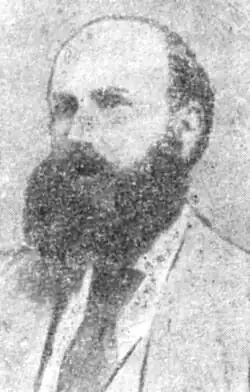
J. A. Bonar
Of this phase Mr. Leo Northcroft, one time editor of the West Coast Times, and father of Colonel the Honourable Mr. Justice Northcroft, D.S.O., V.D., writer of the introduction to this work, tells us: “Field after field was opened with amazing rapidity. From Martin’s Bay in the south to West Wanganui in the north could be seen the tents and fires of the gold diggers, Captains of vessels sailing along the coast would notice a continual line of fires, each of which indicated parties of miners. Prospectors pushed up the rivers and streams, poured over terraces and hills, almost invariably meeting with a rich reward.
“Hokitika was the scene of the first great rush; and for a time numbers predominated there, Kanieri, Eight Mile, Big Paddock, Blue Spur, Waimea and numberless flats and gullies