Old Westland/Chapter 15
Chapter XV
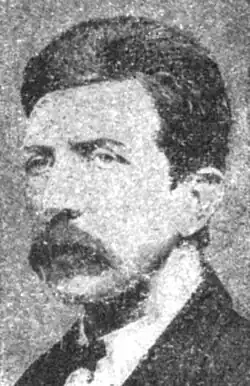
Michael Cassius
“As soon as Walmsley rode up and said he was going to the Greenstone, I saddled Nobby, took my saddle-bags into the bedroom, unlocked the safe, took out what notes and coins I wanted, strapped up the saddlebags, put them on the pony, and away. It so happened that I was particularly busy on this trip, both on Saturday and Sunday. As usual I took up quarters at Tracy’s. On Monday we rode to Hohuna and found such a fresh in the river that we could not proceed on our journey. That night we stayed at Everest’s. About an hour after I went to bed, I put my hand in my breeches’ pocket (for let it be known I always slept with my breeches on and ofttimes in my boots), and missed the key of my safe. I felt first in one pocket, then in another. I lay for some time trying to remember when I had it last. For the life of me I could not. I remembered going to the safe and locking it up but nothing more. I got up, struck a light, searched the saddle-bags, but no key could I find. Next morning I gave a man £1 to go to the Greenstone to see if I had dropped it at Tracy’s. He returned in the evening without it. I was in a nice fix; my safe at Taramakau, myself a prisoner at the Hohuna, where I was likely to be for days, and my key lost. In this state of suspense I remained until Wednesday evening, when, by good luck, a Maori, in a canoe, called in on his way to Taramakau. The river was anything but safe. However, I was in such a state of mind that I would not lose the chance of getting down, so left Nobby to be sent after me. Off we went. I did not relish the trip, but I sat down in the bottom of the canoe and remained perfectly steady, and trusted entirely to my Maori friend. I did not even ask to get out at the ‘Devil’s Elbow’ and in less than half an hour I was safely landed at the Taramakau township. I paid the Maori his fare—£1—and marched up to the store. Here I saw McGregor, and after a while said, ‘By the way, did I leave a key here?’ ‘Yes,’ he replied, ‘Dan found it on the table immediately after you left on Friday; he did not know whose it was and hung it up inside’ (pointing to the bedroom). I went in, and sure enough, there was the missing key. I opened the safe, which, as I said before, was a small one, in which I had left several hundred ounces of gold, and £2,000 in notes. The treasure I had packed away at the back and the few books I had in use, piled up in front. On opening it everything appeared to be as I had left it, so I locked up, determining to balance up after tea. This I attempted to do, but a lot of drunken men coming in I had to give up.
“That evening I went to Broham’s tent, where I slept; of course I told him about losing the key and finding it again. Some time in the night I woke up with severe pains in my stomach; I was regularly doubled up, groaning and perspiring with pain. Broham knocked up Cooper and sent him to McGregor’s for some brandy and gave me nearly half a pannikin full, which I drank. This had a good effect and I slept until morning. I got up and tried to get to the store, being anxious to balance my cash, but, finding myself too weak, returned to the tent, where I remained the whole day. Next morning, feeling better, I went to the store, wrote up the books, counted the cash, and balanced. I was truly delighted, and went home to Broham in great glee.
“A day or two after this the Nelson arrived at the Grey. I took what gold I had there and weighed it at Horsington’s. I could not do this at the Taramakau, my scales only weighing a few ounces at a time; my large set I kept at the Greenstone. Horsington assisted me to weigh off some hundreds of ounces, but when I totted up the total, I found I was some 35 ozs. short. I said to him, ‘This can never be, we must weigh it over again.’ We did so, but with the same result. I did not know what to do. However, before sending it away, I determined to ride back to the Taramakau and have a look in the safe, thinking I might have left a lot in it—but no such luck. It then struck me the gold must have been taken out of the safe. I told Broham the whole circumstances of the case, and, moreover, whom I suspected. He went to the store and searched but without discovering anything. The gold was gone without a doubt.
“I had no alternative but to report the loss to my inspector in Christchurch, which I did by the first opportunity. My anxiety was now to know how the report of my loss would be received, and I must say I fully expected to be called upon to make it good. I did not hear from the inspector for some considerable time. (In those days letters had to go via Nelson.) Meanwhile I was continually being asked by one or another had I heard from the inspector. At last a letter arrived to the effect that although leaving the key of the safe behind was careless, still, taking everything into consideration, the difficulties I had to contend with, etc., it was decided that the loss should not fall on me. On taking the letter to Jimmie Price, he said it would not have affected me in any case. I replied, ‘Only this much, that I would have been some £140 out of pocket.’ ‘Nothing of the kind,’ he said, ‘had you been called upon to make good the amount, it would have been paid by the principal business people here (Hokitika) and the Grey unknown to you.’ I was thunder-struck, and at the same time gratified, to think I had such kind friends who would have assisted me out of my difficulty.
“To account for my cash balancing at Taramakau, as I said before, I had no gold scales there large enough to weigh off, so took the weight for granted, putting the value down at so much, say 500 ozs. at £4—£2,000, which balanced my cash, but on weighing off found I had only 465 ozs., which at £4 would be £1,860, or £140 short. A letter was written and signed by nearly all the business people on the Coast, and forwarded to my inspector, calling his attention to the hardships I had to undergo, the liability to loss through having no office, etc. When at the Greenstone I always slept with my clothes on, even to my boots and hat. I had my own blankets, which were kept (or supposed to be) in a bushel bag to prevent their being ‘fly blown,’ but which had not the desired effect, for when I had occasion to use them | found them ‘crawling.’ I was, of course, disgusted, but what was I to do? I had to grin and bear it. My bedstead, too, was anything but a comfortable one; four posts stuck in the ground, three saplings on the top, the middle one a shade higher than the other two. The first time Broham had occasion to sleep at the Greenstone he went to Tracy’s shanty. Tracy said, “You can have Mr. Preshaw’s bed, you will find it very comfortable.” Broham and I have had many a laugh since about my bed at the Greenstone. Another great hardship we had to undergo was the total absence of fresh meat. Wild pigeons and other birds were very plentiful, and were shot by the dozen, and boiled by the bucketful, adding fern tops called pick-a-pick, which, when boiled, made a splendid vegetable and substitute for cabbage, and to which the population were indebted for the absence of scurvy owing to their constrained daily diet of salt meat.
“Apart from my own affair, the one and only theft committed up to the time of the great rush, was by a Maori named Jacob who was in the employ of John Hudson. He entered a digger’s tent at the rear of Hudson’s store, at Hokitika, and stole a small quantity of gold. He was, however, caught with the gold upon him, at once tried by a jury, and was sentenced to be tied up to a stump all night and hanged next morning. He was, as was thought, securely fastened to the stump, but lo! next morning Jacob was nowhere to be seen; how he freed himself never transpired. After a lapse of six weeks Jacob returned looking penitent, and seeking employment.”
As the country to the north and south of Hokitika continued to attract an ever increasing number of men, many of whom quickly got “on the gold,” Messrs. N. Edwards and Company decided to despatch the steamer Nelson thereto. Of this most important and historical event, which marks the beginning of what was to be the wonder city of the southern hemisphere, Preshaw, who, together with Broham, was actually present, states: “On December 20th, 1864, Captain Leech of the S.S. Nelson visited Hokitika and satisfied himself that he could take his steamer into the river. The owners (N. Edwards and Company) had chartered her on this her first trip to Messrs. Ferguson and Buchanan. Up to this time these gentlemen had been engaged as packers, but they now intended to start business as storekeepers. The river was full of snags, many of which could not be seen at high water, and were therefore dangerous for vessels entering without a pilot. A boatman named James Teer acted on this occasion. The sea was as smooth as glass; so smooth that he crossed the bar alone in his boat and piloted the vessel in in safety. She was full of cargo and crowded with passengers. Broham and I were on the south spit, and assisted to make her fast. The passengers were taken to the north side of the river—where the town of Hokitika afterwards stood—by boat. The place at that time was one mass of driftwood, so thick that it was impossible to get a horse or waggon through without clearing it away. The cargo was discharged inside the river on the beach, and on a point close to the sea. A storm coming on a few days later and in consequence a fresh in the river, a lot of goods were carried out to sea before they could be removed. Some of the storekeepers sustained severe loss. Waite was one of the number and J. R. Fraser another. Ferguson and Buchanan had erected a store on the south beach, but afraid of it being washed away, removed it over to the north side. On the passengers being landed there was quite a rush for allotments. Amongst the first marked out were those for Cassius and Comiskey, the Bank of New Zealand and Ferguson and Buchanan. I did not mark out one but got the mail bag and rode off to the Grey. I reached there at ten o’clock at night, and rather astonished Mrs. Waite by putting in an appearance at that hour with the mail.
“When I returned the next day I scarcely knew the place, it had so changed in appearance, even in that short time; buildings were going up in all directions. The inspector of the Bank of New Zealand decided to put up a building, which he did as soon as timber was procurable. I agitated for an office, and was informed one would be provided if the rush turned out a good one. As soon as the Bank of New Zealand was finished, two or three other hands were sent down, and an agency opened. I was then working at a great disadvantage, inasmuch as Walmsley was still my opponent in the field, and his bank having an office in Hokitika had by far the best chance of securing the business accounts, and of this they did not fail to take advantage. Notwithstanding such odds against me, I managed to hold my own, especially in the gold purchases.
“Revell was busy throughout the day marking off sites of 40 feet frontage; he also laid out two streets and measured off the different allotments, reserving one chain frontage to the river, and 40 feet wide for the street. Several disputes have already arisen. The sea still being smooth, Captain Whitwell, master of the S.S. Wallaby, crossed the bar in the ship’s boat and took soundings. He afterwards brought the Wallaby into the lagoon and discharged cargo. To top off the day Cassius opened his store. On December 21st, Broham pitched his tent on the Camp Reserve which had been marked out by Revell and here I was generally to be found at meal times. The next day the cutter Nugget, of Invercargill, and the cutter Petrel arrived from Jackson’s Bay, with thirty-nine men who had been prospecting in that locality with indifferent success, Barrington and party being amongst the number.”
At this time gold was being discovered almost everywhere and on the 23rd—two days before Christmas—a rush set in to Saltwater Creek, which, as has been stated, is five miles south of where Greymouth to-day stands. Here over one hundred men settled down to work with good results—this field being very rich. Despite this and the fact that the Greenstone was still producing fabulous quantities of the metal royal, the idea that the wealth of Westland, for the most part, lay to the south became general, with the result that there was a definite drift of the population in that direction. So pronounced was this, indeed, that for a time the Grey District was almost deserted, and storekeepers who had established themselves there quickly made for the rapidly rising town of Hokitika.
“Christmas Day of this year (1864) fell on a Sunday,” Preshaw tells us, “and I was busy all day buying gold. A short time after I got to bed (my saddle-bags under my head and my revolver at my side),” he continues, “three drunken men rushed in; one came close to me, took my hat from over my eyes, and said to the others, ‘By gad it’s the b——— banker; suppose we give him a crack on the head with a stick?” and off they went into the bar. I have often heard it said that when people are drowning the principal events of their lives pass through their brain. So it was with me in this instance. I thought of all sorts of things and at the same time made up my mind what to do. I turned my face to the door and took out my revolver which I always kept in good order, and waited. I knew perfectly well should any scrimmage take place, and the report of a pistol be heard, there were so many maniacs about, that without enquiring why or wherefore, but ‘eager for the fray,’ they would rush in and I would stand a very poor show. Still I had to protect myself and the bank property as far as I could, and this I was determined to do. They had several drinks in the bar, and away they went. I did not see any more of them. My idea was, had they shown up again, to challenge the first man at the doorway; had he attempted to advance—fire. I knew I could depend on my revolver and unless the mob tore down the tent I was good for six of them. All I can say is that I was in a very awkward predicament, and was not at all sorry they did not turn up again. I have often thought since what risks Walmsley and I ran, both of our lives and the bank property. Fortunately for us Burgess and party were not on the Coast. Had they been we would have stood but a poor show.”
The last entry in Preshaw’s diary for the year 1864 is as follows: “December 28th. A dispute arose this morning between Messrs. Cassius and Price about one of the business sites. Revell was called on, and decided in favour of Cassius. Price persisted in putting in his pegs and digging post-holes. Revell interfering, Price made a blow at him with a shovel, striking him across the instep of the left foot. I was present when the assault took place. The allotment in dispute was marked out by Cassius, and adjoined the one occupied by Messrs. Hudson and Price, the first storekeepers at Hokitika. It seemed hard that these men should not be allowed an extra allotment or two, having been the pioneers of the place; still not having applied for an increased area, Cassius was fairly entitled to it, having marked out the ground. A little later Price apologised to Revell, and was let off with a severe lecture.”
Reviewing Preshaw’s first Christmas in Old Westland it was not a very happy one. The fact that stern necessity compelled him to contemplate (and on Christmas night, too), the possibility of having to defend his life—and his bank’s property—and in so doing kill, or be killed, was far from being in accord with the principle of peace on earth and towards mankind good will. Truly this Yuletide was very hectic and the amount of liquor consumed was enormous.
John Hudson often spoke of the “Christmas Party,” as the diggers and storekeepers who arrived at Hokitika by the Nelson and Wallaby were called, and of the seasonable celebrations they indulged in—mostly at the expense of some prior arrival, who now was “on the gold.” He mentioned, too, the fact that at this time two Maoris who had been digging at the Hohonu, hearing of the rush to the Hokitika River immediately jumped into a canoe, and coming down the Taramakau River actually crossed the bar and paddled sixteen miles south to the Hokitika River, which they in turn entered and proceeded to the rush. “They were gold-crazed,” said Hudson, “and knew not what they did. Fancy ‘working’ two treacherous bars in one day. Man alive, the odds were a million to one against working one, let alone two!” He spoke, too, of Big Revell and how he made Price his partner “feel worse than a wet week,” when upon receiving his apology he admonished him for striking him with a shovel—and so on, and so on. Some day the story of “Honest John” Hudson (and of other pioneers, too) will (and should) be written and then, and only then will posterity realise the debt of gratitude they owe these sterling men.
Concluding this section of Old Westland it is necessary to state that by the end of 1864 about 2,500 ounces of gold had been shipped to Nelson. Of this 1,200 ounces had been obtained by four men, who, working quietly at Watson’s Creek, two miles south of the Grey, had won this amount in less than four months. At a later date they cleaned up a further 600 ounces, and then returned to Ireland from whence they came. On these sons of Erin fickle fortune had smiled. As far as could be ascertained the population on the Westland (or Canterbury) goldfields was 830 at the end of 1864.