Moral Reflections, Sentences and Maxims
MORAL REFLECTIONS,
SENTENCES AND MAXIMS
OF
FRANCIS,
DUC DE LA ROCHEFOUCAULD.
NEWLY TRANSLATED FROM THE FRENCH.
WITH AN INTRODUCTION AND NOTES.
TO WHICH ARE ADDED
MORAL SENTENCES AND MAXIMS OF STANISLAUS,
KING OF POLAND.
"As Rochefoucauld his maxims draw From nature, I believe them true; They argue no corrupted mind In him; the fault is in mankind." Dr.Swift.
"Among the books in ancient and modern themes which record the conclusion of observing men on the moral qualities of their fellows, a high place should be reserved for the Maxims of Rochefoucauld."
H. HALLAM.

NEW YORK:
WILLIAM GOWANS


1851.
Contents
- Preface
- Life of Francis, Duke of Rochefoucauld
- 1-99 (pg. 1-34)
- 100-199 (pg. 35-61)
- 200-299 (pg. 62-93)
- 300-399 (pg. 94-113)
- 400-499 (pg. 114-135)
- 500-541 (pg. 136-148)
- The Life of Stanislaus (pg. 149-152)
- 1-144 (pg. 153-176)
- 1-17 (pg.177-182)
- Moral Courage In Every-Day Life (pg.183-186)
- Index (pg.187-189)
- Catalogue (pg.1-16)
- Published By William Gowans (pg.1-4)
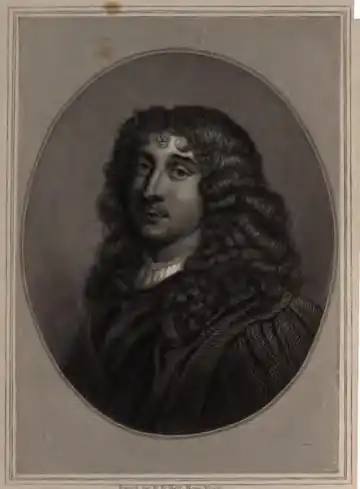
(Improve this image)
Entered, according to Act of Congress, in the year 1851, by
WILLIAM GOWANS,
In the Clerk's Office of the District Court of the United States for the Southern District of New York.
LIFE
OF
FRANCIS, DUKE OF ROCHEFOUCAULD.


Francis, Duke of Rochefoucauld, Prince of Marsillac, a distinguished wit and nobleman of the reign of Louis XIV., was born in 1613. He distinguished himself as the most brilliant nobleman about the court, and by his share in the good graces of the celebrated Duchess of Longueville, was involved in the civil wars of the Fronde. He signalized his courage at the battle of St, Antoine, in Paris, and received a shot which for some time deprived him of his sight. At a more advanced period, his house was the resort of the best company at Paris, including Boileau, Racine, and the Mesdames Sevigné and La Fayette. By the former of these ladies, he is spoken of as holding the first rank in "courage, merit, tenderness, and good sense." The letters of Madame de Maintenon, also, speak of him with high, but inconsistent praise. Huet describes him as possessing a nervous temperament, which would not allow him to accept a seat in the French Academy, owing to his want of courage to make a public speech. The Duke de Rochefoucauld died with philosophic tranquillity, at Paris, in 1680, in his sixty-eighth year. This nobleman wrote "Mémoires de la Règne d'Anne d'Autriche," 2 vols. 12mo., 1713, an energetic and faithful representation of that fretful predicament as Macihiavelli with regard to political morality. J. J. Rousseau, who was certainly not free from selfishness, has abused La Rochefoucauld's maxims, and yet, in his "Emile," he observes that "selfishness is the mainspring of all our actions;" and that "authors, while they are ever talking of truth, which they care little about, think chiefly of their own interest, of which they do not talk." La Fontaine, in his fable, (b. i. 11,) "L' Homme et son Image," has made an ingenious defence of La Rochefoucauld's book. The "Maxims" receive a portion of their peculiar point from the very courtly scene of contemplation, and from the delicacy and finesse with which the veil is penetrated that is spread over the surface of refined society. It is well known that Swift was a decided admirer of Rochefoucauld, and his celebrated poem on his own death commences with an avowal of the fact.[1] The misanthropy of that great man renders his suffrage any thing but popular; but possibly, as in the doctrine of the invariable predominance of the stronger motive, that of self-love simply bespeaks a more strict attention to early cultivation and discipline, to render it not only compatible with virtue, but strictly and philosophically connected with the highest, the noblest, and, in common language, the most disinterested fulfillment of all our duties.
La Rochefoucauld's "Maximes" have gone through many editions. The " Œuvres de la Rochefoucauld," 1818, contain, besides his already published works, several inedited letters and a biographical notice.
INTRODUCTION.
The family of La Rochefoucauld is one of the most ancient and illustrious in France. Its founder, according to Andrew Du Chesne, was one Foucauld, or Fulk, a cadet, as is supposed, of the house of Lusignan, or Lezignem, and connected with the ancient Dukes of Guienne, who appears, about the period A.D. 1000, as Seigneur, or Lord, of the Town of La Roche in the Angoumois. He is described in contemporary charters as Vir nobilissimus Fulcaldus, and his renown seems to have been sufficiently extensive to confer his name on La Roche, which has ever since borne, and bestowed on his descendants, the distinctive appellation of La Roche Foucauld. Guy, the eighth Seigneur de la Roche Foucauld, is mentioned by Froissart as having performed, in the year 1380, a celebrated tilt in the lists at Bordeaux, whither he came, attended by 200 of his kinsmen and connections.
Francis, the sixteenth seigneur, had the honor of being sponsor to, and bestowing his name on, King Francis I., and was shortly afterwards advanced to the dignity of Count de la Rochefoucauld. The widow of his son and successor, in the year 1539, entertained, at the family seat of Vertueil, the Emperor Charles V., and some of the Royal Family of France. The Emperor is reported by a contemporary historian to have said on his departure, that he had never entered a house which possessed such an air of virtue, courtesy, and nobility as that. Francis, the fifth count, was created the Duke de la Rochefoucauld in 1622, and was father to Francis, the second duke, the celebrated author of the Maxims, who was born on the 15th December, 1613. The principal events of his life are matter of history rather than biography, as he was a leading actor in the numerous and complicated state intrigues which took place in France after the death of Louis XIII., and during the minority of his successor. It is extremely difficult at this period, and would hardly be worth while, to attempt to trace the course of these cabals and the wars to which they gave rise. Beyond the gratification of an absurd ambition, it is almost impossible to discover any object that the contending parties had in view; and the motives of individuals are still more difficult to penetrate, from the conflicting accounts given by the various actors themselves, of the transactions in which they were engaged. The impression left on the mind by a perusal of the histories of the times, is a painful sensation of the corruption of the government, the sad want of public, or even private, principle on the part of the higher classes, and the frivolity and folly generally prevalent in the society of the period. La Rochefoucauld was early engaged on the side of the Fronde, the party opposed to Mazarin, which was also espoused by the Duchesse de Longueville, (whose lover La Rochefoucauld then was,) by the Prince de Conti, and afterwards by the celebrated Condé. To these princes La Rochefoucauld appears to have remained faithful during all the subsequent mutations of the party. He took part in most of the military proceedings that resulted from the troubles of the times; and though he does not appear much in the character of a general, is universally allowed to have displayed the greatest bravery on all occasions. At the battle of St. Antoine, near Paris, he received a severe wound in the head, which for a time deprived him of sight, and was the occasion of terminating his military career. Before he had recovered, the Fronde had fallen before the gold of Mazarin and the arms of Turenne. Condé was driven from France; and as the proclamation of the King's majority appeared likely to put an end to the miserable dissensions which had so long existed, La Rochefoucauld, with the consent of Condé, reconciled himself to the court, and returned to Paris, where he continued to live in the midst of the literary and fashionable society of the time until his death in 1680. His most attached friend was Madame de Lafayette, authoress of the Princesse de Cleves; but he was also intimately acquainted with Madame de Sevigné, (in whose letters repeated mention is made of him,) La Fontaine, Racine, Boileau, and most of the celebrated men of his age. La Rochefoucauld appears to have been a man of most amiable character and of high personal probity; for, amid the various party feelings of the writers of that period, scarcely any thing can be discovered in the accounts they have left which would throw discredit on him. He possessed brilliant powers of mind, but without any regular education; and an easiness of temper, combined, as it generally is, with fickleness and indecision, which is supposed to have led him to engage so constantly in the various intrigues of the time. He has left us an entertaining sketch of himself, which is subjoined, together with another character of him by Cardinal de Retz, his great enemy, and also a character of De Retz, by La Rochefoucauld.
In the leisure which succeeded to the stir of his early life. La Rochefoucauld composed the "Memoirs of his own Times," and the work on which his fame is founded, "Maxims and Moral Reflections." Voltaire's remark on the two is well known, that the "Memoirs are read, and the Maxims are known by heart." It may be doubted, however, whether the "Memoirs" are often read at the present day, notwithstanding the extravagant compliment of Bayle, that "there are few people so bigoted to antiquity as not to prefer the 'Memoirs' of La Rochefoucauld to the 'Commentaries of Cœsar.'" In fact, their interest appears to have passed away with that of the times of which they treat.
The book of "Maxims" no doubt results from the observation of La Rochefoucauld's earlier years, combined with the reflection of his later life. He appears to have taken considerable pains with their composition, submitting them frequently for the approval of his numerous circle of friends, and altering some of them, according to Segrais, nearly thirty times. They were first published in 1665, with a preface by Segrais, which was omitted in the subsequent editions; several of which appeared, with various corrections, during the author's life.[2]
Scarcely any work, as Mr. Hallam observes, has been more highly extolled or more severely censured. Dr. Johnson has pronounced it almost the only book written by a man of fashion, of which professed authors had reason to be jealous. Rousseau calls it, (Conf. b. 3,) "livre triste et désolant," though he goes on to make a naïve admission of its truth, "principalement dans la jeunesse où l'on n'aime pas à voir l'homme comme il est." Voltaire's account of it, in his "Age of Louis XIV.," is perhaps the most generally acquiesced in:—"One of the works which most contributed to form the taste of the nation, and to give it a spirit of justness and precision, was the collection of the 'Maxims' of Francis, Duc de la Rochefoucauld. Though there is scarcely more than one truth running through the book—that 'self-love is the motive of every thing;' yet this thought is presented under so many various aspects, that it is almost always striking; it is not so much a book as materials for ornamenting a book. This little collection was read with avidity; it taught people to think and to comprise their thoughts in a lively, precise, and delicate turn of expression. This was a merit which, before him, no one in Europe had attained, since the revival of letters."[3]
It would be difficult to give higher praise than this to the style of the "Maxims," to which, no doubt, the work owes a great part of its popularity. If not precisely the inventor, La Rochefoucauld is, at all events, the model of this mode of writing, in which success indeed is rare, but when attained, it has many charms for the reader.[4] "The writing in aphorisms," as Bacon observes, (Adv. of Learn.,) "hath may excellent virtues whereto the writing in method doth not approach. For first, it trieth the writer whether he be superficial or solid; for aphorisms, except they be ridiculous, cannot be made but of the pith and heart of sciences; for discourse of illustration is cut off; recitals of example are cut off; discourse of connection and order is cut off; descriptions of practice are cut off: so there remaineth nothing to fill the aphorisms but some good quantity of observation: and therefore no man can suffice, nor in reason will attempt, to write aphorisms, but he that is sound and grounded. But in method
Tantum series juncturaque pollet,
Tantum de medio sumptis accedit honoris,
as a man shall make a great show of an art, which, if it were disjointed, would come to little. Secondly, methods are more fit to win consent or belief, but less fit to point to action; for they carry a kind of demonstration in orb or circle, one part illuminating another, and therefore satisfy; but particulars being dispersed, do best agree with dispersed directions. And lastly, aphorisms representing a knowledge broken, do invite men to inquire further; whereas methods, carrying the show of a total, do secure men, as if they were at furthest."
A principal cause of the attractiveness of this mode of writing lies in the necessarily epigrammatic turn of the sentences, which constantly arrests the attention; and while it stimulates the reader's reflection, renders the point of the observation more palpable and more easy to be retained in the memory. It is, besides, no mean advantage to be spared the exertion of wading through and deciding upon the successive stages, each perhaps admitting of discussion, of a tedious and involved argument, and to be presented at once with ready-made conclusions. Notwithstanding Bacon's second remark on aphorisms, it seems questionable whether the mind is not more disposed to assent to a proposition when clearly and boldly announced on the ipse dixit of a writer, than when arrived at as the termination of a chain of reasoning. Where so much proof is required, men are apt to think much doubt exists; and a simple enunciation of a truth is, on this account perhaps, the more imposing from our not being admitted, as it were, behind the scenes, and allowed to inspect the machinery which has produced the result. There is, besides, a yearn mg after infallibility to a greater or less degree latent in every human heart, that derives a momentary gratification from the oracular nature of these declarations of truth, which seem to be exempt from the faults and shortcomings of human reason, and to spring, with all the precision of instinct, full grown to light, like Minerva from the head of Jupiter.[5]
The chief, perhaps the only serious, defect incidental to this mode of composition, is the constantly recurring temptation to sacrifice the strict truth to the point of the maxim. For the sake of renderitig the turn of expression more smart and epigrammatic, truth is sometimes distorted, sometimes laid down in such general and unqualified terms as sober reason would not warrant. La Rochefoucauld ia by no means free from this fault, which perhaps is inseparable from the species of composition we are considering, and may be regarded as the price we pay for its other advantages.
But while the style of the " Maxims" has been almost universally admired, the peculiar views of morals they present have been the subject of much cavil. The author is generally considered as a principal supporter of the selfish school of moralists; and, indeed, the popular opinion of the " Maxims" seems to be summed up in Voltaire's remark, that there is but one truth running through the book; that " self-love is the motive of every action." Bishop Butler's observations are to the same effect, (Pref. to Sermons:)
"There is a strange affectation in some people of explaining away all particular affections, and representing the whole of life as nothing but one continued exercise of self-love. Hence arises that surprising confusion and perplexity in the Epicureans of old, Hobbes, the author of * Reflections, &c. Morales,' and this whole set of writers, of calling actions .interested which are done in contradiction of the most manifest known interest, merely for the gratification of a present passion. Now all this confusion might be avoided by stating to ourselves wherein the idea of self-love consists, as distinguished from all particular movements towards particular external objects, the appetites of sense, resentment, compassion, curiosity, ambition, and the rest. When this is done, if the words 'selfish' and 'interested' cannot be parted with, but must be applied to every thing, yet to avoid such total confusion of all language, let the disitnction be made by epithets,—and the first may be called cool or settled selfishness, and the other passionate or sensual selfishness. ' But the most natural way of speaki% plainly is, to call the first only self-love, and the actions" proceeding from it, interested; and to say of the latter, that they are not love to ourselves, but movements towards somewhat external, honor, power, the harm or good of another, and that the pursuit of these external objects, so fiur as it proceeds from these movements, (for it may proceed from self-love,) is no otherwise interested than as every action of every creature must from the nature of the thing be; for no one can act but from a desire, or choice, or preference of his own." The confusion of language complained of by Butler, has certainly been the cause of much misapprehension on this subject; but it does not appear right to ^arge La Rochefoucauld with this ambiguity;„on the contrary, it will be evident to any attentive reader of the " Maxims" that " self-love" and " interest" are clearly distinguished from each other. If it were not so, and La Rochefoucauld considered interest to be man's only motive, Maxims 415, that "Men more easily surrender their interests' than their tastes," and 512, that "There are more people without interest than without envy," would involve palpable absurdities, Irt fact, " self-love" and " interest," in the "Maxims," stand to each other in their real relation I of a' whole and one of its parts.
With regard to the question whether La Rochefoucauld meant to represent self-love, in its more extended sense, as the motive of all human actions, it seems not altogether fair to charge him with the inculcation of any particular theory or system, in the same manner as if the maxims were formal deductions from a regularly reasoned treatise, instead of being, as they are, unconnected observations on mankind and their actions. If he had, however, any regular I design^ it was not so much to point out self-love as the primum mobile, but rather to expose the hypocrisy and pretence so current in the world under the name of virtue This will be apparent from the heading he prefixed to the work, "Our virtues are generally only disguised vices," and from the commencement of the last maxim, "After having spoken of the falsity of so many apparent virtues," &€ The key of his system (if he had one) would seem to lie in the maxim, that "Truth does not do so much good, a Its apearances do evil, in the world." The assumption or the name of virtue is prejudicial in many ways. It opens gates suicidally on the morals of the actor, because a long course of imposition on others invariably ends in self-deceit; "We are so much accustomed to disguise ourselves to others," as our Author remarks, "that at length we disguise ourselves to ourselves." The history of the world is full of examples of men whose career is represented in these words. But this assumption is still more pernicious to the interests of virtue itself To use a common illustrator nothing depreciates a sound coinage more than the existence of well-executed counterfeits. Nothing tends so much t disgust men with goodness, as the hollowness and artificiality of what is palmed on them for goodness. Repeatedly disappointed in their search for the reality, they are led to doubt its existence, and it is this feeling which is embodied in the bitter exclamation of the despairing Roman:—" Virtue, I have worshipped thee as a real good, but at length find thee an empty name."
If the maxims can aid men to distinguish the true from the false, the sterling from the alloy, they are so far from injuring the cause of virtue that they obviously render it t most important service. It will readily be admitted also that any inquiry into the reality of virtue must go deeply into the theory of human motives. An action may be externally virtuous; but, when the motive comes to be examined, may prove to be deserving of censure rather than commendation. And it is evident that, to constitute a virtuous action a virtuous motive is absolutely necessary. "Celui," as La Bruyèreobserves, "qui loge chez soi dans un palais avec deux appartemens pour les deux saisons, vient coucher au Louvre dans un entresol, n'en use pas ainsi par modestie; et autre, qui pour conserver une taille fine s'abstient du vin et ne fait qu'un seul repas, n'est ni sobre ni tempérant; et d'un troisième, qui, importimé d'un ai]c4' pauvre, lui donne enfin quelque secours, l'on dit qu'il achète son repos et nullement qu'il est libéraL Le motif seul fait le mérite des actions des hommes, et le désintéressement y met la perfection."[6] The last illustration will recall the parable of the unjust judge, which is familiar to every one. In these instances the result may be beneficial; but, so far as the actor is concerned, this is evidently an accidental effect to which it would be preposterous to give the name of virtue.
It is this inquiry, then, into the motives of men which La Rochefoucauld appears to have had in view in the ***Maxims," and in prosecuting this he has pointed out that a vast part of what passes in the world for virtue and goodness, is by no means genuine, but the result of meaner and more debased principles of action. He has unmasked with consummate skill the appearances of virtue so frequently put forward by men, and every one must be entertained by the exquisite subtlety of manner in which he has laid bare feelings and motives always most carefully hidden, often unacknowledged, sometimes unknown to the actors themselves. Truly he may be said to have " anatomized" man and shown what breeds about his heart. The spectacle he offers us is, it may be admitted, decidedly gloomy, and by no means gratifying to human pride; but on the other hand. La Rochefoucauld is very far from denying, as has been represented, the reality of virtue. Several of the maxims show a complete recognition of its existence, and indeed a desire that it should be freed from the odium created by the pretenders that usurp its name. The precise amount of truth which is allowed to be found in the maxims will perhaps always vary with the experience or the feelings of individual readers: but it may be remarked as strange, that any general denunciations of the depravity of human nature are almost always tacitly, if not readily, acquiesced in; but when this principle comes to be applied to particular actions, it is indignantly scouted. The Scriptures have laid down that the heart of man is "deceitful and desperately wicked;" the Church, that "man is far gone from original righteousness and has no strength of himself to turn to good works;" and that " not only do all just works, but even all holy desires, and all good counsels, proceed from God." Moralists as well as theologians have been earnest in urging this point, and would appear to have been successful, at least in theory; but when an author like La Rochefoucauld attempts to elicit the same principle from a subtle and penetrating analysis of human actions, the world seems to shrink from the practical application of the theory it had approved. The reason appears to be, that a general statement of a principle, as it concerns no one in particular, comes home to no one more than another; but a close and searching scrutiny, like that of the maxims, into the motives of particular actions, must raise an uncomfortable sensation in every breast, which is thus, made to feet its own failings. As has been acutely observed, the cause of La Rodbefoncauld's unpopularity as a moralist is that he had told every one's secret. Men have a direct interest in maintaining appearances; if they have not the virtue, they at least may " assume it," and they are naturally irritated at the dissipation of those delusions which facilitated the assumption.
It might with more speciousness be objected to the maxims that they are contrary in their tendency to the spirit of that charity which "thinketh no evil, believeth all things, and hopeth all things;" that we should be more ready to assign an action, if possible, to a good, than an evil motive, and that the low opinion of our fellow-men which we may acquire from La Rochefoucauld's observations, only tends to render our own tempers misanthropic and morose, without in any way conducing to practical morality. There may certainly appear some want of charity in any attempt to throw discredit on the motives of an action; but in practice it will be found that every well-constituted mind, in proportion as it becomes more sensible of the numerous and inherent failings of human nature, is more and more willing to make allowance for weaknesses it knows to be so difficult to remedy, for temptations which it feels are so hard to struggle with; and no longer thirsting for. impracticable perfection, will show a sincerer sympathy for the sins and errors of its fellow-mortals. To quote La Bruyère again: "Rien n'engage tant un esprit raisonnable à supporter tranquillement des parens et des amis les torts qu'ils ont à son égard, que la réflexion qu'il fait sur les vices de l'humanité, et combien il est pénib aux hommes d'être constans, généreux, fidèles, d'être touch d'une amitié plus forte que leur intérêt. Comme il cornu leur portée, il n'exige point d'eux qu'ils pénètrent les cor| qu'ils volent dans l'air, qu'ils aient de l'équité. D peut hi les hommes en général, où il 7 a si peu de vertu; mais excuse les particuliers, il les aime même par des mot plus relevés, et il s'étudie à mériter le moins qu'il se pe une pareille indulgence."* It might be sufficient, therefoi to say that the maxims are only uncharitable in appearane but that, in reality, by increasing our knowledge of hum; nature, they tend to render us more indulgent to hum weakness; that, however charity may suffer in theory fro a low idea being entertained of human nature, it gains i finitely in practice from the avoidance of that soured ai despairing temper which is caused by the reaction frc overstrained hopes and enthusiastic imaginations of goo but it may be fiirther remarked, that whoever uses t maxims merely for the object of making uncharital remarks on the conduct of others, has studied them little purpose. It is his own heart that they should tea him most to reflect upon. In his preface to the edition 1665,Segrais says,—"The best method that the reader c adopt, is at once to be convinced that not one of the mi ims is applicable to himself in particular, and that he alo is excepted, although they appear to be generally appli< ble; then I will answer for it, he will be one of the first
"He whose opinion of mankind is not too elevated, will alwa be the most benevolent, because the most indulgent to the errors ddental to human perfection; to place our nature in too flattering view is only to court disappointment and end in misanthropy."—Bi WEB Lttton. subscribe to their correctness, and to reflect credit on the human heart." The recommendation contained in this remark, may be sufficiently palatable to disguise the sneer which it involves; but it would seem more honest, and in the end more salutary, to reverse the advice^ and to recommend the reader to consider each maxim as applicable to himself only, and in no way to his neighbors. He will thus avoid any breaches of charity, and be led to the true utility of the maxims, namely, the aid they give to the extirpation of the dangerous habit of self-deceit, the habit of all others the most fatal to virtue. They can hardly fail to open the eyes of men to the various and singular modes in which self-delusion operates, the readiness with which glosses over error, the acuteness with which it discovers excuses applicable only to itself, nay, the perverse subtlety with which it would palm off its very errors as instances of virtue. No man who is thoroughly imbued with the spirit of the maxims, can pretend to that degree of mental obliquity which looks for illustrations of their working solely in the conduct of others.
Should it still be considered that La Rochefoucauld presents us with too low a view of human nature to serve the purposes of morality, it should be remembered, in his defence as an author, that the times in which he lived, and the political and moral state of the society of his day, are known to have closely corresponded with the general picture he has offered us, and in this respect may be said to afford him a complete justification.[7] Another circumstance for which due allowance should be made, has been already hinted at, namely, that the mode of composition in detached maxims, to be at all effective, requires a generality of expression greater than is strictly warranted by reason, or is perhaps, really intended by the author. Neither is it fair as before remarked, to charge La Rochefoucauld with any deliberate system of vilifying human nature, or with any theory destructive to morality. Like Montaigne, he might plead, that he was not so much an instructor as an observer:—"Others form man; I only report him."
Controversy apart, there are many of the "Maxims,' the profundity of which will at once be admitted, and which have been enrolled as axioms in moral science; and of all it may be safely pronounced, that there is sufficient truth in them to make the work of the utmost value in it true character,—that of a record of moral observations not so much in themselves representing a theory of morals as hereafter to be used as the basis of new discoveries, and in the end of a scientific moral system. "As young men,' to use the words of Bacon, "when they knit and shape perfectly, do seldom grow to a further stature, so knowledge, while it is in aphorisms and observations, is it growth; but when it once is comprehended in exact methods, it may, perchance, be further polished and illustrated and accommodated for use and practice, but it increasetly no more in bulk and substance." PORTRAIT
OF
THE DUKE DE LA ROCHEFOUCAULD,
DRAWN BY HIMSELF.
(First Published in 1658.)
I am of a middling size, active and well proportioned. My complexion is dark, but sufficiently uniform; forehead high and tolerably large; eyes black, small and deep set, and eyebrows black and thick, but well arched. I should have some difficulty in describing my nose, for it is neither flat, aquiline, large, nor pointed; at least, I think not: as far as I know, it is rather large than small, and extends a trifle too low. My mouth is large; the lips sufficiently red in general, and neither well nor badly shaped. My teeth are white and tolerably even. I have been sometimes told that I have rather too much chin. I have just been examining myself in the glass to ascertain the fact; and I have not been able to make up my mind about it. As to the shape of my face, it is either square or oval; but which, it would be very difficult for me to say. My hair is black, curling naturally, and, moreover, thick enough and long enough to give me some pretensions to a fine head. In my countenance there is something sorrowful and proud, which gives many people an idea that I am contemptuous, although I am far from being so. My gestures are easy, indeed rather too much so; producing a great degree of action in discourse.
xxiv CHARACTER OF
This, I confess candidly, is what I think of my outward man ; and what I have said of myself will not, I consider, be found different from the reality. I shall endeavor to finish my portrait with the same fidelity ; for I have studied myself sufficiently to be well acquainted with myself, and shall not want assurance enough to speak openly of any good qualities I may have, nor sincerity enough frankly to acknowledge my faults. First, then, as to my temper am of a melancholy cast ; so much so that, in the course of three or four years, I have not been seen to laugh about three or four times. It seems to me, however, that i melancholy would be quite supportable, and even agreeable if it only proceeded from my constitution ; but there i so many other causes which fill my imagination with strange ideas, and take possession of my mind in so singu- lar a manner, that the greater part of my time I remain in a kind of dream, without uttering a syllable, or else I at- tach no meaning to what I do say. I am very reserved with strangers ; and I am not extremely open even with the generality of those I do know. It is a fault, I acknowl- edge ; and I vnll do every thing to correct it. But, a certain sombre cast of countenance contributes to make seem more reserved than I really am, and as it is nol our power to get rid of a disagreeable look proceeding fr the natural disposition of the features, I conceive that, ei after I shall have corrected myself within, the same I marks will, nevertheless, be always apparent outside. I am clever ; and I make no scruple of declaring it ; j why should I be delicate thereon ? Going about the bi and softening down so much the assertion of the qualil
/ I we possess is, in my way of thinking, hiding a little van / under the mask of modesty, and slyly endeavoring to mi ( ourselves appear to have more merit than the world ] Page:Moralreflection00stangoog.djvu/33 Page:Moralreflection00stangoog.djvu/34 Page:Moralreflection00stangoog.djvu/35 Page:Moralreflection00stangoog.djvu/36 Page:Moralreflection00stangoog.djvu/37 Page:Moralreflection00stangoog.djvu/38 Page:Moralreflection00stangoog.djvu/39 of Cardinal Mazarin; but, afler the death of that minist he resigned it, without knowing what he was doing, a without making use of the opportunity to promote the i terests of himself and his friends. He has taken part several conclaves, and his conduct has always increased 1 reputation.
His natural bent is to indolence; nevertheless, he lalx with activity in pressing business, and reposes with indifiS ence when it is concluded. He has great presence of min and knows so well how to turn it to his own advantage all the occasions presented him by fortime, that it wot seem as if he had foreseen and desired them. He loves narrate, and seeks to dazzle all his listeners indifferent by his extraordinary adventures; and his imagination oft supplies him with more than his memory. The general! of his qualities are false; and what has most contribut to his reputation is his power of throwing a good light his faults. He is insensible alike to hatred and to friei ship, whatever pains he may be at to appear taken up y^ the one or the other. He is incapable of envy or of ayarii whether from virtue or from carelessness. He has m rowed more from his friends than a private person cou ever hope to be able to repay;—he has felt the vanity • acquiring so much on credit, and of undertaking to disdiar it. He has neither taste nor refinement; he is amused 1 every thing, and pleased by nothing. He avoids, with oo siderable address, allowing people to penetrate the slig acquaintance he has with every thing. The retreat he h just made from the world, is the most brilliant, and tl most unreal action of his life; it is a sacrifice he has ma( to his pride under pretence of devotion—^he quits the coui to which he cannot attach himself; and retires from world, which is retiring from him.
MORAL REFLECTIONS, SENTENCES,
AND MAXIMS.
1.
Self-love is the love of one's self, and of every thing on account of one's self; it makes men idolize themselves, and would make them tyrants over others if fortune were to give them the means. It never reposes out of itself, and only settles on strange objects, as bees do on flowers, to extract what is useful to it. There is nothing so impetuous as its desires, nothing so secret as its plans, nothing so clever as its conduct. Its pliancy cannot be depicted, its transformations surpass those of Ovid's "Metamorphoses," its refinements those of chemistry. We cannot sound the depths, nor penetrate the darkness of its abysses. There it is concealed from the keenest eyes, it goes through a thousand turns and changes. There it is often invisible to itself; it conceives, nourishes, and brings up, without being conscious of it, a vast number of loves and hates. Some of these it forms so monstrous, that when brought to light it is unable to recognize them, or cannot resolve to own them. From this darkness, which conceals it, spring the ridiculous ideas it has of itself; hence come its errors, its ignorances, its grossness, and its follies with respect to itself. Hence it comes that it fancies its sentiments dead when they are only asleep, it thinks that it has no desire to arise from its repose, and believes that it has lost the appetite which it has satiated. But this thick darkness which conceals it from itself does not prevent its seeing perfectly every external object—in this, resembling our eyes, which see every thing and are only blind to themselves; in fact, in its greatest interests and in its most important affairs, where the violence of its desires call for all its attention, it sees, it perceives, it understands, it imagines, it suspects, it penetrates, it divines every thing; so much so, that one is tempted to believe that each of our passions has a magic peculiar to itself. Nothing is so close and so firm as its attachments, which it vainly endeavors to break off at the appearance of the extreme evils which menace it. Sometimes however, it accomplishes in a short time, and without effort, what it had not been able to effect in the course of several years with all the efforts in its power; whence we may conclude, not unjustly, that its desires are excited by itself, rather than by the beauty and the merit of their objects; that its own taste is the price which gives them value, and the cosmetic which sets them off; that it is only itself which it pursues, and that it follows its own taste when it follows things after its taste. It is a compound of contraries, it is imperious and obedient, sincere and dissembling, compassionate and cruel, timid and daring; it has various inclinations according to the various temperaments which affect it, and devote it, sometimes to glory, sometimes to riches, and sometimes to pleasure; it changes them according to the changes of our age, our fortune, and our experience. It is indifferent to it, whether it has many inclinations, or only one, because it shares itself among many, or collects itself into one as may be necessary or agreeable to it. It is inconstant, and, besides the changes which arise from external causes, there are an infinity which spring from itself, and from its own resources. It is inconstant from inconstancy, from levity, from love, from novelty, from weariness, from disgust. It is capricious, and we sometimes see it laboring with extreme earnestness and with incredible toil, to obtain things which are by no means advantageous, and even hurtful, to it, but which it pursues because it wills to have them. It is whimsical, and often throws its whole application into the most frivolous pursuits; it finds its whole delight in the most insipid, and preserves all its pride in the most contemptible. It is present to all states and in all conditions of life; it lives everywhere, it lives on every thing, it lives on nothing. It accommodates itself to advantages, and to the deprivation of them; it even goes over to the side of those who are at war with it; it enters into their schemes, and, what is wonderful, it joins them in hating itself, it conspires its own destruction, it labors for its own ruin. In short, it cares for nothing but its own existence, and, provided that it do exist, will readily become its own enemy. We must not be surprised, therefore, if it unites with the most rigid austerity, and enters boldly into league with it to work its own destruction, because, at the same time that it is overthrowing itself in one place it is re-establishing itself in another. When we suppose that it is relinquishing its pleasures, it does nothing but suspend or vary them; and even when defeated, and supposed to be annihilated, we find it triumphing in its own defeat. This is the picture of self-love, the whole existence of which is nothing but one long and mighty agitation. The sea is a sensible image of it, and self-love finds in the ebb and flow of the waves a faithful representation of the turbulent succession of its thoughts, and of its ceaseless movements.
2.
What we take for virtues is often nothing but an assemblage of different actions, and of different interests, that fortune or our industry know how to arrange; and it is not always from valor and from chastity that men are valiant, and that women are chaste.[8]
3.
Self-love is the greatest of all flatterers.[9]
4.
Whatever discoveries may have been made in the territory of self-love, there still remain in it many unknown tracts.
5.
Self-love is more artful than the most artful man in the world.
6.
The duration of our passions no more depends on ourselves than the duration of our lives.
7.
Passion often makes a madman of the cleverest man, and renders the greatest fools clever.
8.
Those great and brilliant actions which dazzle our eyes, are represented by politicians as the effects of great designs, instead of which they are commonly the effects of caprice and of the passions. Thus the war between Augustus and Antony, which is attributed to the ambition they had of making themselves masters of the world, was, perhaps, nothing but a result of jealousy.
9.
The passions are the only orators that always persuade: they are, as it were, a natural art, the rules of which are infallible; and the simplest man with passion, is more persuasive than the most eloquent, without it.
10.
The passions have an injustice and an interest of their own, which renders it dangerous to obey them, and we ought to mistrust them even when they appear most reasonable.
11.
There is going on in the human heart a perpetual generation of passions, so that the overthrow of one is almost always the establishment of another.
12.
The passions often engender their contraries; avarice sometimes produces prodigality, and prodigality avarice; we are often resolute from weakness, and daring from timidity.
13.
Whatever pains we may take to disguise our passions under the appearances of piety and honor, they always discover themselves through these veils.
14.
Our self-love endures with greater impatience the condemnation of our tastes, than of our opinions.
15.
Men are not only prone to lose the remembrance of benefits and of injuries; they even hate those who have obliged them, and cease to hate those who have grievously injured them. The constant study to recompense good and avenge evil appears to them a slavery, to which they feel it difficult to submit.
16.
The clemency of princes is often only a stroke of policy to gain the affections of their people.
17.
This clemency, of which men make a virtue, is practised sometimes from vanity, sometimes from indolence, often from fear, and almost always from all three together.
18.
The moderation of fortunate people comes from the calm which good fortune gives to their tempers.
19.
Moderation is a fear of falling into envy, and into the contempt which those deserve who become intoxicated with their good fortune; it is a vain ostentation of the strength of our mind; in short, the moderation of men in their highest elevation is a desire of appearing greater than their fortune.[10]
20.
We have all of us sufficient fortitude to bear the misfortunes of others.[11]
21.
The constancy of sages is nothing but the art of locking up their agitation in their hearts.
22.
Those who are condemned to be executed[12] affect sometimes a firmness and a contempt of death, which is, in fact, only the fear of looking it in the face; so that it may be said that this firmness, and this contempt, are to their minds what the bandage is to their eyes.
23.
Philosophy triumphs easily over past, and over future evils, but present evils triumph over philosophy.[13]
24.
Few people know what death is. We seldom suffer it from resolution, but from stupidity
and from habit; and the generality of men die because they cannot help dying.
25.
When great men suffer themselves to be overcome by the length of their misfortunes, they let us see that they only supported them through the strength of their ambition, not through that of their minds; and that, with the exception of a good deal of vanity, heroes are made just like other men.
26.
It requires greater virtues to support good, than bad fortune.[14]
27.
Neither the sun nor death can be looked at steadily.
28.
We often make a parade of passions, even of the most criminal; but envy is a timid and shameful passion which we never dare to avow.[15]
29.
Jealousy is in some sort just and reasonable, since it only has for its object the preservation of a good which belongs, or which we fancy belongs to ourselves, while envy, on the contrary, is a madness which cannot endure the good of others.
30.
The evil which we commit does not draw[16] down on us so much hatred and persecution as our good qualities.
31.
We have more power than will; and it is often by way of excuse to ourselves that we fancy things are impossible.
32.
If we had no faults ourselves, we should not take so much pleasure in remarking them in others.
33.
Jealousy lives upon doubts—it becomes madness, or ceases entirely, as soon as we pass from doubt to certainty.
34.
Pride always compensates itself, and loses nothing, even when it renounces vanity.[17]
35.
36.
Pride is equal in all men; and the only difference is in the means and manner of displaying it.[19]
37.
It seems that Nature, which has so wisely disposed our bodily organs with a view to our happiness, has also bestowed on us pride, to spare us the pain of being aware of our imperfections.[20]
38.
39
We promise according to our hopes, and perform according to our fears.
40.
Interest speaks all sorts of languages, and plays all sorts of parts, even that of disinterestedness.
41.
Interest, which blinds some, opens the eyes of others.
42.
Those who bestow too much application on[21] trifling things, become generally incapable of great ones.
43.
We have not strength enough to follow all our reason.
44.
A man often fancies that he guides himself when he is guided by others; and while his mind aims at one object, his heart insensibly draws him on to another.
45.
Strength and weakness of mind are badly named—they are, in fact, nothing more than the good or bad arrangement of the organs of the body.
46.
The capriciousness of our humor is often more fantastical than that of fortune.
47.
The attachment or indifference which the philosophers had for life was nothing more than one of the tastes of their self-love, which we ought no more to dispute than the taste of the palate, or the choice of colors.
48.
Our humor sets its price on every thing we get from fortune.
49.
Happiness lies in the taste, and not in the things; and it is from having what we desire that we are happy—not from having what others think desirable. [22]
50.
We are never so happy, or so unhappy, as we imagine.
51.
Men who fancy they have merit, take a [23] pride in being unfortunate, to persuade others and themselves that they are worthy to be the butt of fortune.
52.
Nothing ought so much to diminish the good opinion we have of ourselves as to see that we disapprove at one time what we approve at another.
53.
Whatever may be the apparent difference between fortunes, there is a certain compensation of good and evil which renders them equal.
54.
However great the advantages which Nature bestows on us, it is not she alone, but Fortune in conjunction with her, which makes heroes. [24]
55.
The contempt of riches among the philosophers was a hidden desire to revenge their merit for the injustice of Fortune, by contempt of the very advantages of which she deprived them. It was a secret to secure themselves from the degradation of poverty: it was a byroad to arrive at that consideration which they could not obtain by riches.
56.
Hatred of favorites is nothing else than the love of favor. The mortification of not possessing it, is consoled and relieved by the contempt we show of those who do possess it; and we refuse them our respect, because we cannot deprive them of what attracts the respect of all the world.
[25] 57.
In order to establish themselves in the world, men do all they can to appear established there.[26]
58.
Although men pride themselves on their great actions, these are often the result, not of any great design, but of chance.
59.
It would seem that our actions are regulated by lucky or unlucky stars, to which they owe a great part of the praise or blame bestowed on them.
60
There are no circumstances, however unfortunate, that clever people do not extract some advantage from; and none, however fortunate, that the imprudent cannot turn to their own prejudice.
61.
Fortune turns every thing to the advantage of her favorites.[27]
62.
The happiness or unhappiness of men depends as much on their humors as on fortune.[28]
63.
Sincerity is an opening of the heart: we find it in very few people; and that which we generally see is nothing but a subtle dissimulation to attract the confidence of others. [29]
64.
Aversion to lying is often an imperceptible desire to render our testimony important, and to give a religious aspect to our words.
65.
Truth does not do so much good in the world as its appearances do evil. [30]
66.
There is no kind of praise which has not been bestowed on prudence; nevertheless, however great it may be, it cannot assure us of the least event, because its subject is man —the most changeable in the world.
67.
A clever man should regulate his interests, and place them in proper order. Our avidity often deranges them by inducing us to undertake too many things at once; and by grasping at minor objects, we lose our hold of more important ones.
68.
69.
It is difficult to define love. All that we can say of it is, that in the soul it is a passion for reigning; in minds it is a sympathy; and in the body it is nothing but a latent and delicate desire to possess the loved object, after a good deal of mystery.
70.
If there exists a love pure and exempt from the mixture of our other passions, it is that which lies hidden at the bottom of the heart, and of which we are ignorant ourselves. [31]
71
There is no disguise which can long conceal love where it does, or feign it where it does not, exist.
72.
As it never depends on ourselves to love, or to cease to love, a lover cannot complain with justice of the inconstancy of his mistress, nor she of her lover's fickleness. [32]
73.
If we judge of love by the generality of its effects, it resembles hatred rather than friendship.
74.
It is possible to meet with women who have never had an affair of gallantry; but it is rare to find any one who have had only one. [33]
75.
76.
Love, like fire, cannot subsist without continual movement; as soon as it ceases to hope and fear, it ceases to exist. [34]
77.
78.
The pleasure of love is in loving. We are happier in the passion we feel than in that we excite. [35]
79.
There are people who would never have been in love if they had never heard of love.
80.
It is with true love as with apparitions. Every one talks of it, but few have ever seen it.
[36] 81.
Silence is the best course for any man to adopt who distrusts himself.[37]
82.
The reason we are so changeable in our friendships is, that it is difficult to know the qualities of the heart, while it is easy to know those of the head.[38]
83.
What men have given the name of friendship to is nothing but an alliance, a reciprocal accommodation of interests, an exchange of good offices; in fact, it is nothing but a system of traffic, in which self-love always proposes to itself some advantage.
84.
Love of justice in the generality of men is only the fear of suffering from injustice.[39]
85.
86.
When we are tired of loving we are very glad of some act of infidelity towards ourselves to disengage us from our own fidelity.
87.
It is more disgraceful to distrust one's friends than to be deceived by them.
88.
We often persuade ourselves that we love people more powerful than we are ; and yet it is interest alone which produces our friend- ship. We do not associate with them for any good that we wish to do them, but for that which we would receive from them.
89.
Our mistrust justifies the deceit of others. [41]
90.
How can we expect another to keep our secret if we cannot keep it ourselves?[42]
91.
Self-love increases or diminishes in our eyes the good qualities of our friends in proportion to the satisfaction we derive from them, and we judge of their merits by the kind of intercourse which they keep up with us.
92.
93.
There are no people who are so troublesome to others as the indolent: when they have satisfied their indolence they wish to appear diligent.
94.
The greatest ambition has not the least appearance of it when it finds the absolute impossibility of reaching the height it aspires after.
95.
Great names debase, instead of elevating, those who cannot sustain them.
96.
To undeceive a man persuaded of his own merit, is to do him as ill a service as that ren-[44]
dered to the Athenian madman, who fancied that all the vessels entering the harbor belonged to him.
97.
Old men are fond of giving good advice, to console themselves for being no longer in a position to give bad examples. [45]
98.
The mark of an extraordinary merit, is to
see those most envious of it constrained to praise.
99.
It is a proof of very little friendship not to notice a cooling in that of our friends.
100.
We are mistaken in supposing that intellect and judgment are two different things. Judgment is merely the greatness of the light of the mind; this light penetrates into the recesses of things; it observes there every thing remarkable, and perceives what appears to be imperceptible. Thus it must be allowed that it is the greatness of the light of the mind which produces all the effects attributed to judgment.
101.
Every one speaks well of his heart, but no one dares to do so of his head.
102.
Politeness of mind consists in the conception of honorable and delicate thoughts.
103.
104.
It often happens that things present themselves to our minds in a more complete state than we could by much art make them arrive at.
105.
The head is always the dupe of the heart. [46]
106.
It is not all who know their heads who know their hearts. [47]
107.
108.
He is not a reasonable man who by chance stumbles upon reason; but he who derives it from knowledge, from discernment and from taste.
109.
To know things perfectly, we should know them in detail; but as this is almost infinite, our knowledge is always superficial and imperfect.
110.
It is a species of coquetry to make a parade of never practising it.
111.
The head cannot long play the part of the heart.
112.
In youth the tastes are changed from heat of blood; in old age they are preserved from habit.
113.
114.
The more we love a mistress, the nearer we are to hating her. [48]
115.
The defects of the mind, like those of the countenance, augment with age.
116.
There are some good marriages, but none that afford many delights.
117.
118.
It is as easy to deceive oneself without perceiving it, as it is difficult to deceive others without their perceiving it.
119.
Nothing is less sincere than the method of asking and giving advice. The man who asks it appears to have a respectful deference for the opinion of his friend, while he intends to make him approve of his own; and he who gives the advice repays the confidence shown in him by an ardent and disinterested zeal, though, in the advice he gives, he has generally nothing in view but his own interest or fame.
120.
The most subtle of all artifices is the power[49] of cleverly feigning to fall into the snares laid for us; and we are never so easily deceived as when we think we are deceiving others.
121.
A determination never to deceive often exposes us to deception.
122.
We are so much accustomed to disguise ourselves to others, that at length we disguise ourselves to ourselves.
123.
Men are more often guilty of treachery from weakness of character than from any settled design to betray.[50]
124.
We often do good, in order that we may do evil with impunity.
125.
If we resist our passions it is more from their weakness than from our strength. [51]
126.
127.
The cleverest men affect all their lives to censure all artifice, in order that they may make use of it themselves on some grand occasion, and for some great interest.[52]
128.
The ordinary employment of artifice is the mark of a petty mind; and it almost always happens that he who uses it to cover himself in one place, uncovers himself in another. [53]
129.
Treacheries and acts of artifice only originate in the want of ability.
[54] 130.
The true method of being deceived is to think oneself more cunning than others.[55]
131.
Too great refinement is false delicacy, and true delicacy is solid refinement.
132.
Coarseness is sometimes sufficient to protect us from being overreached by an artful man.
133.
Weakness of mind is the only fault incapable of correction.
134.
The least fault in women who have abandoned themselves to love is to love. [56]
135.
It is more easy to be wise for others than for ourselves. [57]
136.
The only good copies are those which exhibit the defects of bad originals.
137.
We are never so ridiculous from the qualities we have, as from those we affect to have.
138.
139.
Coldness in love is a sure means of being beloved. [59]
140.
Men talk little when vanity does not prompt them.
141.
We would rather speak ill of ourselves than not talk of ourselves at all.[60]
142.
One thing which makes us find so few people who appear reasonable and agreeable in conversation is, that there is scarcely any one who does not think more of what he is about to say than of answering precisely what is said to him. The cleverest and most complaisant people content themselves with merely showing an attentive countenance, while we can see in their eyes and minds a wandering from what is said to them, and an impatience to return to what they wish to say; instead of reflecting that it is a bad method of pleasing or persuading others, to be so studious of pleasing oneself; and that listening well and answering well is one of the greatest perfections that can be attained in conversation. [61]
143.
A man of wit would often be embarrassed without the company of fools. [62]
144.
We often boast that we are never weary of ourselves. We are such braggarts, that we do not like to allow that we are bad company for ourselves.
145.
As it is the characteristic of great wits to convey a great deal in a few words, so, on the contrary, small wits have the gift of speaking much and saying nothing.
146.
It is rather by estimation of our own senti
ments that we exaggerate the good qualities of others, than by estimation of their merit; and we wish to attract praise for ourselves even when we seem to be praising them.
147.
We are not fond of praising, and never praise any one except from interested motives. Praise is a clever, concealed, and delicate flattery, which gratifies in different ways the giver and the receiver. The one takes it as a recompense of his merit, and the other bestows it to display his equity and discernment. [63]
148.
We often choose envenomed praises, which, by a reaction, expose faults in those we are praising that we should not dare to discover in any other way.[64]
149.
150.
Few people are wise enough to prefer useful reproof to treacherous praise.
151.
There are reproaches which praise, and praises which convey satire.
152.
A refusal of praise is a desire to be praised twice.
153.
The desire of meriting the praise we receive fortifies our virtue; and that bestowed on talent, courage, and beauty, contributes to augment them.
154.
It is more difficult to avoid being governed than it is to govern others.
155.
156.
Nature creates merit, and fortune brings it into play.
157.
Fortune corrects us of more faults than reason is able to correct.
158.
Some people are disgusting with great merit—others with great faults are agreeable. [67]
159.
160.
Kings do with men as with pieces of money—they give them what value they please, and we are obliged to receive them at their current, and not at their real value.[69]
161.
The glory of men should always be propor
tioned to the means they have employed to acquire it.
162.
It is not sufficient to have great qualities; we must be able to make proper use of them.
163.
However brilliant an action may be, it ought not to pass for great when it is not the result of a great design.
164.
There ought to be a certain proportion between actions and designs, if we would draw from them all the results they are capable of producing.
165.
The art of being able to make a good use of moderate abilities wins esteem, and often confers more reputation than real merit.
166.
167.
It is more easy to appear worthy of employments which we do not, than of those which we do possess. [70]
168.
Our merit gains us the esteem of the virtuous—our star that of the public. [71]
169.
The world more often rewards the appearances of merit than it does merit itself.
170.
Avarice is more opposed to economy than liberality is.
171.
172.
Indolence and timidity often keep us to our duty, while our virtue carries off all the credit of doing so. [72]
173
It is difficult to determine whether an open, sincere, and virtuous action is the result of probity or artfulness.
174.
The virtues are lost in interest, as rivers are lost in the sea.
175.
If we examine well the different effects of ennui, we shall find that it makes us neglect more duties than interest does.
176.
There are various sorts of curiosity: one is from interest, which makes us desire to know[73] what may be useful to us; another is from pride, and arises from a desire of knowing what others are ignorant of.
177.
It is better to employ our minds in supporting the misfortunes which actually happen, than in anticipating those which may happen to us.[74]
178.
It is never so difficult to speak as when we are ashamed of our silence.[75]
179.
Constancy in love is a perpetual inconstancy, which causes the heart to attach itself successively to all the qualities of the person we love, giving the preference sometimes to one, sometimes to another; so that this constancy is nothing but an inconstancy, limited and confined to one object. [76]
180.
There are two sorts of constancy in love—one arises from continually discovering in the
loved person new subjects for love, the other arises from our making a merit of being constant.
181.
There are very few people who, when their love is over, are not ashamed of having been in love.
182.
We can love nothing except with reference to ourselves; and we are merely following our own taste and pleasure when we prefer our friends to ourselves. It is, nevertheless, by this preference alone that friendship can be true and perfect.
183.
The first movement of joy which we experience at the good fortune of our friends does not always arise from the goodness of our nature, nor from the friendship we have for them. It is more often the result of self-love which flatters us with the hope of being fortunate in our turn, or of deriving some advantage from their good fortune.
184.
185.
Perseverance deserves neither blame nor praise, inasmuch as it is merely the duration of tastes and opinions, which we can neither give nor take away from ourselves.
186.
We sometimes make frivolous complaints of our friends to justify beforehand our own fickleness.[77]
187
Our repentance is not so much regret for the evil we have done, as fear of its consequences to us.
[78] 188.
There is a kind of inconstancy which arises from levity of mind, or from its weakness causing it to receive all the opinions of others. There is another kind, more excusable, which comes from satiety.
189.
What makes us like new acquaintances is not so much any weariness of our old ones, or the pleasure of change, as disgust at not being sufficiently admired by those who know us too well, and the hope of being more so by those who do not know so much of us.
190.
The vices enter into the composition of the virtues, as poisons into that of medicines. Pru[79] dence collects and arranges them, and uses them beneficially against the ills of life.
191.
For the credit of virtue it must be admitted that the greatest evils which befall mankind are caused by their crimes.
192.
There are some crimes which become innocent, and even glorious, by their renown, their number, and their excess. Hence it is that public robberies become proofs of talent, and seizing whole provinces unjustly is called making conquests.[80]
193.
We confess our faults, to make amends by our sincerity for the harm they have done us in the opinion of others.
194.
There are heroes in evil as well as in good.
195.
We do not despise all those who have vices, but we despise all those who have not a single virtue.
196.
The name of virtue is as serviceable to interest as vice is.
197.
The health of the soul is no more secure than that of the body; and though we may appear free from passions, we are in quite as much danger of being carried away by them as we are of falling sick when we are in health.
198.
It would seem that Nature has prescribed to every one from the moment of his birth certain limits for virtue and vice.
199.
200.
It may be said that the vices await us in the journey of life like hosts with whom we must successively lodge; and I doubt whether experience would make us avoid them if we were to travel the same road a second time.
201.
When our vices quit us we flatter ourselves with the belief that it is we who quit them.[81]
202.
There are relapses in the disorders of the soul as well as in those of the body. What we take to be our cure is most often nothing but an intermission or a change of the disorder.
203.
204.
What often prevents our abandoning ourselves to a single vice is, our having more than one.
205.
We easily forget our faults when they are only known to ourselves.[82]
206.
There are some people of whom we should never have believed evil unless we had seen it, but there are none at whom we ought to be surprised when we do see it.
207.
We enhance the reputation of some with a view of depreciating that of others; and sometimes we should not praise the Prince de Condé and M. de Turenne so much, if we did not wish to blame them both.
208.
209.
Virtue would not travel so far if vanity did not keep her company.[83]
210.
He who thinks he can find in himself the means of doing without others is much mistaken; but he who thinks that others cannot do without him is still more mistaken.
211.
Pretenders to virtue are those who disguise their faults from others as well as from themselves. The truly virtuous know their imperfections and confess them.
212.
A truly virtuous man is he who prides himself upon nothing.
213.
Severity of demeanor in women is a species[84] of decoration and paint which they add to their beauty.
214.
The virtue of women is often love of their reputation and of their quiet.
215.
It is to be a truly virtuous man to wish to be always exposed to the view of virtuous people.
216.
Folly pursues us in every period of life. If any one appears wise, it is only because his follies are proportioned to his age and fortune.
211.
218.
He who lives without folly is not so wise as he thinks.
219.
As we grow old we become more foolish and more wise.
220.
Some people resemble ballads, which are only sung for a certain time.
221.
The generality of people only judge of men by the fashion they are in, or by their fortunes.
222.
Love of glory, fear of shame, the design of making a fortune, the desire of rendering our lives easy and agreeable, and the envious wish of lowering the fame of others are often the causes of that valor so celebrated among men.
223.
Valor in common soldiers is a dangerous[85] trade, which they have adopted to gain their livelihood.
224.
BOOKS
PUBLISHED BY
WILLIAM GOWANS,
178 FULTON-ST., NEW YORK.
Plato's Phaedon;
Or, a Dialogue concerning the Immortality of the Soul. Translated from the original Greek by M. Dacier, with Notes and Emendations. To which is prefixed a Life of Plato. By Bishop Fenelon. A new edition, to which is added, by way of an Appendix, the Opinions of Ancient, Intermediate, and Modern Philosophers and Divines on the Soul's Immortality; also. Catalogue of Books, by various authors, treating on the Immortality of the Soul. 12mo. pp. 238. $1.25. 1849.
Ancient Fragments.
Namely:—The Morals of Confucius, the Chinese Philosopher; The Oracles of Zoroaster, the founder of the Persian Magi; Sanchoniatho's Theology of the Phoenicians; The Periplus of Hanno, the Carthaginian Navigator and Discoverer; King Hiempsal's History of the African Settlements; The Choice Sayings of Publius Syrus; The Egyptian Fragments of Manetho; The Similitudes of Demophilus, or Directions for the Proper Regulation of Life; and The Excellent Sayings of the Seven Wise Men of Greece. Translated into English by various authors. 12mo. pp. 298. $1.25. 1835.
Denton, Daniel.
A Description of New York, formerly called New Netherlands, with the places thereunto adjoining. Likewise a Brief Relation of the Customs of the Indians there. By Daniel Denton. A new edition, with an Introduction and copious Historical Notes, by Gabriel Furman. 8vo. pp. 67. $1.00. 1845
Page:Moralreflection00stangoog.djvu/250 Page:Moralreflection00stangoog.djvu/251 Page:Moralreflection00stangoog.djvu/252
- "Fuit haud ignobilis Argis
- Qui se credebat miros audire tragœdos,
- In vacuo lætus sessor plausorque theatro.
- Hic ubi cognatorum opibus curisque refectus,
- Expulit elleboro morbum bilemque meraci,
- Et redit ad sese: Pol, me occidistis, amici,
- Non servâstis, ait, cui sic extorta voluptas
- Et demptus per vim mentis gratissimus error."
- Epist. ii. 2, 127.
- ↑ Dr. Swift wrote a poem of near five hundred lines upon the Maxims of Rochefoucauld, and was a long time about it. They were committed to the care of the celebrated author of "The Test;" an edition was printed in 1788, in which more than one hundred lines were omitted. Dr. King assigned many judicious reasons—though some of them were merely temporary aud prudential—for the mutilations; but they were so far from satisfying Dr. Swift, that a complete edition was immediately printed by Faulkner, with the dean's express permission.—Swift's Works, Sheridan's Edition, 19 vols., London, 1801.
- ↑ They were first translated into English in 1689, under the title of " Seneca unmasked," by the celebrated Mrs. Aphara Behn, who calls the author the Duke of Rushfucave. The work, as is the case With all the English translations of the "Maxims," is full of faults.
- ↑ Notwithstanding their popularity, and Voltaire's assertion that they are known by heart, the "Maxims" have been most unblushingly pillaged on almost all sides; indeed there is hardly any modern collection of thoughts or aphorisms which is not indebted to this work. A late instance may be found in the review of Baron Wessenberg's "Thoughts," by the Quarterly Review, Dec., 1848, where it appears by the extracts that the baron adopts, as his own, one of the "Maxims," (No. 39,) which is quoted with approbation, and evidently unrecognized by the reviewer. Some plagiarisms may be detected in the illustrations quoted in the ensuing pages, which, however, have not been collected for that purpose so much, as to compare the manner in which different minds have expressed themselves on similar subjects. Many other illustrations of the " Maxims" will, of course, suggest themselves, according to the various extent of individual reading.
- ↑ M. Villemain, in his " Eloge de Montaigne," seems to insinuate that La Rochefoucauld may have been indebted to Montaigne for the idea of the style of the "Maxims:" "Dans ce genre j'oserai dire qu'il (Montaigne) a donné le plus heureux modèles d'un style dont La Rochefoucauld passe ordinairement pour le premier inventeur." La Rochefoucauld was probably under many obligations in other respects to Montaigne; but it seems difficult to select two writers more dissimilar in their mode of expressing themselves than the rambling, gossiping Montaigne and the precise, sententious La Rochefoucauld.
- ↑ See Aristot. Rhet. book ii. c. 21.
- ↑ Montaigne is rather more plain spoken. "We ought to love temperance for itself, and in obedience to God who has commanded it and chastity; but what I am forced to by catarrhs, or owe to the stone, is neither chastity nor temperance."
- ↑ The writer whom La Rochefoucauld most frequently reminds us of is Tacitus, and this coincidence may suggest a strong similarity in the state of society at the respective periods which the two authors had in view.
- ↑
"Not always actions show the man: we find
Who does a kindness is not therefore kind;
Perhaps prosperity becalmed his breast;
Perhaps the wind just shifted from the East:
Not therefore humble he who seeks retreat,
Pride guides his steps, and bids him shun the great.
Who combats bravely, is not therefore brave,
He dreads a death-bed like the meanest slave.
Who reasons wisely, is not therefore wise;
His pride in reasoning, not in acting, lies."
Pope, Moral Essays, Epistle 1. 109. - ↑ "It hath been well said that the arch flatterer, with whom all the petty flatterers have intelligence, is a man's self."—Bacon, Essay 10.
- ↑ Tacitus notices of Piso, on his elevation to the empire by Galba: "Nihil in vultu habituque mutatum; quasi imperare posset magis, quam vellet."—Hist. i. 17.
- ↑ . "Every man can master a grief, but he that has it."
— Much Ado about Nothing, Act iii. Scene 2.
"Men
Can counsel and speak comfort to that grief,
Which they themselves not feel, but tasting it
Their counsel turns to passion.
* * * *
No, no ! 'Tis all men's office to speak patience
To those that wring under the load of sorrow.
But no man's virtue nor sufficiency.
To be so moral, when he shall endure
The like himself."
Much Ado about Nothing, Act v. Scene 1.Swift was not above adopting this maxim as his own. "I never knew a man who could not bear the misfortunes of others with the most Christian resignation." — Thoughts on Various Subjects.
- ↑ The poor wretches that we see brought to the place of execution, full of ardent devotion, and therein, as much as in them lies, employing all their senses,—their ears in hearing the instructions that are given them,—their eyes and hands lifted up towards heaven,—their voices in loud prayers, with a vehement and continual emotion, do doubtless things very commendable and proper for such a necessity: we ought to commend them for their devotion, but not properly for their constancy; they shun the encounter, they divert their thoughts from the consideration of death, as children are amused with some toy or other, when the surgeon is going to give them a prick with his lancet."— Montaigne, b. iii. c. 4. (Cotton's Translation.)
- ↑ This sentiment has been expressed in a homely, but perhaps more forcible way by Goldsmith, in The Good-natured Man, "This same philosophy is a good horse in a stable, but an arrant jade on a journey." "There was never yet philosopher
That could endure the tooth-ache patiently,
However they have writ the style of gods,
And made a push at chance and sufferance."
Much Ado about Nothing, Act v. Scene 1. - ↑ "Fortunam adhuc tantum adversam tulisti; secundœ res acrioribus stimulis animos explorant, quia miseriœ tolerantur, felicitate corrumpimur." — Tac. Hist. i. 15. "Prosperity doth best discover vice, but adversity doth best discover virtue." — Bacon, Essay on Adversity.
- ↑ "I don't believe that there is a human creature in his senses, arrived to maturity, that at some time or other has not been carried away by this passion, (sc. envy,) in good earnest; and yet I never met with any one who dared own he was guilty of it but in jest."—Mandeville, Fable of the Bees, Remark n.
"Many men profess to hate another, but no man owns envy, as being an enmity or displeasure for no cause but goodness or felicity."—Jer. Taylor, Holy Living. - ↑ "L'on me dit tant de mal de cet homme, et j'y en vois si peu que je commence à soupçonner qu'il n'ait qu'un mérite importun qui éteigne celui des autres."—La Bruyere, De la Cour.
- ↑ "Whoever desires the character of a proud man ought to conceal his vanity."—Swift, Thoughts on Various Subjects.
- ↑ "The proud are ever most provoked by pride."
Cowper, Conversation.
- ↑ "Men are sometimes accused of pride merely because their accusers would be proud themselves if they were in their places."—Shenstone, Men and Manners.
- ↑ "See some strange comfort every state attend, And pride bestow'd on all, a common friend." Pope, Essay on Man, Ep. 2, 271.
- ↑ "Frivolous curiosity about trifles, and laborious attention to little objects which neither require nor deserve a moment's thought, lower a man, who from thence is thought (and not unjustly) incapable of greater matters. Cardinal de Retz very sagaciously marked out Cardinal Chigi for a little mind, from the moment he told him that he had wrote three years with the same pen, and that it was an excellent good one still."—Lord Chesterfield.
"Never get a reputation for a small perfection, if you are trying for fame in a loftier area; the world can only, judge by generals, and it sees that those who pay considerable attention to minutiœ, seldom have their minds occupied with great things. There are, it is true, exceptions; but to exceptions the world does not attend."—Bulwer Lytton.
- ↑ "Every one is well or ill at ease, according as he finds himself: not he whom the world believes, but he who believes himself to be so, is content, and therein alone belief gives itself being and reality. Fortune does us neither good nor hurt; she only presents us the matter and the seed, which our soul, more powerful than she, turns and applies as she best pleases, being the sole cause and sovereign mistress of her own happy or unhappy condition. All external accessions receive taste and color from the internal constitution, as clothes warm us not with their heat but our own, which they are adapted to cover and keep in."— Montaigne, b. i. ch. 40.
- ↑ "Persecution to persons in a high rank stands there in the stead of eminent virtue."— De Retz. Dogberry, in the enumeration of his merits, tells us that he is "a rich fellow enough, go to; and a fellow that hath had losses." — Much Ado about Nothing, Act iv. Scene 2. See also Scott's Introduction to Quentin Durward where Dogberry's remark is discussed.
- ↑ " In analyzing the character of heroes, it is hardly possible to separate altogether the share of fortune from their own."— Hallam.
- ↑ 55. This will remind the reader of one of Gibbon's sneers. "It is always easy, as well as agreeable, for the inferior ranks of mankind to claim a merit from the contempt of that pomp and pleasure which fortune has placed beyond their reach. The virtue of the primitive Christians, like that of the first Romans, was very frequently guarded by poverty and ignorance." — Decline and Fall, cap. 15.
Since we cannot attain to greatness, let us revenge ourselves by railing at it." — Montaigne, b. iii. c. 7. - ↑ "If a man wishes to become rich, he must appear to be rich," — Goldsmith.
According to Juvenal, the Roman lawyers had a thorough appreciation of this truth :—
- "Respcit hæc primum, qui litigat, an tibi servi
- Octo, decem comites, an post te sella, togati
- Ante pedes. Ideo conductâ Paulus agebat
- Sardonyche, atque ideo pluris quam Cossus agebat,
- Quam Basilus." Sat.. vii. 141.
- ↑ "Aderat (Cereali) fortuna etiam ubi artes defuissent." — Tacitus, Hist v. c. 21.
- ↑ "Satis est orare Jovem quæ donat et aufert, Det vitam, det opes, æquum animum mî ipse parabo." Hor. Epist. i. 18, 111.
- ↑ "C'est toujours un mauvais moyen de lire dans le cœur des autres, que d'affecter de cacher le sein."—Rousseau, Conf, 1. 2.
- ↑ This thought is inserted by Talleyrand in his Maxims for Seasoning Conversation. See his Reminiscences, by M. Colmache.
- ↑ "Genuine love, however rated as the chief passioin of the human heart, is but a poor dependant, a retainer upon other passions, —admiration, gratitude, respect, esteem, pride in the object. Divest the boasted sensation of these, and it is not more than the impression of a twelve-month, by courtesy, or vulgar error, termed love" —Mrs. Inchbald Nature and Art
- ↑ "L'on n'est pas plus le maître de toujours aimer, qu'on ne l'a été de ne pas aimer." — La Bruyère, du Cœur.
- ↑ "Writing grows a habit, like a woman's gallantry: there are women who have had no intrigue, but few who have had but one only; so there are millions of men who have never written a book, but few who have written only one." —Byron, Observations on an Article in Blackwood's Magazine. And again :—
- "Yet there are some, they say, who have had none,
- But those who have, ne'er end with only one."
- Don Juan, iii. st. 4.
- ↑ :"Like chiefs of faction,
- Love's life is action,
- A sordid paction,
- That curbs his reign,
- Obscures his glory.
- Despot no more, he
- Such territory,
- Quits with disdain.
- "Still, still advancing,
- With banners glancing,
- His power enhancing,
- He must move on;
- Repose but cloys him,
- Retreat destroys him,
- ↑
- "Love is sweet
- Given or retum'd. Common as light is love,
- And its familiar voice wearies not ever ;
- They who inspire it most are fortunate,
- As I am now ; but those who feel it most
- Are happier still."—Shelley, Prometheus Unbound.
- "It is better to desire than to enjoy, to love than to be loved."—Hazlitt, Characteristics No. 205. And again, 236: "It makes us proud when our love of a mistress is returned: it ought to make us prouder still when we can love her for herself alone, without the aid of any such selfish reflection. This is the religion of love."
- ↑ Byron was well read in La Rochefoucauld, and this maxim appears to have been the germ of the following fine stanza:—
- "O Love, no inhabitant of earth thou art.
- An unseen seraph, we believe in thee—
- A faith whose martyrs are the broken heart;
- But never yet hath seen, or e'er shall see,
- The naked eye thy form, as it should be.
- The mind hath made thee, as it peopled heaven
- Even with its own desiring fantasy.
- And to a thought such shape and image given
- As haunts the unquench'd soul, parch'd, wearied, wrung, and riven."—Childe Harold, Canto iv.
- ↑ Πᾶς τις ἀπαίδευτος φρονιμώτατος ἔστι σιωπῶν."—Pallad. Alexand. Epig.
- "O my Antonio, I do know of these
- That therefore only are reputed wise
- For saying nothing.”—Merchant of Venice.
- ↑ "A government is inexcusable for employing foolish ministers, for they may examine a man's head, though they cannot his heart.”—Shenstone, Thoughts on Politics.
- ↑ "An injury done to one is a threat held out to a hundred."—Bacon, translated from Publius Syrus :—
- "Multis minatur qui uni facit injuriam."
- ↑ "After three obstinate and equal campaigns, John of Antioch and Cyril of Alexandria condescended to explain and embrace; but their seeming reunion must be imputed rather to prudence than reason, to the mutual lassitude rather than to the Christian charity of the patriarchs."—Gibbon, Decline and Fall, chap. 47.
- ↑ "Multi fallere docuerunt dum timent falli, et aliis jus peccandi suspicando fecerunt."—Seneca, Ep. 3.
- ↑ This idea has been expressed by other writers, but by none more happily than by La Rochefoucauld.
- "I have play'd the fool, the gross fool, to believe
- The bosom of a friend would hold a secret
- Mine own could not contain."
- Massinger, Unnatural Combat Act v. Sc. 2.
"Toute révélation d'un secret est la faute de celui qui l'a confié."—La Bruyere, De la Société.
- "Ham. Do not believe it.
- Rosener. Believe what?
- Ham. That I can keep your counsel, and not mine own."—Shakspeare, Hamlet, Act iv. Sc. 2.
- ↑ "When I complain of my memory, they seem not to believe I am in earnest, and presently reprove me as though I accused myself for a fool; not discerning the difference between memory and understanding. Wherein they are very wide of my intention, and do me wrong; experience rather daily showing us, on the contrary, that a strong memory is commonly coupled with an infirm judgment," — Montaigne, book i. ch. 9.
- ↑ This alludes to an incident related by Ælian (Hist. Var. book iv. ch. 25) and Athenœus (book xii.), of one
- ↑ "La première chose qui arrive aux hommes après avoir renoncé aux plaisirs c'est les condamner dans les autres."—La Bruyere, De l'Homme.
- ↑ "Quelle mésintelligence entre l'esprit et le cœur! Le philosophe vit mal avec tous ses préceptes, et le politique rempli de vues et de réflexions ne sait pas se gouverner."—La Bruyere, De l'Homme.
"Plusieurs diroient en période quarré, que quelques réflexions que fasse l'esprit, et quelques résolutions qu'il prenne pour corriger ses travers, le premier sentiment du cœur renverse tous ses projets. Mais il n'appartient qu'à M. de la Rochefoucauld de dire tout en un mot que 'L'esprit est toujours la dupe du cœur.'"—Bouhours, Art de Penser. - ↑ See No. 82.
- ↑ Probably because excess has a tendency to produce reaction. La Bruyère observes, "Les froideurs et
les relâchemens dans l'amitié ont leurs causes; en amour il n'y a guère d'autre raison de ne s'aimer plus que de s'être trop aimés."—Du Cœur.
- "Love bears within its breast the very germ
- Of change; and how should it be otherwise?
- That strongest things the soonest find their term
- Is shown by Nature's whole analogies."
- Byron, Don Juan, canto xiv. st. 94. D
- Is shown by Nature's whole analogies."
- "Love bears within its breast the very germ
- ↑ "Solum insidiarum remedium est si non intelligerentur."—Tac. Ann. 14, 6. "The surest way of making a dupe is to let your victim suppose that you are his."—Bulwer Lytton. "Vous le croyez votre dupe ; s'il feint de l'être, qui est le plus dupe, de lui ou de vous ?"—La Bruyere, De la Société. A curious illustration of this maxim was lately exhibited in the events which led to the defeat of the King of Sardinia, in Lombardy, in July, 1848. He was beguiled by a pretended plot for delivering the town of Mantua into his hands, and with a view of aiding in its execution, was induced to weaken his military position to such a degree as to enable the Austrian general, Radetzky, to attack him at a disadvantage. The Italian correspondent of the Times Newspaper (Aug. 2d, 1848) remarks upon this: "I perceive that the whole affair was, to use a vulgar but expressive phrase, * a plant' to induce the King to impoverish the left of our lines, where Radetzky saw, as events have since proved, that he might strike the surest blow. * * * I have often noticed that cunning men are the most easily deceived, and I fear Charles Albert, who has the reputation of being very rusé, has thus been caught."
- ↑ This is the principle which Shakespeare appears to have in view when he makes Polonius say,—
- "This above all, to thine own self be true,
- And it must follow, as the night the day.
- Thou canst not then be false to any man."—Hamlet.
- ↑ Thus Montaigne says of himself: "If I had been born of a more irregular complexion, I am afraid I should have made scurvy work on't, for I never observed any great stability in my soul to resist passions if they were never so little vehement."—Essays, b. ii. ch. 11.
- ↑ "Certainly the cleverest men that ever were have all had an openness and frankness of dealing, and a name of certainty and veracity, but then they were like horses well managed, for they could tell passing well when to stop or turn, and at such times, when they thought the case required dissimulation, if then they used it, it came to pass that the former opinion spread abroad of their good faith and clearness of dealing, rendered them almost invisible."—Bacon, Essays, Simulation and Dissimulation.
- ↑ "We take cunning for a sinister or crooked wisdom, and certainly there is a great difference between a cunning man and a wise man, not only in point of honesty, but in point of ability."—Bacon, Essays, Cunning.
- ↑ See last note. The same truth seems to be ad mitted in the saying of Lysander (Plutarch in vit.)—“When the lion's skin is too short, it should be eked out with the fox's."—See Sir E. B. Lytton's Richelieu, Act i.
- ↑ “Here, my sagacious friend,” said Louis, “take this purse of gold, and with it the advice, never to be so great a fool as to think yourself wiser than another."—Quentin Durward.
- ↑ :"Faciunt graviora coactæ
Imperio sexús, minimumque libidine peccant.”
- Juvenal, Sat. vi. 134.
- ↑ "Ita quæso (Dii vostram fidem!)
Itane comparatam esse hominum naturam omnium
Aliena ut melius videant et dijudicent
Quam sua! An eo fit quia in re nostrâ aut gaudio
Sumus præpediti nimio aut ægritudine?"—
Terence, Heaut. Act iii. Scene 1, ad fin. - ↑ "We are all unformed lumps, and of so various a contexture that every moment every piece plays its own game, and there is as much difference betwixt us and ourselves as betwixt us and others. 'Magnam rem puta unum hominem agere.'" — Montaigne. ii. 1, p. 155. >>Rousseau {Conf. b. ix.) tells us that he was so much struck with this singularity, that he contemplated writing a work on the subject : "L'on a remarqué que la plupart des hommes sont dans les cours de leur vie souvent dissembla» blés à eux-mêmes, et semblent se transformer en des hom- mes tout différens. Ce n'étoit pas pour établir une dioie aussi connue, que je vouloîs faire un livre ; j'avois un objet plus neuf, et même plus important, c'étoit de chercher les causes de ces variations et de m'attacher à celles qui de- pendoient de nous, pour montrer comment elles pouvoient être dirigées par nousmêmes, pour nous rendre meilleurs el plus surs de nous."
- ↑ Among the epigrams of John Owen (pub. 1612) is the following — "Rarus amatur amans, ut amere inamabilis esto >>Omnibus; a nullis vis ut ameris ? ama." "The great secrets of being courted are, to shun others and seem delighted with yourself." — Bulwer Lytton. "Contemnite amantes Sic hodie veniet si qua negavit heri." Propertius, Eleg, 2. xiv. 19.
- ↑ Un homme vain trouve son compte à dire du bien ou du mal de soi; un homme modeste ne parle point de soi." — La Bruyère. "Montaigne's vanity led him to talk perpetually of himself and, as often happens to vain men, he would rather talk of his own failings than of any foreign subject." — Hallam, Lit. of Europe, vol. ii. p. 170. Ed. 1839.
- ↑ La Bruyère has a fine passage illustrative of this sentiment: "L'esprit de la conversation consiste bien moins à en montrer beaucoup qu'à en faire trouver aux autres; celui qui sort de votre entretien content de soi et de son esprit l'est de vous parfaitement. Les hommes n'aiment point à vous admirer, ils veulent plaire; ils cherchent moins à être instruits et même réjouis qu'à être goutés et applaudis, et le plaisir le plus délicat est de faire celui d'autrui." — De la Société.
- ↑ "Wits uniformly exclaim against fools, yet fools are their proper foil, and it is from them alone they can learn what figure themselves make." — Shenstone, Men and Manners.
- ↑ "L'on dit à la cour du bien de quelqu'un pour deux raisons. La première, afin qu'il apprenne que nous disons du bien de lui; la seconde, afin qu'il en dise de nous." — La Bruyere, De la Cour.
- ↑ See No. 330, and note.
- ↑ See note on 147.
- ↑ See No. 3.
- ↑ "Avec de la vertu, de la capacité, et une bonne conduite, on peut être insupportable. Les manières, que l'on neglige comme des petites choses, sont souvent ce qui fait que les hommes se décident de vous en bien ou en mal; une lègère attention à les avoir douces et polies previent leurs mauvais jugemens. Il ne faut presque rien pour être cru fier, incivil, méprisant, désobligeant; il faut encore moins pour être estimé tout le contraire." — La Bruyere, De la Société
- ↑ "Tom Tweedle played a good fiddle, but nothing satisfied with the inconsiderable appellation of a fiddler, dropped the practice, and is now no character." — Shenstone, Men and Manners.
- ↑ This remark is probably the origin of the following: "Titles of honor are like the impressions on coin, which add no value to gold and silver, but only render brass current" — The Koran, (a work attributed to Sterne, but of questionable parentage;) and Burns' well-known lines:—
"The king can make a belted knight,
A marquis, duke, and a' that,
* * * *
The rank is but the guinea stamp.
The man's the gowd for a' that."In the life of Dr. South, published by Curll in 1717, and prefixed to the Oxford edition of his works, 1823, this maxim, with the substitution of "commonwealths" for "kings," is with Maxim 235, attributed to the "characteristic terseness" of that learned divine. It was omitted by La Rochefoucauld in the last edition he published, on the ground, says the Abbé Brotier, that it is less a moral axiom than a conversational witticism; a dictum which would however exclude many others of the maxims.
- ↑ This is the remark of Tacitus respecting Galba, "Major privato visus, dum privatus fuit, et omnium consensu capax imperii, nisi imperasset." —Hist. i. 49.
- ↑ "All give to dust that is a little gilt
More laud than gilt o'er dusted."
Troilus and Cressida, Act, iii. Sc 3. - ↑ "Quod segnitia erat sapientia vocaretur." —Tacitus, Hist. i. c. 49.
- ↑ In the original edition this stood, "There are twosorts of curiosity," &;c., upon which Bishop Butler (Preface to Sermons) observes, "The author of Réflexions Morales, &c., says curiosity proceeds from interest or pride, which pride also would doubtless have been explained to be self-love; as if there were no such passions in mankind as desire of esteem, or of being beloved, or of knowledge." Pascal will only allow one species, "La curiosité n'est que la vanité. Le plus souvent on ne veut sçavoir que pour en parler; on ne voyageroit pas sur la mer pour ne jamais en rien dire et pour le seul plaisir de voir sans espérance de s'en entretenir jamais avec personne,"—Pensées, Vanité de l'Homme. It is to be feared, however, that there are some kinds of curiosity which have not even so good a motive as vanity.
- ↑ This is the Scriptural maxim, "Sufficient unto the day is the evil thereof."—St. Matthew, chap. vi. 34. Rousseau observes, "La prévoyance qui nous porte sans cesse au-delà de nous, et souvent nous place où nous n'arriverons point, voilà la véritable source de toutes nos misères." —Emile, b. ii.
- ↑
- ↑ There appears to be an instance of this kind of inconstancy in Shakespeare's Winter's Tale, Act iv. Scene 3:
"What you do
Still betters what is done. When you speak, sweet,
I'd have you do it ever; when you sing
I'd have you buy and sell so; so give alms;
Pray so; and for the ordering your affairs,
To sing them too. When you do dance, I wish you
A wave of the sea, that you might ever do
Nothing but that; move still, still so, and own
No other function: each your doing,
So singular in each particular.
Crowns what you're doing in the present deeds,
That all your acts are queens.' - ↑ It is difficult to render in English the exact point of this maxim, from there being in the original an untranslateable play on the words "légèrement" and "légèreté."
- ↑ "You do repent
As that the sin hath brought you to this shame,
Which sorrow is always toward ourselves, not heaven,
Showing, we'd not spare heaven as we love it.
But as we stand in fear."
Measure for Measure, Act ii. Scene 3.So Cassio, on recovering from his drunken fit, is not so much concerned for his fault as distressed at his loss of reputation: — "Reputation, reputation, reputation. Oh! I have lost my reputation. I have lost the immortal part, sir, of myself, and what remains is bestial."—Othello Act ii. Scene 3.
A modern authoress has gone still deeper: "We are all liable to this error, of imagining that we are grieved at a fault, when we are only grieved at having done something to lower ourselves in our own estimation."—Margaret Percival, vol. ii. chap. 33. - ↑ "As our bodies are compounded of different elements, so are our minds of various passions. And as the blending of the former creates the union of body, so is all virtue produced by the balancing or commixing of the several affections and propensities of the soul. As our bodies are formed of clay, so are even our virtues made up of meanness or vice. Add vain-glory to avarice and it rises to ambition. Lust inspires the lover, and selfish wants the friend. Prudence arises from fear, and courage arises from madness or from pride."—Sterne, Koran.
- ↑ "Auferre, trucidare, rapere, falsis nominibus imperium; atque ubi solitudinem faciunt, pacem appellant."—Tacitus, Agricola, c. 30.
- ↑ "When men grow virtuous in their old age, they are merely making a sacrifice to God of the devil's leavings."—Swift, Thoughts on Various Subjects.
- ↑ "Innocentem quisque se dicit respiciens testem non conscientiam."—Seneca.
- ↑ "Contemptu famæ contemni virtutes."—Tacitus, Ann. 4. c. 38. Englished by Ben Jonson, "Contempt of fame begets contempt of virtue."
- ↑ "To what use serves the artifice of this virgin modesty, this grave coldness, this severe countenance, but to increase in us the desire to overcome, and with more gluttony subject to our appetites all this ceremony and all these obstacles. We should believe that their hearts tremble with affright, that the very sound of our words offends the purity of their ears, that they hate us for talking so, and only yield to our importunity by a compulsive force. Beauty, all powerful as it is, has not wherewithal to make itself relished without the mediation of these little acts."—Montaigne, b. ii. c. 15.
- ↑ "Men venture necks to gain a fortune,
The soldier does it every day,
(Eight to the week,) for sixpence pay."
Hudibras, Part ii. Canto 1, line 512. - ↑ Montaigne denies that any man can be brave who is not uniformly so. "If a man were brave he would be uniformly so, and upon all occasions. If it were a habit of virtue and not a sally it would render a man equally resolute in all accidents, the same alone as in company, the same in lists as in battles, for let people say what they will, there is not one valor for the street and another for the field. He would bear a sickness in his bed as bravely as a wound in the trenches, and no more fear death in his own house than at an assault. We should not then see the same man chaise into a breach with a brave assurance, and
Thrasyllus. Horace's account of a similar delusion is well known.
The fear of being silent makes us mute,"
Cowper, Conversation.