Collier's New Encyclopedia (1921)/Aristotle
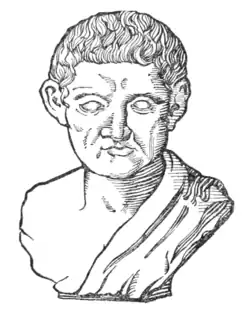
ARISTOTLE (ar'is-totl), the most renowned of Greek philosophers, born at Stagira, Macedonia, 384 b. c.; was for 20 years a student of philosophy in the school of Plato at Athens, but at the same time a teacher. After Plato's death, he opened a school of philosophy at the court of Hermias, King of Atarneus, in Mysia, whose adopted daughter he afterward married. At the invitation of Philip of Macedon, he undertook the education of his son, Alexander. When Alexander succeeded to the throne, the philosopher returned to Athens and opened a school in the Lyceum. From being held in the covered walk (peripatos) of the Lyceum, the school obtained the name of the Peripatetic. The number of his separate treatises is given by Diogenes Laertius as 146; only 46 separate works bearing the name of the philosopher have come down to our time. He died at Chalcis, Eubœa, in the year 322 b. c.
ARISTOTLE