Author:Arthur Herbert Church
 sister projects: Wikipedia article, Commons category, Wikidata item
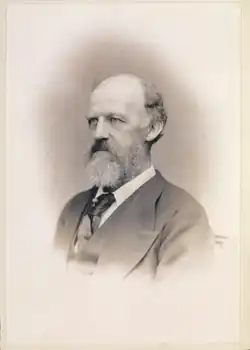
Arthur Herbert Church
Works
- Colour (1871) (start transcription)
- The Chemistry of Common Life (1879), with J.F.W. Johnston
- English Porcelain: A Handbook to the China made in England during the Eighteenth Century as Illustrated by Specimens Chiefly in the National Collections (1885) IA
- Food-Grains of India (1886) IA
- The Chemistry of Paints and Painting (1890) (transcription project)
- Chemistry of Paints and Painting (1890; 4th ed. 1915) IA
- The Laboratory Guide: A Manual of Practical Chemistry for Colleges and Schools, Specially Arranged for Agricultural Students (1888) IA
- Food: Some Account of Its Sources, Constituents, and Uses (1902) IA
- Josiah Wedgwood, Master-Potter (1903)
- Precious Stones (1905)
- A Guide to the Museum of Roman Remains of Cirencester (1922) IA
- "Wedgwood, Josiah," in Dictionary of National Biography, 1885–1900, London: Smith, Elder, & Co. (1885–1900) in 63 vols.
Contributions to EB1911
- "Pigments," in Encyclopædia Britannica (11th ed., 1911)
Contributions to Transactions and Proceedings of the New Zealand Institute
- Further Report on the Chemistry of Phormium tenax (1873)
Edited works
- Royal Society, Some Account of the 'Classified Papers' in the Archives, with an Index of Authors (1907)
Works about Church
- "Church, Arthur Herbert," in Alumni Oxonienses: the Members of the University of Oxford, 1715-1886, by Joseph Foster, London: Parker and Co. (1888–1892) in 4 vols.
- "Obituary: Sir A. H. Church, Royal Academy Professor of Chemistry," in The Times (1915)

Some or all works by this author were published before January 1, 1930, and are in the public domain worldwide because the author died at least 100 years ago. Translations or editions published later may be copyrighted. Posthumous works may be copyrighted based on how long they have been published in certain countries and areas.
Public domainPublic domainfalsefalse