A Nation in Making
A
NATION
IN
MAKING
being the
reminiscences of
fifty years of public life
SIR SURENDRANATH BANERJEA
Oxford University Press
Bombay Calcutta Madras

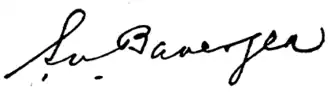
Sir Surendranath Banerjea
as editor of ‘The Bengalee’
ILLUSTRATION BY COURTESY OF SURENDRANATH COLLEGE, CALCUTTA
OXFORD UNIVERSITY PRESS AMEN HOUSE LONDON E.C.4
Glasgow New York Toronto Melbourne Wellington Bombay Calcutta Madras Karachi Lahore Dacca Cape Town Salishury Nairobi Ibadan Accra Kuala Lumpur Hong Kong
Surendranath Banerjea 1848—1925
First published
1925
Reprinted three times
RESET AND REPRINTED
1963
Printed in India by B. R. Mundhra at Binani Printers Private Ltd., 38, Strand Road, Calcutta 1 and published by
JOHN BROWN, OXFORD UNIVERSITY PRESS, MERCANTILE BUILDINGS CALCUTTA-1
TO THE MEMORY OF
the founders and early builders of the
INDIAN NATIONAL CONGRESS
whose achievements the present generation is apt to forget, but who have placed India firmly on the road to constitutional freedom to be attained by constitutional means this book is dedicated by an old colleague who has lived to witness the partial fruition of their labours, destined to culminate in full dominion government for India.
Preface
I have for some time been thinking of writing the Reminiscences of my life. I have been encouraged in the idea by some of my friends, who think (and I share their view) that they may throw light on some of the most interesting chapters in our current history and help to elucidate them from the Indian standpoint. I belong to a generation that is fast passing away; and I have been in close touch, and I may add in active association, with some of its most illustrious men, devoted workers in the public cause, who by their labours have largely contributed to our own Province and to foster the beginnings of a real national life throughout the country. Their work lies buried in the forgotten columns of contemporary newspapers. Perhaps a generation hence it will all be forgotten. I hope in these pages to do some justice to their honoured memories; and these Reminiscences will not have been written in vain if I am able even in part to accomplish this object.
The need for Reminiscences such as these has become all the more pressing in view of recent developments in our public life, when unfortunately there is a marked, and perhaps a growing, tendency among a certain section of our people to forget the services of our early nation-builders—of those who have placed India on the road to constitutional freedom to be achieved by constitutional means.
Contents
| 1 | MY BOYHOOD AND EARLY DAYS 1 |
| My parentage—early influences—school and college life—evils of child-marriage—the Brahmo-Samaj movement; Keshub Chunder Sen—the temperance movement; Peary Churn Sircar—re-marriage of Hindu widows; Pundit Iswar Chinder Vidyasagar | |
| 2 | MY FIRST VISIT TO ENGLAND 9 |
| The voyage; obstacles and prejudices—successful in the Civil Service Examination, 1869 — disqualified; the Commissioners’ mistake —public resentment in India—lawsuit and my re-instatement—my father’s death, 1870—Sripad Babaji Thakur, Romesh Chunder Dutt, and Rehari Lal Gupta—my English tutors | |
| 3 | MY HOME-COMING AND OFFICIAL CAREER, 1871–1874 20 |
| London to Brindisi—taken for German spies at Versailles—Calcutta again: socially ostracized by orthodox Brahmins—work as Assistant Magistrate at Sylhet—racial prejudices—the circumstances of my dismissal from the Service | |
| 4 | 1875–1882 29 |
| My second visit to England—exclusion from the English Bar—return to India, 1875—educational work; my joy in it—Mr. A. M. Bose | |
| 5 | THE INDIAN ASSOCIATION 37 |
| Need for a political Association to represent educated middle classes—inaugurated, July 1876—Mazzini’s influence—the Civil Service agitation, 1877—my tour in North India—Sirdar Dayal Singh Majeetia and the Tribune—tour in Western India, 1878–79; meeting with Mr. Ranade—the first Indian Deputation to England; Mr. Lalmohan Ghose—the Maharani Swarnamoyee, ‘Lady Bountiful of Cossimbazar’—success of the Deputation | |
| 6 | REACTIONARY GOVERNMENT AND ITS CONSEQUENCES 52 |
| Lord Salisbury Secretary of State—the Vernacular Press Act—the silence of Lord Lytton—Dr. K. M. Banerjee—a letter to Gladstone—strong convictions a bar to promotion—Lord Ripon and local self-government—a broader vision and a higher platform | |
| 7 | JOURNALISM 63 |
| Kristo Das Pal and the Hindoo Patriot—I become proprietor and editor of the Bengalee, January 1, 1879—Ashutosh Biswas—Sir Ashley Eden | |
| 8 | THE CONTEMPT CASE: IMPRISONMENT 69 |
| The leaderette in the Bengalee—prosecuted for contempt of court—public excitement—the trial—condemnation and imprisonment—demonstrations of sympathy; attitude of the Statesman—'Good cometh out of evil'—a national Fund—my life in prison—my release | |
| 9 | POLITICAL ACTIVITIES, 1883-1885 79 |
| The First Indian National Conference—a second tour through Upper India; an appeal for unity—Lord Dufferin Viceroy—Sir Henry Harrison—drunkenness and the outstill system—public meetings | |
| 10 | THE INDIAN NATIONAL CONGRESS 91 |
| First sittings at Bombay—the genesis of Provincial Conferences—the first Calcutta Congress, 1886—Congress in Madras, 1887—the late Maharaja of Vizianagrami—the Allahabad Congress, 1888—Mr. Bradlaugh's visit to India | |
| 11 | THE CONGRESS DEPUTATION TO ENGLAND 103 |
| Each member pays his own expenses—first meeting at Clerkenwell—interview with Gladstone; the elective principle—members of the Deputation—the debate at the Oxford Union—return to India; the Ripon College controversy | |
| 12 | MY LEGISLATIVE COUNCIL WORK 114 |
| Expansion of the Legislative Councils, 1892—my election to the Bengal Legislative Council—Sir Charles Elliott—the Bengal Municipal Act—Sir Edward Baker—the House of Commons and simultaneous examinations | |
| 13 | THE INDIAN NATIONAL CONGRESS, 1894–1896 125 |
| The Madras Congress—'should students discuss politics?'—President of the Poona Congress, 1895—preparation for the Presidential speech—reflections on oratory—Sir Romesh Chunder Mitter—development of the Congress movement | |
| 14 | TWO CLOUDED YEARS 139 |
| Evidence before the Welby Commission—British public addressed on Indian questions—my return to India: elected to the Bengal Council—the Congress of 1897: case of the Natu brothers—famine, plague, and deportations—Lord Curzon assumes office—the Madras Congress: Mr. Ananda Mohan Bose | |
| 15 | THE STRUGGLE FOR RECOGNITION 147 |
| Simultolla's attractions—tragic death of Dr. Suresh Chunder Sircar: 'grievous hurt' by British soldiers—Lord Curzon's policy—Local Self-government in danger—Congress at Lucknow: making India known in England—my Congress tour in the Punjab—inter-racial concord; Kali Prosanna Roy—officialdom and the movement—exclusion of Indians from higher appointments—W. C. Bonnerjea | |
| 16 | 1900–1901 157 |
| Rise of the Bengalee: a devoted manager: journalism in India—I am again President of the Congress; successful Ahmedabad meeting—the Coronation Durbar—Viceregal profession and practice—Commission on Universities: abolition of law classes in colleges | |
| 17 | THE UNIVERSITIES ACT 164 |
| Ripon College made over to trustees: from proprietor I become President of Council: public appeal for funds—farewell to teaching: what I taught my membership of the Senate: an inexplicable election rule—English literature without English history—Mr. Justice Ashutosh Mukherjea as Vice-Chancellor—I cease to be a member of the Bengal Legislative Council | |
| 18 | THE PARTITION OF BENGAL 170 |
| A former Partition—the Civil Service case for further division—the energy of Lord Curzon: his visit to East Bengal—contempt of public opinion: the secret despatch—astonishment and indignation of Bengalee-speaking public; we make our plans | |
| 19 | THE BOYCOTT AND 'SWADESHI' MOVEMENT 176 |
| Genesis of the Boycott—new note of practicality in agitation—how the Swadeshi movement spread: enthusiasm of the student community—industrial revival | |
| 20 | SWADESHISM AND 'BANDE-MATARAM' 186 |
| Non-Co-operation: a comparison—my ideals in public life—campaign in the country: roughing it for the cause—Kabyavisarad: journalist, composer and patriot—beginning of repression: Government circulars—Bande-Mataram forbidden—a pan-Indian cry: its meaning and origin | |
| 21 | BY ISSUES OF THE 'SWADESHI' MOVEMENT 193 |
| A stimulus to journalism—industrial activity: Government's neglected opportunity—the Banga Luxmi Cotton Mill—banking and insurance—public inauguration: the ball set a-rolling | |
| 22 | THE SETTLED FACT 197 |
| The Partition takes effect—proposal for a Federation Hall: analogy of Alsace-Lorraine—the stone-laying: swan-song of Ananda Mohan Bose—Sir Gurudas Banerjee—our proclamation—Sir Bampfylde Fuller's administration—strictures by the High Court | |
| 23 | BARISAL 204 |
| Programme of the Conference—Bande-Mataram a point at issue—police attack the procession: 'instructions to arrest Mr. Banerjea alone'—wounded magisterial dignity—the Conference suppressed by the police: our indignation | |
| 24 | AFTER THE BARISAL CONFERENCE 212 |
| The Swadeshi vow an inspiration—my visit to the Chakravartis of Rahamatpore: the police are foiled—Liyakat Hossain—Mr. A. Rasool, President of the Barisal Conference—Indian public opinion stirred—anarchy in Bengal: the provocation—a sinister interview—an unpopular Lieutenant-Governor—rowdyism at the Surat Congress. | |
| 25 | PASSIVE RESISTANCE 221 |
| The Congress united—entry of Mrs. Besant: her internment—the Home Rule League—passive resistance discussed at Bombay Congress: conditions not favourable for success—a Calcutta meeting forbidden for astonishing reasons—interview with Lord Ronaldshay: the true reasons the prohibition withdrawn—my speech at the Town Hall | |
| 26 | THE REVOLUTIONARY MOVEMENT IN BENGAL 231 |
| The Mozufferpore murders—deportations under Regulation III: Mr. Morley's attitude—how orders from Home have been exceeded—the Morley-Minto Reforms—the new Councils—my disqualification removed, but I decline to stand before the Partition is modified | |
| 27 | MY VISIT TO ENGLAND IN 1909 239 |
| I am invited to the Imperial Press Conference—Ripon College in safe keeping the first function—irrelevance of Lord Cromer: my reply and its effect Warwick Castle; Stratford-on-Avon; Oxford—when and why I smoked—I speak at Manchester—a visit to Windsor—work after the Conference—I speak on the Partition: repression condemned—breakfast and speeches at Sir William Wedderburn's—the assassination of Sir William Curzon—Wyllie—meeting at the New Reform Club—conference at Mr. Stead's house: my 'last word' to the British public—return to Calcutta, August, 1909 | |
| 28 | THE ANTI-PARTITION MOVEMENT 263 |
| Lord Hardinge Viceroy—my first interview with him—the Delhi Durbar, 1911—modification of the Partition—outstanding personalities | |
| 29 | WORK IN THE IMPERIAL COUNCIL 271 |
| Sundry Resolutions—reform of Calcutta University—Local Self-government—the Bengal Internments—Provincial Autonomy—recruiting work | |
| 30 | THE REFORMS AND THE GROWTH OF EXTREMISM 281 |
| Grant of responsible government, 1917—Mr. Montagu in India—the Montagu-Chelmsford Report—cleavage between Moderates and Extremists—speech in the Imperial Council on the Reforms—interview with the Viceroy—what the Moderate party stands for—the Franchise Committee—unveiling of the Dadabhai Naoroji portrait | |
| 31 | DEPUTATION OF THE MODERATE PARTY TO ENGLAND, 1919 298 |
| Importance of the occasion—the Joint Committee—the Indian witnesses—necessity for responsibility in the Central Government—Diarchy—reflex action of Punjab Government—other activities in London | |
| 32 | MY RETURN TO INDIA AND MINISTERIAL APPOINTMENT 309 |
| Return to India, September, 1919—Non-Co-operation—the Rotary Club—appointed Minister of Local Self-government—my colleagues—relations with Lord Ronaldshay | |
| 33 | MY WORK AS MINISTER 319 |
| European colleagues—the Medical Department—atmosphere of the Secretariat—hostility of the Non-Co-operators—Local Self-government | |
| 34 | MUNICIPAL LEGISLATION 333 |
| The Calcutta Municipal Act: my part in it—the Swarajist party—Mr. C. R. Das and the Calcutta Corporation—Bengal Municipal Bill | |
| 35 | MY WORK AS MINISTER—(Continued) 341 |
| Indianization of departments—Mr. Surendranath Mullick—relations with the Medical Department—Medical schools—a familiar method of attacking Ministers—the 1922 floods in Bengal | |
| 36 | DIARCHY 352 |
| Diarchy the essence of the Reforms—a tentative experiment—has diarchy failed?—dependence upon the personal element—Ministerial salaries | |
| 37 | CONCLUSION 363 |
| The secret of long life—my views on Hindu social problems—the conservatism of the Hindu—a moral and a message to my countrymen | |
| APPENDIX A 375 | |
| APPENDIX B 378 | |
| INDEX 379 |

This work is in the public domain in the United States because it was published before January 1, 1930.
The longest-living author of this work died in 1925, so this work is in the public domain in countries and areas where the copyright term is the author's life plus 99 years or less. This work may be in the public domain in countries and areas with longer native copyright terms that apply the rule of the shorter term to foreign works.

Public domainPublic domainfalsefalse